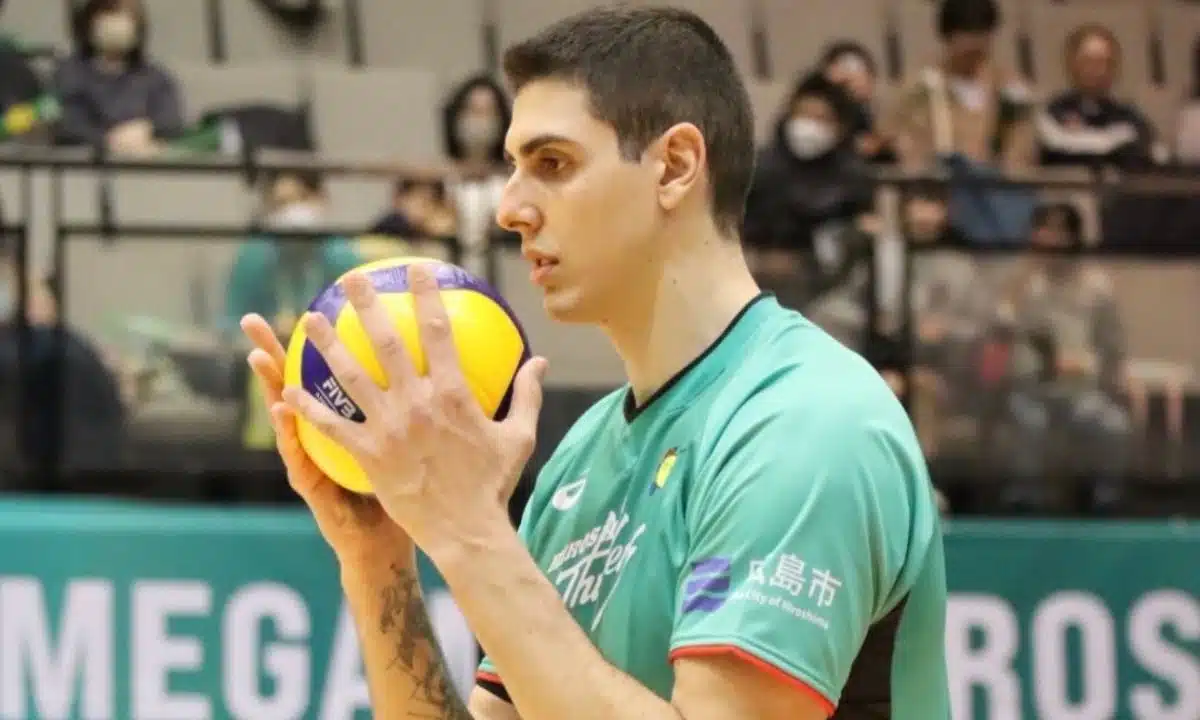
In Japan’s men’s volleyball league, two Brazilian names were on the court, and Jogo Hoje has been tracking the daily swing of form and numbers with the kind of consistency that matters. The big story was Felipe Roque: not just points, but structure. Meanwhile, Lucarelli collected a win with a calmer statistical footprint, and that contrast tells you a lot about how each role is being asked to deliver.
The Brazilian round in Japanese men’s volleyball
Both teams were in full competitive rhythm, with the season’s ladder tightening. JT Thunders took on Toray Arrows and came through 3 sets to 1, while JTEKT edged Nagoya 3 sets to 2. When the standings are this close, you don’t need fireworks to feel the pressure; you need repeatable execution, and that’s where the box score starts talking.
Felipe Roque decides with volume and blocking
JT Thunders leaned on Felipe Roque in the role of opposite, and the numbers read like a scouting report. He finished with 13 points, including 4 points from blocking, plus 59% aproveitamento no ataque (attack aproveitamento no ataque) and 1 ace. That blend is pure volleyball nerd fuel: volume on swings, plus vertical presence at the net. If you’re a opposite, you’re supposed to be a pressure valve and a weapon; Roque was both.
The match control showed up in the set pattern: 22-25, 25-21, 25-16, 25-19. JT Thunders didn’t just win, they steadied the tempo after the early scare, and Roque’s eficiência ofensiva was the kind that keeps teammates confident—especially when the opposition tries to take away your first look.
On the table, JT Thunders sit sixth with 21 wins. In other words: they’re not cruising; they’re building a case, one set at a time.
Lucarelli wins, but with a quieter footprint
On the other side, JTEKT got the job done versus Nagoya, 3 sets to 2, with Lucarelli in the ponteiro role. His final tally was only 2 points, and that’s exactly why the review matters: he wasn’t asked to be the primary weapon, and the efficiency numbers suggest he didn’t waste the chances he received.
Lucarelli recorded 66.67% efficiency and also contributed two well-executed plays in recepção. That’s the subtle stuff coaches love: a ponteiro who can stay clean in passing so the setter can run the system without panic. Even with limited swings, his eficiência ofensiva showed up where it counts, and the match went deep enough to make every phase matter.
The set breakdown—25-22, 25-21, 22-25, 25-27, 15-11—ended in a tiebreak that JTEKT owned. The third-place context also matters: JTEKT are third with 27 wins, so this wasn’t just a win; it was a statement of consistency.
What the results change in the standings
JT Thunders’ 3-1 win keeps them in the thick of the playoff conversation, and sixth place with 21 victories is a reminder that margins are razor-thin in this league. Meanwhile, JTEKT stacking another win and staying third with 27 confirms the competitive bite at the top: they’re not merely surviving— they’re controlling outcomes.
And here’s the nerd question: if the opposite is producing points plus blocking, while the ponteiro is stabilizing recepção, what happens when those roles synchronize at full speed? That’s when teams start separating themselves, and that’s the real takeaway.
O Veredito Jogo Hoje
Felipe Roque was the kind of opposite you build a gameplan around: 13 points, 4 from bloqueio, and 59% aproveitamento no ataque is not luck, it’s repeatability. Lucarelli, por sua vez, did the job with low statistical noise—2 points, 66.67% efficiency, and two clean reception actions—proof that a win doesn’t always require a highlight reel. If JT Thunders keep pairing Roque’s net presence with that passing discipline, they’re going to turn “close sets” into controlled sets. JTEKT? They’re already doing it, and the 15-11 tiebreak score seals the mindset.
Perguntas Frequentes
How many points did Felipe Roque score in JT Thunders’ win?
Felipe Roque scored 13 points in the 3-1 victory over Toray Arrows, including 4 points from blocking.
How was Lucarelli’s performance in JTEKT’s triumph?
Lucarelli finished with 2 points, 66.67% efficiency, and two well-executed reception plays in the 3-2 win over Nagoya.
Where do JT Thunders and JTEKT stand in the Japanese league?
JT Thunders are in sixth place with 21 wins, while JTEKT are third with 27 wins.