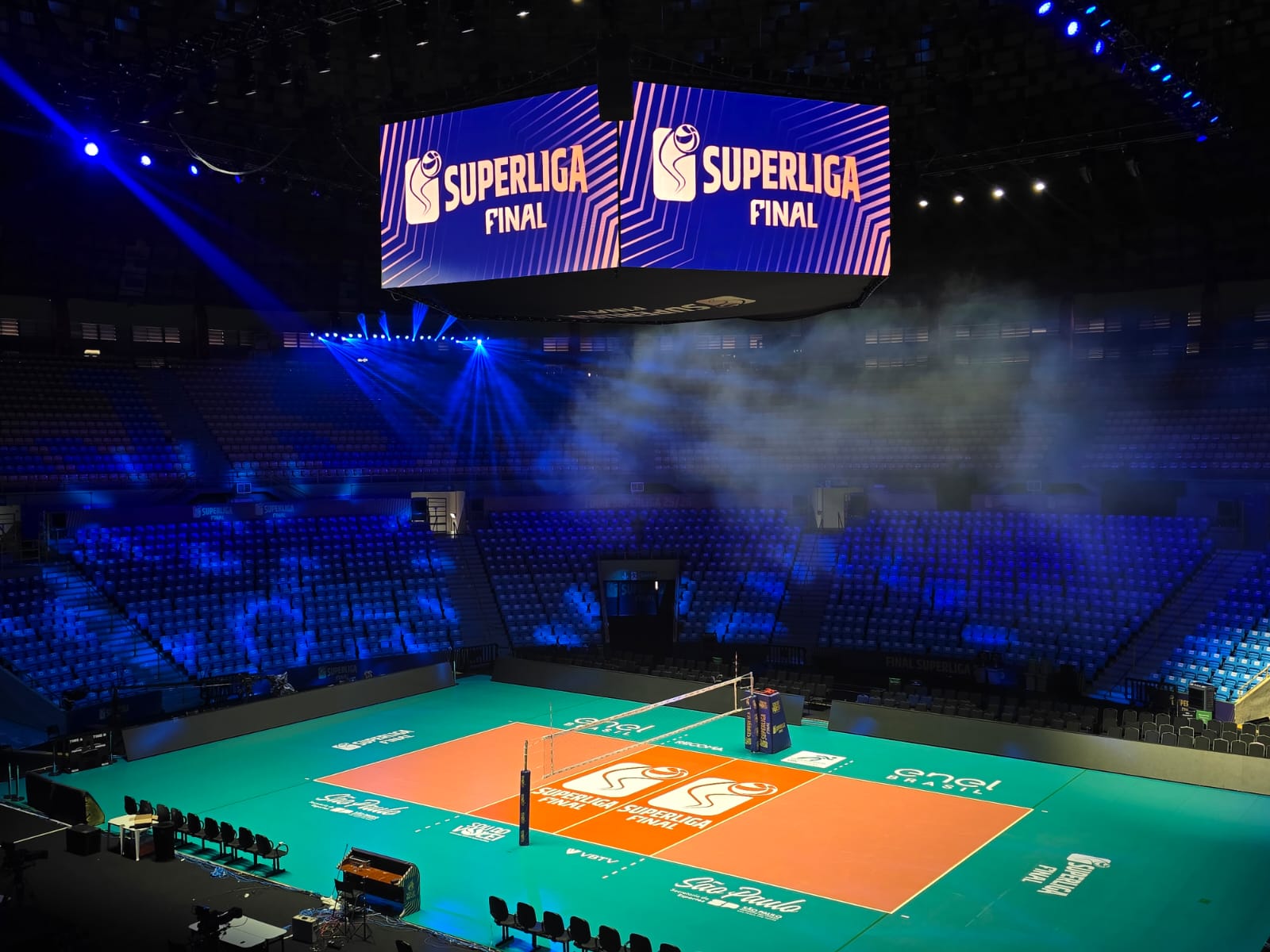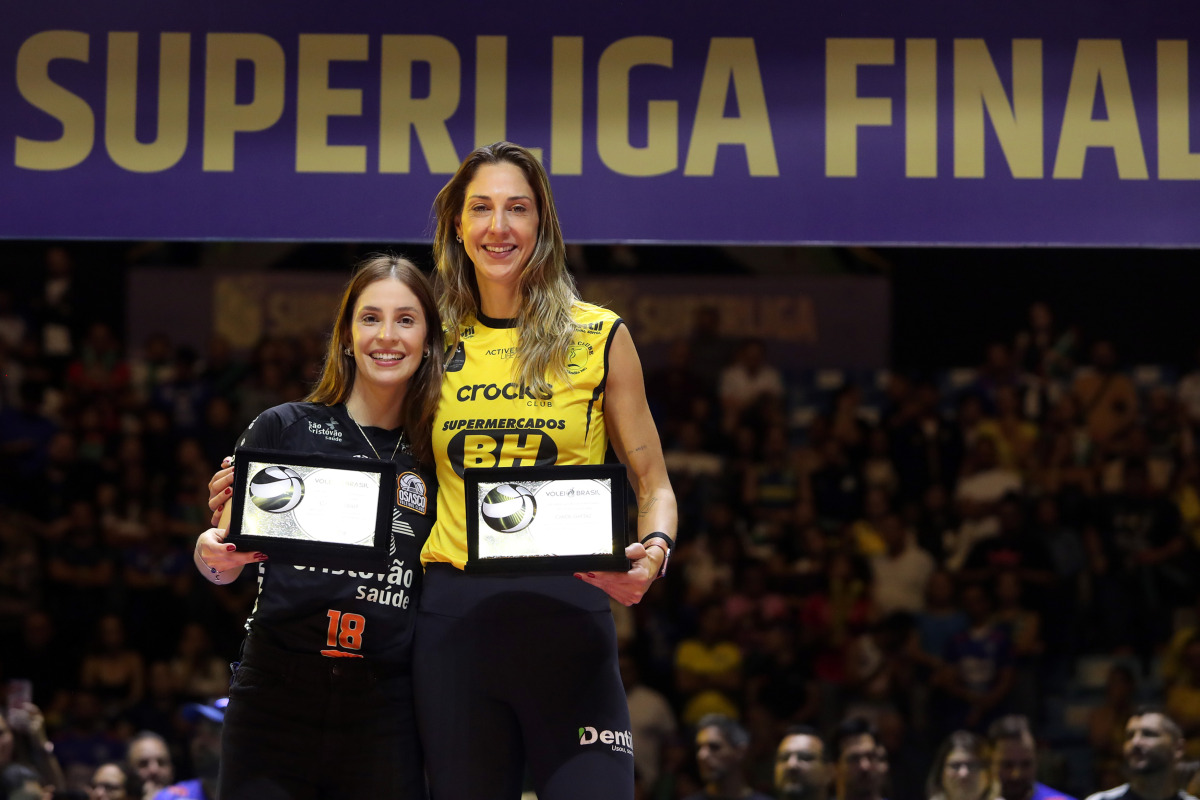
She walked out like a champion and left like a legend. Camila Brait closed a chapter of Brazilian volleyball with the kind of clarity you only see when the decision is final and the heart is clean: named the best libero of the Superliga 2025/26, and honored in the final played on August 3 at the ginásio do Ibirapuera in São Paulo. The scene wasn’t just a matchday ritual. It was a symbolic passing of the torch, the kind that makes a whole sport pause for a breath.
And if you’ve been following volleyball closely, you know why this mattered. As reported by Jogo Hoje, this final carried more weight than the scoreboard ever could, because Osasco wasn’t simply playing for a title. It was playing for the memory of a player who built an entire era inside the same walls.
The farewell of an idol at her peak
Let’s call it what it is: Camila Brait didn’t retire on a whim, and she didn’t go out looking for pity. She went out at the top of her technical powers, still reading attacks like she had eyes in the back of her head, still moving with that calm, economical precision that only a true líbero owns. In a sport where careers can burn bright and fade fast, hers burned longer than most, and it did it with a steady flame.
Her final moment at the ginásio do Ibirapuera felt like a full stop to a sentence she started as a teenager: devotion, discipline, and the rare ability to keep improving without changing who she is.
18 years of loyalty to Osasco
What made the story so special wasn’t just the duration. It was the fidelity. 18 years defending Osasco, the kind of allegiance you rarely see anymore in modern sport, where transfers are often the default setting. Brait’s own words hit hard: “Osasco is my home.” She arrived at 19, and by the time the dust settled, the club had become family, not just a workplace.
She credited Luizomar for believing in her when even she wasn’t sure. That belief turned into a relationship built through training sessions, pressure weeks, and the kind of competitive setbacks that forge a mindset. Titles came, of course. But so did the losses that sting, the ones you carry into the next season and still show up anyway.
Inside the Liberatti, she says the crowd’s energy is priceless. You can hear it in her tone: the stadium noise wasn’t background music, it was fuel. And when she sees that, she doesn’t imagine a different jersey. She imagines the same team, the same rhythm, the same responsibility.
- Arrived as a teenager and grew into a captain
- Built a family while playing at the highest level
- Stayed through cycles, coaches, and evolving volleyball styles
The weight of motherhood and high-level sport
If anyone tells you that motherhood is a detour, they haven’t watched Camila Brait. She doesn’t describe it as a break from volleyball; she describes it as a change in how she carries the sport in her chest. After her children, defeat stopped feeling like an apocalypse. That’s not weakness. That’s perspective.
Her return to alto rendimento after gestações wasn’t just a comeback story. It was proof that the mind can be rebuilt. She said the hardest games became bearable because the life waiting at home reminded her what matters. The embrace after a tough match gave her a different lens, and that lens helped her come back sharper.
That’s why the phrase maternidade no esporte isn’t a slogan here. It’s a lived mechanic, a way of turning pressure into purpose. And in a career that also includes an Olympic journey, her balance is part of the reason she stayed elite.
Luizomar, the rescue and the trust
There’s a reason Brait keeps naming Luizomar like a second heartbeat. In her telling, he wasn’t only the coach who put her on the court. He was the one who pulled her back when doubts and setbacks tried to steal her momentum.
She calls him a “paizão,” and you feel the gratitude in the details: the belief that turned hesitation into execution; the guidance that turned talent into consistency; the trust that allowed her to keep taking the tough reps, the long training weeks, the matches where margins are measured in centimeters and milliseconds.
In high-performance sport, you can have skill and still lose your way. Luizomar seems to have helped her never lose it.
The toughest moment and the happiest one
Ask any athlete what hurts most, and you’ll get a story with teeth. For Brait, the toughest moment was the corte da Olimpíada de 2016. She admits she thought she might never return. That’s the kind of wound that doesn’t just bruise your body. It shakes your identity.
Yet she also offers the antidote: Luizomar as the rescuer. Not magic, not luck, just the kind of coaching that rebuilds belief when the numbers say “no.”
And the happiest? Too many to fit in one breath. The Campeonato Mundial de Clubes was special, and the medalha de prata nos Jogos Olímpicos de Tóquio was the kind of milestone that turns a career into history. But in her eyes, the sweet spot remains the everyday thunder of Osasco: playing at the Liberatti with it packed, with the superliga stakes buzzing under every rally.
When she says every title with Osasco tastes different, she’s describing more than trophies. She’s describing belonging. You don’t fake that.
What stays when the jersey goes away
There’s a line between retiring and fading, and Camila Brait didn’t do either. She leaves behind a blueprint. Players who come after her will inherit a standard: the calm competitiveness of a líbero who doesn’t just defend, but organizes, communicates, and gives the team a sense of safety.
She also leaves a club that feels like it has a heartbeat. Osasco’s identity is now tied to her consistency, her leadership style, and the way she returned stronger after life changed. And yes, she references the magnitude of a career that appears alongside up to 30 titles in materials circulating in the volleyball ecosystem—because whether the exact count is debated or not, the reality is unmissable: she collected moments that will be replayed for years.
In the final, the ceremony at the ginásio do Ibirapuera turned statistics into emotion. That’s what makes this era feel bigger than sport.
O Veredito Jogo Hoje
This wasn’t a “retirement press moment.” It was a full-circle stop: a player who stayed loyal to Osasco long enough to become the club’s language on the court. In an age of constant churn, Camila Brait proved that character can be a tactic. Her best libero award in the Superliga 2025/26 wasn’t an epilogue—it was the final page written while she still had the pen. Osasco won a title, sure, but more than that, they managed to send their captain out with the noise of the Liberatti still echoing in the ribs. That’s what greatness looks like.
Perguntas Frequentes
Why did Camila Brait decide to retire now?
Because she wanted to stop while she was still performing at a high level, and she felt her body asking for rest. She also wants to be fully present for her family, turning the page after years of demanding alto rendimento routines.
How many years did Camila Brait defend Osasco?
She defended Osasco for 18 years, starting at 19 and building both her career and her family life around the club.
What was the biggest moment of Camila Brait’s career?
The moments are many, but the emotional peaks include the medalha de prata nos Jogos Olímpicos de Tóquio and the many titles with Osasco—especially the ones played with the Liberatti packed, where her leadership as a líbero became the team’s rhythm.