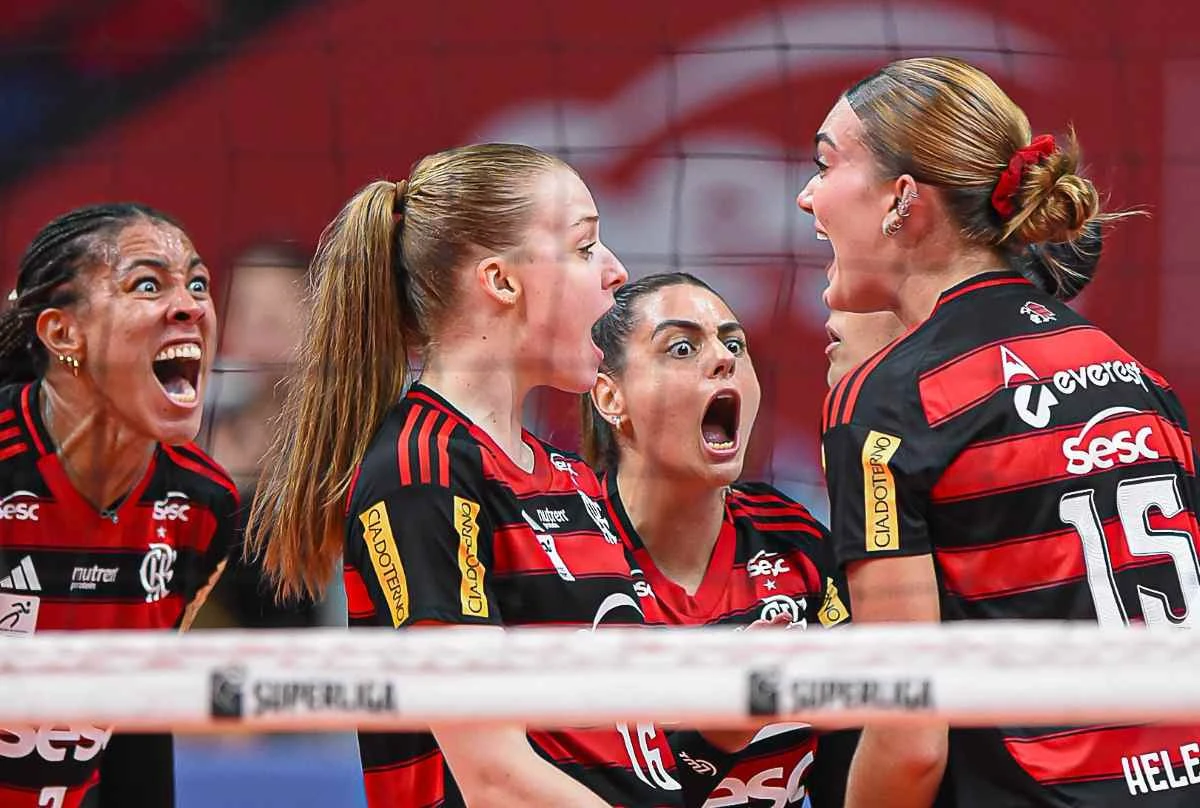
According to Jogo Hoje’s full coverage of the Superliga, the most brutal lesson of volleyball is simple: when you think the match is gone, the side-out sequence can still rewrite everything. On Friday, April 17, at the Maracanãzinho with 8,270 fans roaring, Flamengo’s Sesc RJ Flamengo beat Dentil Praia Clube 3-2, saving a tie-break that looked dead on arrival.
A virada que mudou a semifinal
Let’s be honest: down 14-10 in the tie-break, the scoreboard was basically telling its own story. Praia had done the hard part early, winning the first two sets (23-25, 22-25) by dictating serve rhythm and making the Sesc block read like a closed door. But Bernardinho’s team refused to accept the script.
The final set lines (25-22, 25-20, 16-14) don’t only show a comeback. They show rotação tática under pressure, a shift in how the ball was managed from reception to attack, and a late-course correction in saque pressão that forced Praia’s defense into uncomfortable choices.
O roteiro dos dois primeiros sets e o domínio do Praia
From the opening rallies, Praia looked like the team with a plan. Their serve didn’t just start points; it dragged Sesc’s linha de passe into chaos. The message was clear: win the first ball, then punish the transition. In those early sets, Sesc’s options felt narrower, and Praia’s extremities—especially through the way they read block and shot angles—kept the tempo firmly on their side.
Defensively, it was the kind of match-up that makes analysts sweat: Praia’s defense held steady, and their blocking gave Sesc no easy lanes. Adenízia and Milka were present at the net, and the way Praia attacked the gaps made the Maracanãzinho go quiet at the worst times.
So when Sesc dropped the first two sets, it wasn’t luck. It was structure. Praia had the initiative, and they punished the moments Sesc couldn’t connect side-out into offense.
As mudanças de Bernardinho que destravaram o Sesc
Bernardinho didn’t wait for the match to turn by itself. He changed the problem he was trying to solve.
At the start of the third set, he moved Helena in for Karina. That’s not a cosmetic swap—it’s a call for more aggression in attack and a different rhythm in ball distribution. Then came the second adjustment: Vivian entered midway for Giovana, sharpening the transition and giving Sesc a cleaner pathway from reception to decision.
Even if the offense still wasn’t fully centered around the middle, Helena’s presence expanded the attack menu. Suddenly Sesc wasn’t only surviving the block; it was testing it. That’s the difference between “trying to play” and actually executing a rotation tática that creates new attacking angles.
From there, the home team took control of the next two sets, stitching together side-out sequences that made Praia chase timing instead of setting it.
O tie-break: de 10-14 ao delírio no Maracanãzinho
The tie-break started like a replay of the early story. Praia served well, scored from the edges, and kept Sesc pinned. They built a 10-7 advantage, then pushed the gap to 14-10. That run wasn’t only about points—it was about forcing Sesc into rushed decisions and breaking their comfort in side-out.
Then Bernardinho did what great coaches do: he stopped hoping and started re-aiming. With Tainara on serve, Sesc’s saque pressão shifted the match’s emotional temperature. More importantly, it shifted the ball control. The sequence culminated in a run of six unanswered points, and the crowd finally had something to celebrate.
Praise has to go to the details: the late-game execution included timely reads that turned defense into offense. When Sesc closed at 16-14, it wasn’t just a swing—it was a statement that a virada de bola can arrive even after a near-certainty of defeat.
Quem brilhou: Caffrey, Simone Lee, Kirov e Tainara
Individual brilliance mattered, but it was the way it connected to tactical moments that made it decisive.
- Caffrey Payton was the top scorer with 23 points, carrying the load when the match demanded fearless shot selection.
- Simone Lee added 21 points, giving Sesc a reliable outlet in the phases where reception and side-out were under threat.
- Kirov finished with 16 points, including 8 on the bloqueio duplo, making Praia’s attack lanes feel smaller every time it mattered.
- Tainara was the spark with the serve that flipped the tie-break momentum from 10-14 to 16-14.
And Praia’s Caffrey again showed why she’s a matchup nightmare—yet Sesc’s late adjustments simply took away the easy rhythm.
O que a vitória altera na série e na corrida para a final
With the 3-2 win, Sesc RJ Flamengo leveled the semifinal series 1-1 in this best-of-three showdown. Praia took Game 1 in Uberlândia with a 3-0 win, and now the pressure moves to the decider.
Because this semifinal winner advances to the final against whoever comes out of the other side—Osasco São Cristóvão Saúde versus Gerdau Minas—the stakes are amplified. That other series is also tight enough to make every tactical tweak feel like it could decide the title race.
So yes, the match changed the series. But more than that, it changed the confidence. Praia had the tie-break under control, and still had to watch it slip away because Sesc adjusted the rhythm, forced better side-out opportunities, and weaponized late serve pressure.
Próximo jogo e cenário da outra semifinal
The next match in the series is set for Friday, April 24, at 21:00, in Rio de Janeiro. The winner of that game will reach the final on May 3, at the Ibirapuera in São Paulo.
On the other semifinal, Osasco won the first encounter 3-1 in Belo Horizonte, while Minas evened the tie with a win on Friday night at Liberatti, sending the series to a crucial third confrontation as well.
O Veredito Jogo Hoje
We’ve seen plenty of “comebacks” in volleyball, but this one carried tactical fingerprints. Bernardinho didn’t just ride emotion—he attacked the problem: reception into offense, then the late tie-break serve pressure that made Praia’s angles collapse. When a team turns a tie-break from 10-14 to 16-14 under a hostile crowd, that’s not luck; that’s line of pass discipline, rotation tática, and nerve. The Maracanãzinho didn’t merely explode—it became the sixth player in Sesc’s execution, and now the series has teeth. Assinamos com convicção: this Game 3 will be a chess match disguised as a volleyball rally.
Perguntas Frequentes
How did Sesc RJ Flamengo turn the match around against Dentil Praia Clube?
After dropping the first two sets, Bernardinho reshaped the lineup early in Set 3, improving the transition from reception to attack. In the tie-break, Sesc applied sharper serve pressure with Tainara, secured key points on side-out sequences, and closed the set 16-14 after trailing 14-10.
Who was the standout in the match at Maracanãzinho?
Caffrey Payton led with 23 points. The tactical backbone also came from Kirov, who delivered 16 points including 8 on the bloqueio duplo, and from Tainara, whose serve triggered the decisive run in the tie-break.
When will the deciding Game 3 of the semifinal be played?
The decisive match is on Friday, April 24, at 21:00 in Rio de Janeiro.