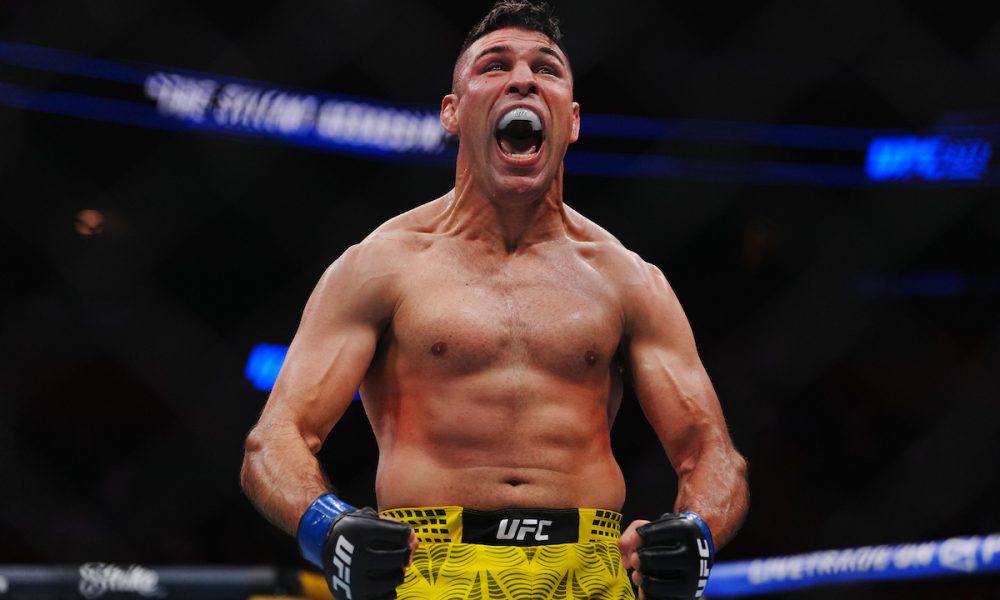
On UFC 327 last Saturday (11), Vicente Luque didn’t just win in Miami, he re-timed his whole game. The Brazilian stepped into the peso-médio bracket (up to 84 kg) and finished Kelvin Gastelum with a finalização still in the first round. After two straight losses at welterweight, that’s not a “bounce-back” headline. That’s a tactical reset, and we saw it play out in real time.
And according to our own reporting, the full tactical breakdown is on Jogo Hoje, where we map the turning points beyond the highlight reel.
The middleweight debut of Vicente Luque
Luque’s move up wasn’t random. When you’re dealing with momentum-killers like consecutive defeats, the body and the timing start to feel off. The UFC had him at a different pace, and the Brazilian looked like he was finally catching the right gear again in the middleweight range. Against Gastelum, a former title challenger known for his toughness and late-career durability, Luque looked calm. Not cautious. Calm.
From the first exchanges, you could see the goal: impose pressure, set traps, and cash in the moment the opponent’s base wobbles. That’s the kind of plan that rewards patience, especially when you’re searching for your best trocação rhythm and your cleanest entry lanes.
How the fight was won: pressure, knockdown, and submission
Let’s talk execution, because that’s where the fight turned. Luque started with solid movement and quickly found space to land a right upper. It wasn’t just a big shot for the sake of it, either. The timing created a knockdown and immediately flipped Gastelum’s priorities from offense to survival.
From there, Luque’s value was in the transition. He didn’t rush the finish like a highlight hunter. He took the fight to the mat with purpose, then used relentless grappling to drain options. Once the distance collapsed, the Brazilian’s pace did the rest.
On the ground, the pressure became a problem Gastelum couldn’t solve. Luque’s transition to the ground set up the finish, and the ground and pound pressure quickly turned into control, then into the exact position he needed for the finalização. That’s the difference between “getting a takedown” and actually winning the fight—cleanly—inside the first round.
- Early pressure to force the exchange
- Right upper that produced the knockdown
- Efficient grappling to secure the fight on the mat
- Finish arriving fast, where the opponent’s recovery time is limited
What the win changes for Luque’s career
Two straight losses can mess with your confidence, sure. But more dangerously, they can mess with your technical assumptions. Luque’s performance here suggested he’s recalibrated: he’s finding better windows in the middleweight fight, and his entries are looking sharper. That matters for how the UFC books you next.
Because this wasn’t just a win. It was a message about physical adaptation and fight IQ. The Brazilian didn’t look like he was “trying out” the division. He looked like he belonged in it.
And when you pair that with a quick finish in a marquee bout, you’re not just regaining form—you’re repositioning yourself in the middleweight conversation.
Why this result matters against a name like Gastelum
Gastelum wasn’t some stepping-stone. He’s a former title challenger, and that experience shows up in how hard he tries to keep the fight alive. So when Luque found the knockdown and then flowed into grappling without hesitation, it told us something big: Luque’s trocação and his ground game weren’t mismatched. They were connected.
That’s the kind of win that forces the UFC to take you seriously. Because it doesn’t read like a fluke. It reads like a style matchup that Luque executed with discipline.
Next steps and the UFC scenario
Now the question is simple: who gets offered next, and can Luque keep this level of adaptation when opponents start planning for him? In the middleweight division, everyone is bigger, stronger, and more willing to trade in the pocket. Luque will be tested on whether his timing stays as lethal once the novelty wears off.
But if the UFC wants proof that Luque’s move up isn’t a gamble, this was it. A first-round submission over a seasoned opponent, after the kind of skid that usually haunts fighters—Luque flipped the script.
O Veredito Jogo Hoje
Here’s our take: this wasn’t just Vicente Luque “finding a finish.” This was a tactical statement. He used pressure to force the exchange, engineered the knockdown, and then weaponized the transition to the ground into a fight-ending finalização with ground and pound pressure. That sequence is exactly what the UFC middleweights will have to respect next—because when a fighter strings together striking, grappling, and finishing like that, it’s not luck. It’s coaching, it’s preparation, and it’s intent. Sign this one in the “Luque belongs at middleweight” column, no hesitation. — Analista Tático, JogoHoje.esp.br
Perguntas Frequentes
How did Vicente Luque defeat Kelvin Gastelum?
Luque pressured in the stand-up, landed a right upper that caused a knockdown, then took the fight to the mat with strong grappling and secured the finalização in the first round.
Why can the move to middleweight benefit Vicente Luque?
The weight cut and timing matter. In the peso-médio range, Luque’s striking rhythm and his transition to the ground looked more efficient, letting him connect trocação to ground and pound pressure without losing momentum.
What does this victory mean for Luque’s next stretch in the UFC?
It resets his trajectory after two consecutive losses and puts him back in the middleweight mix. A quick submission over a seasoned, former title challenger like Gastelum is the kind of result that shapes matchmaking and forces the division to plan differently.