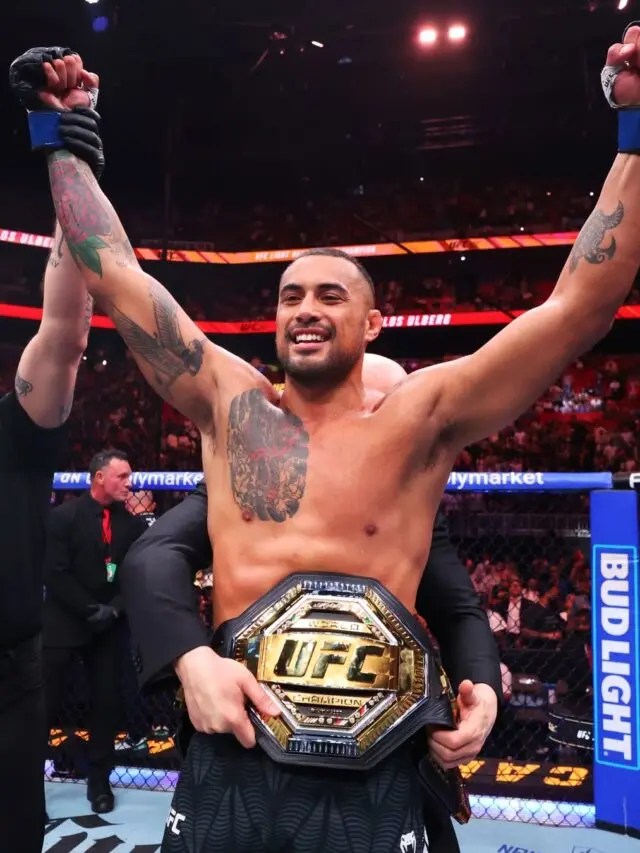
According to our editorial desk, the full UFC 327 coverage and other event breakdowns are on Jogo Hoje, with the kind of fight-by-fight context fans actually need. And on Saturday night, the card principal didn’t just deliver drama, it delivered a tactical curveball: Carlos Ulberg took the peso meio-pesado belt by nocaute in the first round against Jiri Prochazka, ending the night’s main storyline faster than most gameplans even warm up.
A virada na luta principal
Let’s call it what it was: the championship picture in the peso meio-pesado didn’t evolve slowly, it got rewritten. Ulberg didn’t win by outlasting, he won by forcing a timeline. Prochazka, a fighter built for chaos and momentum swings, suddenly faced something he couldn’t negotiate with: a clean, decisive finish when the fight was still young.
And that’s the real tactical tell. When a main event ends via finalização early, it collapses the usual chess match of adjustments. No time for distance ownership, no time for the “let’s see what he gives me” phase. You either land the early money or you get punished before you can reset. Ulberg did exactly that, and now the division’s corrida pelo cinturão has a new face at the center of the storm.
Como foi o nocaute de Carlos Ulberg
Ulberg’s path to the finish reads like a case study in pressure and timing. The key wasn’t just power, it was the moment he chose to commit—when Prochazka’s rhythm was still establishing, not stabilizing. That’s where most challengers misfire: they treat early exchanges like a warm-up. Ulberg treated them like a contract.
The end came via nocaute no primeiro round, a finalização that also signals how dangerous Ulberg is when he turns his offense into a straight line rather than a loop. In UFC terms, that’s the difference between “looking good” and actually controlling the fight’s endgame.
Os destaques do card principal
Outside the belt-changing headline, the main card delivered plenty of signal for matchmaking and future title logic.
- Cub Swanson got it done with a nocaute in the first round over Nate Landwehr, showing he still has that sudden switch for momentum.
- Dominick Reyes and Johnny Walker went to a decisão dividida, the kind of result that screams “styles made it messy,” but also “somebody left points on the table.”
- Josh Hokit beat Curtis Blaydes by decisão unânime, a win that matters because it’s not just the scorecard, it’s the control implied by unanimity.
Os resultados mais importantes das preliminares
The prelims weren’t filler, they were auditions. A lot of fighters can win on the night; fewer can win in a way that changes how the UFC’s depth chart looks after the dust settles.
- Charles Radtke defeated Francisco Prado by decisão unânime, clean and consistent—exactly the profile that earns repeat opportunities.
- Vicente Luque submitted Kelvin Gastelum via finalização no primeiro round, which is the kind of statement that accelerates rankings.
- Tatiana Suarez finished Loopy Godinez by finalização no segundo round, proving she can turn grappling into a deadline.
- Mateusz Gamrot submitted Esteban Ribovics in the second round, keeping the threat level high as the fight progressed.
- Kevin Holland earned a decisão unânime over Randy Brown, a result that supports a “stay active, stay dangerous” future.
- Aaron Pico defeated Patricio Pitbull by decisão unânime, another unanimity that suggests the judges saw a clear tactical edge.
O que muda na divisão dos meio-pesados
Now the big question: how does the division adjust after a first-round title finish? This is where the tactical analyst in me can’t look away. Ulberg’s win via finalização early doesn’t just crown a champion—it forces everyone else to rethink the “safe start.”
And while the belt is the headline, the co-main performance adds fuel to the bigger picture. Paulo Borrachinha stopped Azamat Murzakanov via nocaute técnico in the third round. That timing matters: it’s not a panic finish, it’s a controlled escalation. If Ulberg’s message is “don’t waste the first round,” Borrachinha’s message is “survive the middle, then swing hard.”
Put those together and the corrida pelo cinturão gets sharper. More fighters will chase early offense, but others will also train for the “third-round thunder.” The UFC loves a division that forces new gameplans, and UFC 327 just did exactly that.
O Veredito Jogo Hoje
O UFC 327 não foi só um evento com um campeão novo; foi um alerta tático para a divisão inteira. Quando um cinturão muda de mãos com nocaute técnico em outra luta grande e, na principal, uma finalização no primeiro round, o recado é direto: o próximo desafiante vai precisar de mais do que vontade e mais do que técnica bonita. Vai precisar de gestão de tempo, leitura de distância e coragem de decidir cedo. Ulberg levou o cinturão porque entendeu o relógio da luta melhor do que Prochazka. E agora, quem não ajustar, vai assistir de novo.
Perguntas Frequentes
Who won the main event of UFC 327?
Carlos Ulberg defeated Jiri Prochazka by knockout in the first round to win the peso meio-pesado title.
How did the fight between Paulo Borrachinha and Azamat Murzakanov end?
Paulo Borrachinha defeated Azamat Murzakanov by nocaute técnico in the third round.
What were the most important results from UFC 327?
The key results included Ulberg knocking out Prochazka in the first round, Luque submitting Gastelum in the first round, Suarez finishing Godinez in the second round, and Hokit earning a decisão unânime over Curtis Blaydes, along with Swanson’s first-round knockout over Nate Landwehr.