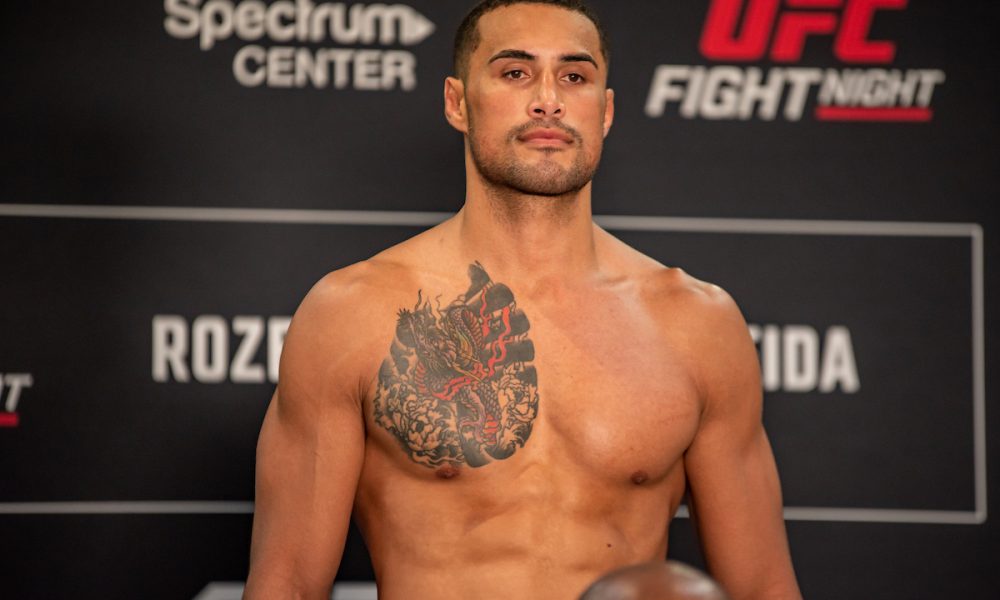
According to our reporting at Jogo Hoje, Carlos Ulberg’s coronation at UFC 327 in Miami has immediately been followed by a major curveball: the new light heavyweight champion has undergone surgery on his right knee just days after winning the 93 kg belt, in the aftermath of a fight that already started with him clearly not moving like a 100 percent fighter.
And that’s the thing about this sport at the top level: you don’t just win the belt, you also inherit the timeline. With Ulberg now sidelined and the exact nature of the damage not fully confirmed publicly, the UFC is staring at a decision tree that can reshape the division’s next chapter, from an interim belt to a full-on logjam of the title picture, with Paulo Costa and the rest of the ranking up to 93 kg watching the clock like it’s a countdown to their own moment.
What happened with Carlos Ulberg after UFC 327
Five days after becoming champion at UFC 327 in Miami (USA), Ulberg posted from a hospital bed via Instagram stories. The striker, known as “Black Jag,” looked upbeat in the photo, but he kept the details deliberately tight. He didn’t confirm the exact procedure, and he didn’t spell out the severity in plain language.
Still, the context was already screaming before the surgery. During his fight against Jiri Prochazka, Ulberg talked about dealing with “insufferable” pain in the right knee while pushing through a bizarre, high-pressure comeback that ended with him taking the belt. That’s not the kind of discomfort you shrug off in training; that’s the kind of pain that changes how you plant, how you kick, and how you survive exchanges.
Ulberg’s surgery was confirmed publicly, but the betting market within MMA circles immediately circled one question: did he tear something structurally, or is this a shorter road? It lines up with what Paulo Costa had been saying in parallel, too, which adds another layer of urgency to the way the division will be managed.
How the knee injury changes the light heavyweight landscape
When a champion goes under the knife right after a title win, the division doesn’t “rest.” It reacts. Light heavyweight is too stacked, too marketable, and too hungry for contenders to sit in limbo for months without consequences.
Here’s what changes tactically and strategically the moment the right knee status becomes a real variable:
- The UFC has to decide whether to pause the belt or accelerate the ladder with an interim belt, because fans and sponsors can’t wait forever.
- Contenders start recalibrating their game plans around a potential title shot timeline, especially those already positioned in the ranking up to 93 kg.
- Momentum can flip fast: someone who looked like a “next-up” fight week suddenly becomes the most logical path to the next title opportunity.
And yes, this is where the conversation inevitably ties into Paulo Costa. He’s not just a name with commercial pull; he’s also a stylistic nightmare for opponents who aren’t fully mobile. If the champion’s return window becomes uncertain, the UFC might decide the belt needs an immediate storyline rather than a long waiting room.
The backstage reading involving Paulo Costa
Paulo Costa has been vocal about what he believed Ulberg told people behind the scenes around UFC 327. The Brazilian claimed the champion had indicated he would need to operate on the knee. Whether every detail is accurate or not, the bigger point is clear: Costa is positioning himself as the most ready recipient of the belt’s next move.
And Costa’s timing isn’t random. He’s coming off a strong statement win inside the same UFC 327 week, knocking out Azamat Murzakanov and putting himself in the thick of the discussion. In a division where a single injury can shift the whole bracket, the fighter who keeps winning stays relevant longer than anyone who waits for permission.
So the real “bastidor” question becomes: if Ulberg can’t defend soon, who does the UFC trust to carry the title narrative through the gap? Costa is pushing for that legitimacy, and the promotion knows that a clean, decisive interim pathway can keep the division from losing its edge.
ACL: why this raises the maximum alert
Even though Ulberg has not publicly confirmed the exact diagnosis, the timeline being discussed in MMA medical logic is hard to ignore. In cases involving a rupture of the anterior cruciate ligament, recovery typically runs about nine to twelve months when surgery is required.
That matters because the “time to come back” isn’t a vague number in the UFC world; it’s a schedule problem. If the right knee damage includes a tear of the ligamento cruzado anterior, you’re not talking about a quick tune-up. You’re talking about a season-scale absence, with a possible return only in the 2027 campaign if the rehab and performance rebuild go the long way.
That’s the kind of uncertainty that forces hard governance decisions. We’ve seen the UFC handle similar situations before, with champions being sidelined and the belt’s status becoming a talking point for months. This time, the language might not be dramatic, but the consequence will be: the division’s rhythm gets interrupted, and the UFC must decide whether to protect the championship’s prestige by pausing it, or protect the fans’ appetite by creating a cinturão interino.
What the UFC can decide now
The UFC’s next move has to balance three competing pressures: competitive fairness, business momentum, and the credibility of the ranking up to 93 kg. With Ulberg’s right knee recovery potentially stretching toward a full season, the promotion has a limited set of options that all come with tradeoffs.
- Interim belt route: create a cinturão interino in the light heavyweight division so the title picture doesn’t stall, then align the interim winner with the champion at the next feasible defense.
- Division pause route: delay any belt decisions until Ulberg is cleared, keeping the current championship status intact but risking fan frustration and ranking drift.
- Status clarification route: if the severity is confirmed and timelines blow out, the UFC could consider whether the champion should remain champion or step aside, depending on precedent and medical reality.
The presence of Paulo Costa as a ready-made contender makes the interim belt conversation even louder. Add the fact that Alex Poatan moved up in weight in pursuit of an unprecedented third title, and suddenly the path for challengers looks less like a ladder and more like a set of doors that only open if the UFC turns the key quickly.
O Veredito Jogo Hoje
This is the moment where the UFC either acts like a league that manages risk—or like a promotion that hopes injuries won’t matter. With Ulberg’s right knee surgery happening just days after UFC 327, the light heavyweight division can’t afford a slow fade. If the anterior cruciate ligament scenario is even remotely on the table, the promotion should move fast toward a cinturão interino, because waiting for a 2027 return would turn the ranking until 93 kg into a museum exhibit. We’re not here for “maybe next year” title talk; we’re here for fight nights that make sense.
Perguntas Frequentes
Carlos Ulberg really can stay out until 2027?
If the diagnosis includes an anterior cruciate ligament rupture and surgery is involved, the typical time frame is roughly nine to twelve months. That makes a late 2027 return plausible, especially when rehab, conditioning, and first-ring-readiness are accounted for. But without an official medical confirmation, any date is still speculative.
Can the UFC create an interim belt in the light heavyweight division?
Yes. The UFC can establish a cinturão interino when the champion is unable to defend within a reasonable window. This keeps the title picture alive and prevents the ranking up to 93 kg from losing its competitive meaning.
Does Paulo Costa gain momentum for the next title shot?
Costa already had the ingredients: a recent statement win and a clear campaign for the next title shot. If Ulberg’s recovery timeline becomes long, Costa becomes the most natural candidate for an interim path, which effectively upgrades his priority in the title conversation.