Jogo Hoje, our reference for complete MMA and UFC coverage, flagged a title fight that turned on one ugly moment and one cold decision.
The fight that flipped the belt
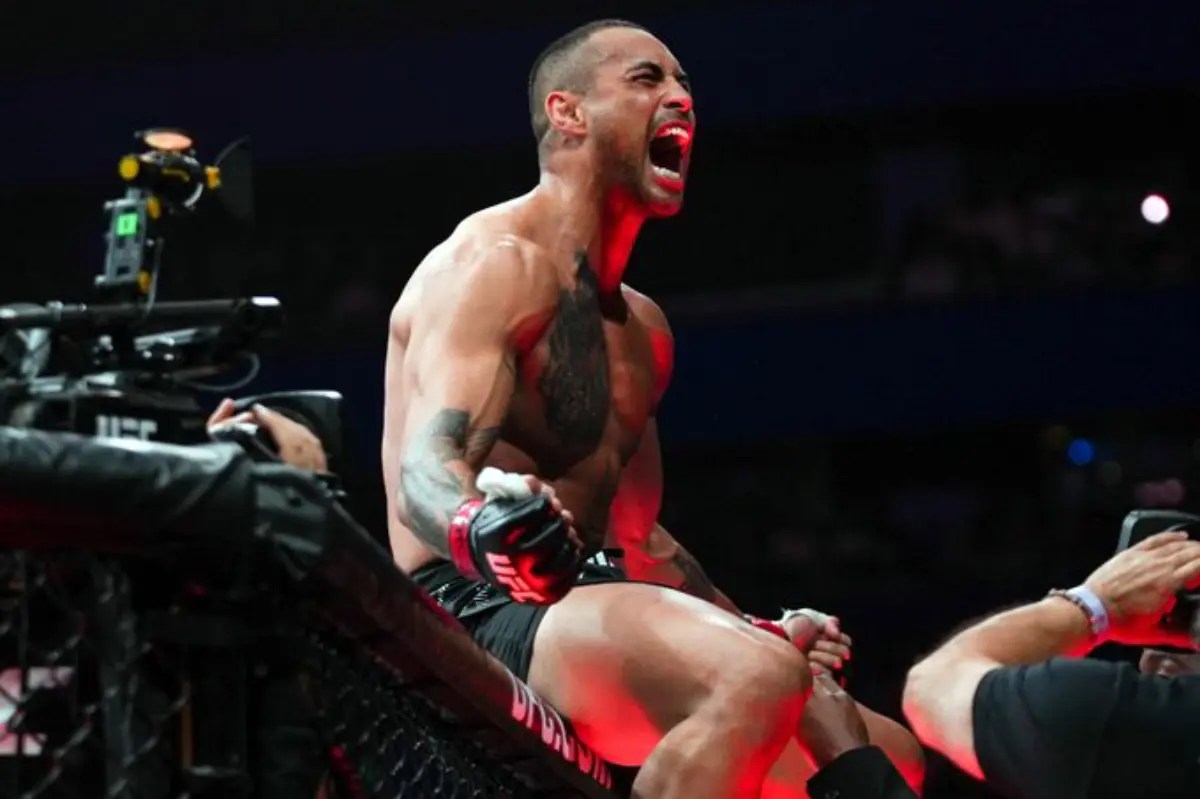
At UFC 327 in Miami on Saturday, the 11th, Carlos Ulberg didn’t just win the vacant light heavyweight belt (up to 93 kg / 92.9 kg). He won it by surviving a nightmare: a knee injury that arrived in the opening frame, then a rival who smelled weakness and kept pressing.
This was the kind of contest that makes you rethink “game plan” as a static thing. One minute, Ulberg is hunting, finding rhythm, managing distance. The next, his base is compromised, his mobility is compromised, and the fight suddenly asks: can you keep your timing when your body won’t cooperate?
Ulberg answered with the most valuable skill in MMA—adaptation under duress—then closed the deal with a nocaute no primeiro round at 3:45.
How Ulberg survived while injured
Let’s be technical, because the drama had layers. In the first round, Ulberg started with better intent, using measured entries and reading Prochazka’s range. Then the knee went, and the story could have ended there—most fighters fold when their support leg is compromised.
But what Ulberg did next wasn’t heroic noise. It was tactical damage control. He tightened his decision-making, kept his head movement working even when his legs weren’t, and avoided giving Prochazka the clean looks that would turn every exchange into a highlight reel.
Prochazka, for his part, leaned on what the injury offered: he began firing low kicks, repeatedly testing the legs that were no longer stable. Those chutes baixos weren’t random strikes; they were a strategy to keep Ulberg’s stance narrow, his weight transfer late, and his chance at a proper base essentially delayed.
And still, Ulberg didn’t chase the finish. He waited for the moment the counter was there—because when you can’t rely on full movement, you rely on timing.
The strike that turned the title fight
The turning point came when Ulberg was forced into the kind of scenario fighters hate: less space, more pressure, and the feeling that the opponent is about to take everything. Against the fence, with his options reduced, Ulberg switched from “survive” to “punish.”
Here’s the key: the knee injury didn’t erase his ability to read the angle. It just changed how he had to win. He landed a sharp cruzado—a cross that fit the moment Prochazka’s guard and posture were most vulnerable.
That’s the essence of a real contra-ataque: not just reacting, but timing the exchange so the opponent’s forward intent becomes the opening. Once Prochazka hit the canvas, Ulberg’s follow-up was ruthless, not chaotic.
From there, the finish came through a disciplined sequence no ground and pound: heavy punches in close quarters, a steady pace, and relentless pressure until the referee stepped in. It was distância curta work, made dangerous by the fact that Prochazka couldn’t reset his defense properly after the knockdown.
And yes—this was a nocaute no primeiro round that arrived at 3min45s. In a fight where everyone expected the injury to dictate the ending, Ulberg flipped the script.
What the win means for the division
Ulberg is now champion of a division that needed clarity—and he didn’t get it quietly. He came in with momentum: 10 straight wins, a record of 14 wins and 1 loss, and a violent efficiency profile that matters when the cage gets tight.
His numbers read like a warning label: 10 victories by the rapid route, including 9 knockouts and 1 submission. That’s not just finishing—it’s finishing with a style that can travel across opponents, even when the body doesn’t.
So what changes now? The light heavyweight picture looks less like a waiting room and more like a real ladder. If Ulberg can still find timing for a cross after his base comprometida is exposed, what happens when he’s fully healthy? That’s the question contenders should be losing sleep over.
For Prochazka, the loss is painful. For the rest of the division, it’s worse: they just learned the champion can win from the worst possible position—injured, pressured, and still landing the exact shot that turns defense into collapse.
Complete results from UFC 327
- Light heavyweight (up to 92.9 kg / 93 kg): Carlos Ulberg defeated Jiri Prochazka by knockout (punch) at 3:45 of Round 1 to win the vacant title.
- Middleweight (up to 120.2 kg): Josh Hokit defeated Curtis Blaydes by unanimous decision (29-28, 29-28, 29-28).
- Light heavyweight (up to 92.9 kg / 93 kg): Dominick Reyes defeated Johnny Walker by split decision (29-28, 28-29, 29-28).
- Featherweight (up to 65.7 kg): Cub Swanson defeated Nate Landwehr by knockout (punch) at 4:05 of Round 1.
- Featherweight (up to 65.7 kg): Aaron Pico defeated Patricio Pitbull by unanimous decision (30-27, 30-27, 29-28).
- Welterweight (up to 77.1 kg): Kevin Holland defeated Randy Brown by unanimous decision (30-27, 30-27, 30-27).
- Lightweight (up to 70.3 kg): Mateusz Gamrot defeated Esteban Ribovics by submission (katagatame) at 4:18 of Round 2.
- Strawweight (up to 52.1 kg): Tatiana Suarez defeated Loopy Godinez by submission (rear-naked choke) at 2:29 of Round 2.
- Lightweight (up to 70.3 kg): Chris Padilla vs. MarQuel Mederos ended in a majority draw (29-27, 28-28, 28-28).
- Middleweight (up to 83.9 kg): Vicente Luque defeated Kelvin Gastelum by submission (arm triangle) at 4:08 of Round 1.
- Welterweight (up to 77.1 kg): Charles Radtke defeated Francisco Prado by unanimous decision (30-26, 30-26, 30-26).
- Light heavyweight (up to 92.9 kg / 93 kg): Paulo Borrachinha defeated Azamat Murzakanov by TKO (high kick) at 1:23 of Round 3.
O Veredito Jogo Hoje
Ulberg didn’t win because the universe felt generous—he won because, when his base comprometida turned his fight into an emergency, he still found timing for a contra-ataque at distância curta, then buried Prochazka with a clean sequence no ground and pound. That’s champion DNA, and it sets a brutal new standard: in this division, even injury won’t guarantee you a loss—if you’re willing to adapt faster than your opponent can adjust.
Perguntas Frequentes
How did Carlos Ulberg defeat Jiri Prochazka at UFC 327?
Ulberg knocked out Prochazka with a punch at 3:45 of Round 1, capturing the vacant light heavyweight belt.
In which round did Ulberg get the knockout?
The knockout came in the first round.
Who else stood out on the main card of UFC 327?
Several fights delivered impact, including Paulo Borrachinha’s TKO finish of Azamat Murzakanov and Mateusz Gamrot’s Round 2 submission over Esteban Ribovics.