As per what we saw, the Jogo Hoje has been tracking the business side of the sport closely, and UFC 328 in Newark was a perfect case study in security scheme as a line item, not just an entertainment accessory. This Saturday, May 9, the promotion rolled out a reinforced media day setup, with police presence and extra staff, because the UFC knows one thing better than anyone: the cage is where the money is made, and where the chaos must be contained.
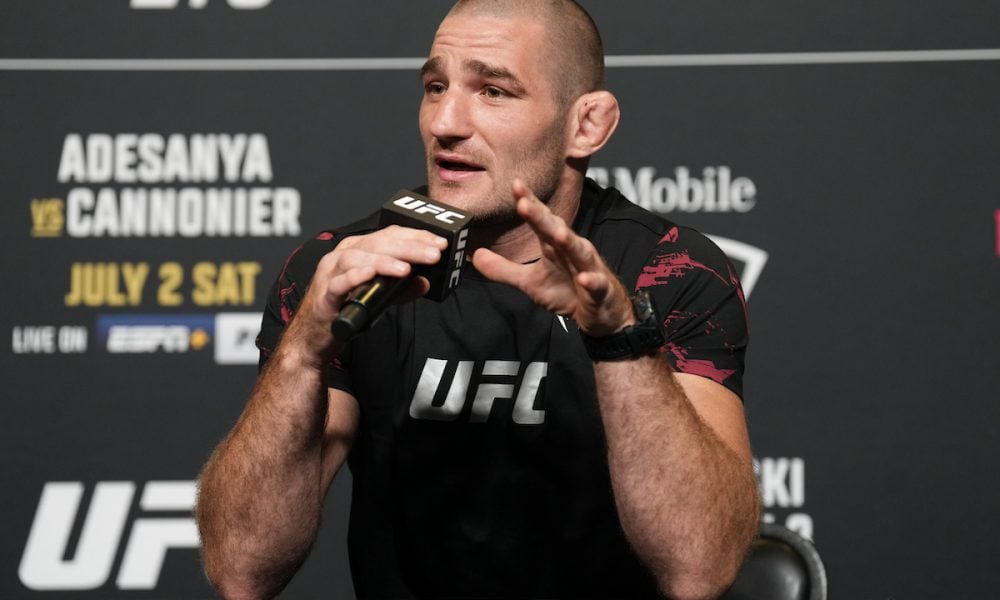
And yet, the fighter the organization likely fears most this week, Sean Strickland, did not buy the need for all that protection. The former middleweight champion basically played down the esquema de segurança while simultaneously lighting the fuse of his own rivalry with Khamzat Chimaev, turning risk management into a talking point for the cameras.
The reinforced security at UFC 328 media day
UFC 328’s media day in Newark came with a visible upgrade in crowd control. We’re not talking about a routine checkpoint; we’re talking about police at the scene and a tighter perimeter around the scrum. That’s operational discipline. That’s gestão de risco in plain sight.
When you spend on security, you’re pricing out scenarios: a fight that spills into hallways, a confrontation that draws in non-essential people, or a moment that forces the event to pause, reroute, or renegotiate its entire day. The UFC has big sponsors, big broadcast commitments, and a live gate that hates surprises. So yes, the extra layer was there for a reason, even if Strickland tried to mock the optics.
What Strickland said about the UFC’s security plan
In the scrum format, Strickland didn’t sound worried about the plan. He sounded annoyed by the idea that UFC 328 needed it. His core argument was simple: he doesn’t think a fight is likely to happen outside the prearranged combat, and he suggested the UFC is overreacting.
But then he pivoted into the part that matters for anyone thinking like a sportsbook accountant. He questioned the cost: how much money the UFC spends to stage these fights, then underlined the consequences if Chimaev’s camp decided to “make contact” before the bell.
Strickland’s logic was provocatively brutal: if Chimaev shows up with his people and tries to get physical, the promotional damage would be immediate, and the financial hit would be shared by everyone who depends on this event running clean. He also threw verbal barbs that went beyond typical trash talk, leaning hard on a “dignity” narrative and framing Chimaev as the one who lacks it.
Why the Strickland–Chimaev rivalry is a concern for the UFC
This rivalry isn’t new, but the pre-fight rivalry intensity has climbed week after week. UFC 328 is being treated like a pressure cooker because the UFC has already seen how fast emotions can turn a controlled environment into a security headache.
Strickland and Chimaev have been trading shots in ways that don’t stay in the realm of gloves and cage talk. The UFC, being the UFC, has to assume the worst-case path: a confrontation outside the octagon, a public incident, or a situation where fans, media, and staff get dragged into it. That’s exactly the kind of pre-fight rivalry the promotion can’t afford to monetize poorly.
The financial and institutional risk of a fight outside the cage
Here’s where the money angle becomes unavoidable. Strickland may have minimized the need for reinforced security, but his own words basically admitted the real threat model: prejuízo financeiro is the fear, even when it’s disguised as bravado.
When a confrontation happens off-script, the UFC isn’t just dealing with bruises. It’s dealing with:
- Potential medical fallout that disrupts schedules and insurance assumptions.
- Broadcast and sponsor exposure that turns a sporting product into a public incident.
- Staffing and venue complications that can ripple into future event planning.
- Reputational damage that hurts the brand with regulators, partners, and local authorities.
That’s risk management with a scoreboard. If the UFC can keep everything locked down before the cage closes, it protects the fight card, the broadcast window, and the institutional trust that lets the promotion operate at scale. Strickland’s “who spends the money?” line is funny for a headline, but the UFC’s behavior tells the truth: they’re treating security as a cost to prevent a far larger loss.
Recent history: tension that didn’t cool down
Weeks ahead of UFC 328, the tone between the two didn’t mellow. First, Chimaev suggested that a confrontation outside the octagon could turn tragic. Strickland didn’t just answer; he escalated the rhetoric, essentially signaling to the organization that this is not a rivalry that can be left to chance.
At one point, Strickland’s comments veered into territory tied to weapons and personal history, and when trash talk starts borrowing from real-world danger, the UFC has to assume the worst path is possible. That’s why the media day was guarded. That’s why the perimeter looked heavier than usual. This isn’t about being dramatic; it’s about preventing a scenario that could be encarada by lawyers, insurers, and venue executives long after the fighters stop talking.
What changes for the fight this Saturday
For UFC 328, the immediate change is psychological as much as logistical. Fighters feel the environment. Camps feel the scrutiny. And when the promotion signals it’s prepared, you also send a message: the UFC expects this rivalry to stay inside the rules, inside the ring, and inside the cage.
Strickland may want to sell the idea that the security is unnecessary, but his own narrative keeps circling the same point: if something spills out of control, someone pays. So the biggest storyline heading into the fight isn’t only who wins on the night. It’s whether both camps can keep their emotions from turning into a costly incident that the UFC can’t afford.
O Veredito Jogo Hoje
Strickland tried to play the numbers game, but the UFC’s reinforced esquema de segurança tells us who actually understands the spreadsheet. This is gestão de risco dressed up as public safety, and when a promoter spends like that, it’s because the penalty for a mistake is bigger than any fighter’s ego. For UFC 328, the cage is the battlefield, and the UFC is making sure the money stays there too—no freebies, no detours, no chaos.
Perguntas Frequentes
Why did the UFC reinforce security for UFC 328?
Because the promotion is managing risk around a high-intensity pre-fight rivalry. With a tense media day and police presence, the UFC aims to prevent confrontations outside the cage that could cause operational disruption, reputational damage, and a potential prejuízo financeiro.
What did Sean Strickland say about Khamzat Chimaev?
Strickland minimized the need for the extra security scheme, then used the opportunity to attack Chimaev verbally, framing him as lacking “dignity” and emphasizing that any off-cage escalation would lead to major financial consequences for everyone involved.
Can the Strickland–Chimaev rivalry affect the fight?
Yes. A rivalry at this level can spill into preparation, mindset, and outside distractions. Even if the fight stays inside the rules, the UFC’s focus on risk management shows the organization expects emotions to be a variable worth controlling.