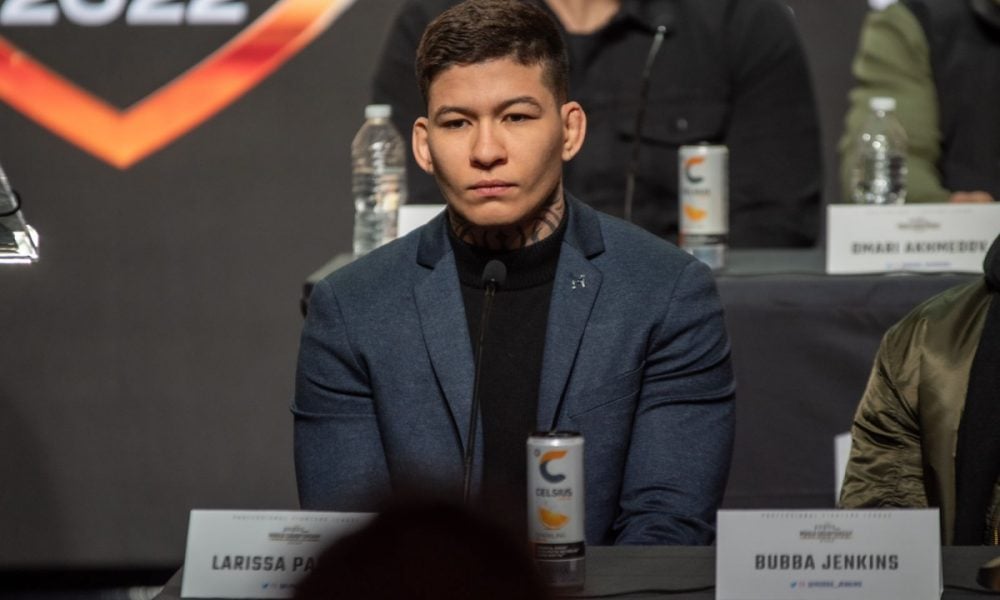
In October 2025, when Larissa Pacheco was released by the PFL and became a free agent, the MMA world assumed the UFC would move quickly. That assumption has been hanging in the air for more than six months, and the longer it stretches, the louder the question gets: what exactly is the UFC waiting for? According to Jogo Hoje’s wider coverage of MMA, this is the kind of timing problem that can distort a fighter’s entire season.
At 31 years old, Pacheco is not chasing a “someday” opportunity. She’s in her competitive prime, switching between the 70 kg and 61 kg lanes as needed, and still looking like a problem for anyone who underestimates her range. Instead, she says she’s stuck in limbo, and that uncertainty has spilled straight into her mental health.
The outburst and the lack of a formal UFC proposal
Pacheco has been public about wanting a return to the UFC, where she fought in 2014 to 2015. But after leaving the PFL, she expected the next chapter to be written faster. She says the UFC simply hasn’t engaged with a concrete offer, despite her efforts through her team and attempts to create openings.
Her message is blunt, but the tactical subtext is even louder. If you’re a striker who can make weight across the strawweight division and the bantamweight division, and you’re coming off a two-division competitive resume, you’re not just “available.” You’re a matchmaker’s dream. Yet she claims she’s still waiting on the contract.
In her words, she believes there’s “no interest,” then flips the pressure back onto the UFC: “What do I still need to prove?”
Why she expected this return now
Let’s do the market math. In modern UFC matchmaking, the promotion doesn’t just buy wins, it buys styles. Pacheco’s game is built for control through striking pressure, and she’s shown the ability to carry power and timing across weight changes. That matters when the division is crowded with athletes who look good on paper but struggle to handle consistent offense.
She’s also not talking in generalities about opponents. She points to two fighters as the biggest threats if she’s not fully prepared: Amanda and Kayla Harrison. Those names aren’t random; they’re references to how the UFC’s women’s landscape can punish mistakes. If Pacheco is saying those two are the ceiling for her, that’s a clear signal she’s ready to run the risk—and she understands the level.
And for a promotion, she’s a gatekeeper who can become a contender. That’s the sweet spot. The UFC doesn’t need every signing to be a guaranteed title shot; it needs credibility, matchups that generate interest, and fights that stay competitive deep into rounds. Pacheco’s profile checks those boxes.
The emotional impact and the routine spiral
Here’s where this stops being just a contract story and becomes a performance story. Pacheco says the uncertainty didn’t just sit in her head—it changed her daily grind. When a fighter builds expectations for a specific timeline and that timeline keeps slipping, the training rhythm gets weird. The body keeps working, but the mind starts leaking energy.
She described how the search for an opportunity turned into a looping question from everyone around her: “And the UFC?” When the answer remains “not yet,” the emotional load piles up. She says she wasn’t just frustrated—she started to struggle, with her weight rising and her mood collapsing into a depressive state.
From a sports-science angle, that’s predictable. Weight management isn’t only calories and sweat; it’s routine discipline, sleep quality, stress regulation, and confidence. When the MMA market stalls and the offer never comes, it’s not just career uncertainty—it becomes physiological uncertainty too.
Karate Combat 61: staying active while negotiations hover
So while the UFC talks remain undefined, Pacheco keeps her competitive engine running. On Saturday (2), she debuted at Karate Combat 61. And she didn’t come out timid. She delivered a knockout in the first round over Julia Stasiuk, showing that her striking still carries bite even when the long-term plan is stalled.
But here’s the part people might miss if they only read headlines: she framed the Karate Combat run as a moment to stay sharp, not a surrender of UFC ambition. That’s an important distinction for anyone tracking her long-game. When a fighter uses another platform to maintain timing, it reduces ring rust and keeps her negotiating leverage alive.
What she delivered in the cage, and why it raises the stakes
That first-round finish matters because it’s not just a highlight reel moment—it’s evidence. Evidence that she can execute under pressure, that her timing hasn’t dulled, and that her power translates in live settings. In UFC terms, it’s the kind of win that makes matchmakers pay attention, because it suggests she’s still improving, not just maintaining.
Her ability to operate across the 70 kg and 61 kg windows also adds tactical flexibility. At the elite level, being able to hit a weight and still move like a striker is a real advantage. It’s why the UFC’s matchmaking interest should be obvious: she’s a ready-made option for the rankings conversation, and she can plausibly slot into multiple pathways depending on where the division needs a stylistic injection.
But the longer she waits, the more pressure builds for everyone involved. If she eventually lands in the UFC, she won’t arrive as a “maybe.” She’ll arrive as a statement—because she’s already been forced to live through the hardest part of the process: uncertainty.
What can happen next
From here, there are two realistic tracks. First, the UFC can move quickly once the public chatter reaches the tipping point. Promotions sometimes react when the narrative becomes too loud to ignore, especially if the athlete keeps producing quality results elsewhere.
Second, Pacheco could consolidate her momentum by continuing to build a performance streak in other organizations, making the eventual UFC offer more complicated but also more expensive in terms of negotiation. Either way, the clock is ticking. Not just on her contract, but on her competitive window.
And tactical question number one for the UFC is simple: are they signing her because of what she’s done, or because of what they think she can do with the right matchup? Because if it’s the latter, they need to stop waiting and start planning.
O Veredito Jogo Hoje
We’re calling it: the UFC is playing a high-stakes game of delay, and in a sport built on momentum, delay is a tax. Pacheco isn’t a “ticket” signing—she’s a style fit with real market pull, proven knockout threat, and the kind of division mobility that helps matchmakers solve problems. If the UFC wants to keep winning, they should stop treating a PFL double champion like she’s optional. This isn’t just bad optics; it’s a competitive misread.
Perguntas Frequentes
Why hasn’t the UFC contacted Larissa Pacheco yet?
Pacheco says she sees no formal interest or offer so far, despite being a free agent since her PFL release in October 2025 and her team attempting contact. The UFC’s exact internal reasons weren’t disclosed.
What did Larissa Pacheco say about her mental health?
She explained that the long wait and constant pressure to know whether the UFC was coming contributed to frustration and a depressive condition, describing how the uncertainty affected her routine and even her ability to manage her weight.
What was the result of Larissa Pacheco’s debut in Karate Combat?
On Saturday (2), she debuted at Karate Combat 61 and won by knockout in the first round against Julia Stasiuk.