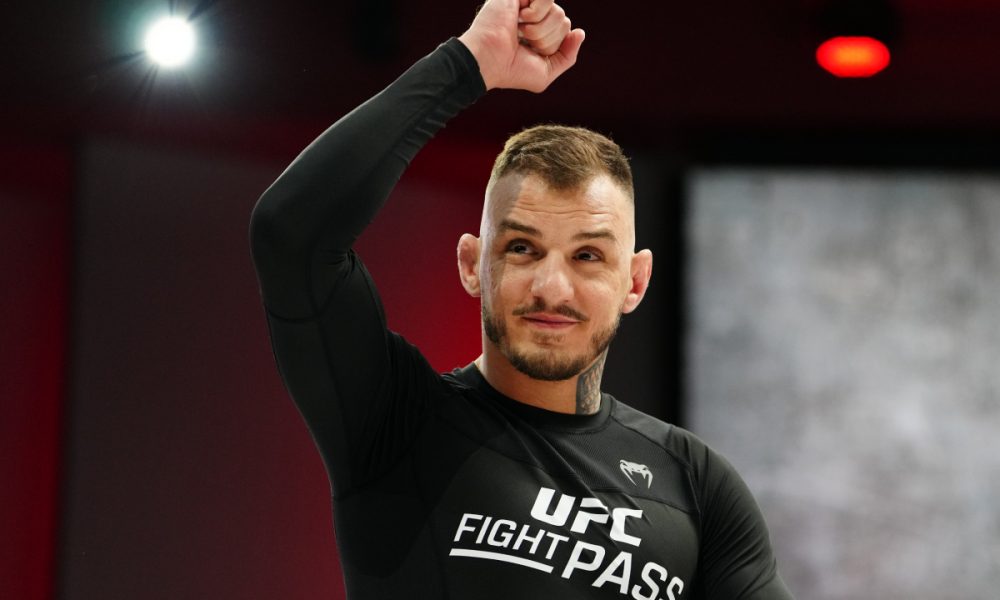
Jogo Hoje has been tracking the MMA fallout from UFC Vegas 115, and one confession from Renato Moicano instantly changed the temperature of his victory. Because when a fighter says the loss would have ended the career, you don’t just hear a headline—you hear a turning point. And Moicano’s turning point came in the fight main event, where he finished Chris Duncan and walked out with more than a win; he walked out with his identity back.
What Moicano revealed after his win at UFC Vegas 115
Renato Carneiro Moicano arrived at UFC Vegas 115 with the noose already snug around his neck. Two straight defeats had put him on the wrong side of momentum, and the lightweight (70 kg) division doesn’t forgive hesitation—especially inside the market of the UFC, where every slip becomes a storyline. Against Chris Duncan, he didn’t merely compete. He snapped the narrative with a submission that felt like a statement to everyone watching.
A week later, in an interview with MMA Fighting, Moicano admitted something that most fighters keep locked up behind their corner talk. He said he had considered retiring from MMA if he lost. The reason wasn’t only sport. It was the weight of a dual career: fighter by trade, influencer by craft, and creator of content by routine. When you build an audience, the audience builds expectations—and then the expectations start hunting you in the gym.
Moicano laid it out plainly: if he had dropped that fight, he likely would have gone home battered like Duncan was, and then asked the most brutal question in combat sports—was it still worth it? Not in theory. Not as a media line. As a real, post-fight thought process. He even described the alternative path he feared: becoming a streamer first, and stepping away from MMA for good.
The pressure of two straight losses—and the burden of a dual career
Let’s call it what it is: that was pressão competitiva with a face. After two defeats in a row, the spotlight turns clinical. People start rewriting your work ethic based on your thumbnails. And Moicano said the talk he was hearing was basically the same refrain from the outside—“he’s on YouTube and not training.”
But he pushed back with the only evidence that matters: he was training. Hard. Focused. Ready. The tension wasn’t just inside the cage; it was in the way the public tried to reduce him to a brand. That’s the trap of a dual career in the modern UFC ecosystem. You’re not only judged by results, but by relevance. Win, and you’re a trend. Lose, and you’re a cautionary tale.
And if you want the philosophy in the confession, it’s this: Moicano wasn’t just worried about a third loss. He was worried about losing purpose. Because in his mind, a loss wouldn’t simply be another setback in the lightweight division—it would erase the reason he kept showing up.
What would happen if he had lost to Chris Duncan
Moicano didn’t dress it up. He said that if he had lost, his MMA career had likely reached its end. He described the mental chain: go back home hurt, look at the situation, and wonder whether the grind still made sense. That’s not drama; that’s the reality of a fighter who understands the clock doesn’t pause for content plans.
But here’s where the story gets even more revealing. He also said he wouldn’t have “retired in the moment.” He would have still faced the immediate aftermath—then made a decision after the adrenaline faded. That’s the difference between a casual talk and a real crossroads. Loss would have pushed him toward a different identity, one built around internet output rather than cage output.
So ask yourself: how many fighters can admit they were one mistake away from stepping out of the game entirely? Not many. Moicano did. And that honesty makes the win hit harder.
The victory that reopens doors in the lightweight ranking
Winning by finalização does more than add a highlight reel. It reorders your standing. Moicano’s performance bounced him back into the conversation, putting him up the ladder in the ranking dos leves—he’s now around the ninth place among lightweights. That’s a meaningful jump in a division where matchups are currency and momentum is everything.
And once the noise settles, the fighter starts thinking like a strategist again. Moicano set four primary targets for the next round of the market of the UFC:
- Potential rematches against Brian Ortega
- Potential clashes with Benoit St-Denis
- Big-name bouts with Paddy Pimblett
- And a fight against Dan Hooker
Now the real question isn’t whether Moicano wants these matchups. It’s whether the UFC will bite. Because the organization always weighs sport, storyline, and timing—three filters that can either accelerate a fighter’s rise or stall it for another season.
Moicano’s next targets in the UFC
In a way, Moicano’s confession explains his matchmaking stance. He’s not chasing fights only for belts; he’s chasing fights that confirm his place in the lightweight ranking. Ortega and St-Denis offer credibility through rankings and fighting styles. Pimblett and Hooker offer spectacle, too—names that bring eyes and keep the fight main event energy alive.
And that’s the philosophical knot: performance creates purpose, but purpose also creates performance. When Moicano says he feared his career could end, he’s admitting that his identity isn’t automatic. He has to earn it every time—inside the cage, and in the way he presents himself outside it.
If the UFC lines up one of those targets, it won’t just be a fight. It will be a vote on whether Moicano’s career has moved past the doubts that followed those two defeats.
Money Moicano MMA: the project that expands the character
Renato Moicano is also adding a third job title to his life, and it’s not a side quest. He’s building as a promoter, creating his own event called Money Moicano MMA, with a debut planned for the end of May in São Paulo. That move tells you he’s planning beyond the next contract cycle.
As a promoter, he wants to develop new talents and create a platform that extends the fight ecosystem. But he also hinted at something bigger later: a social project designed to help people in situations of vulnerability. That’s the kind of long-game thinking you rarely hear from athletes stuck in short-term survival mode.
So yes, UFC rankings matter. But so does legacy. Moicano is trying to build a bridge between the fighter he is and the future version he wants to become.
O Veredito Jogo Hoje
Here’s our take at Jogo Hoje: Moicano didn’t just win a lightweight bout at UFC Vegas 115—he won back the right to decide his own story. The confession about how a third loss could have derailed his MMA career shows the real battle behind the cage: identity versus expectation. In this era of the UFC, where the market loves momentum and hates uncertainty, Moicano turned fear into fuel. And that’s why this submission over Chris Duncan won’t be remembered only for technique—it’ll be remembered for the comeback of a purpose.
Perguntas Frequentes
What did Renato Moicano say about retirement after UFC Vegas 115?
He said that if he had lost to Chris Duncan for a third time in a row, his MMA path would likely have effectively ended, pushing him toward full-time internet life instead of continuing in the cage.
Who does Moicano want to face next in the UFC?
Moicano named four main possibilities: Brian Ortega, Benoit St-Denis, Paddy Pimblett, and Dan Hooker.
What is Money Moicano MMA?
It’s Moicano’s own MMA event promotion, with a debut scheduled for the end of May in São Paulo, aiming to develop new fighters and later expand into a social project.