After UFC 327, the headlines were all about the belt changing hands. But our read of the main event isn’t only about the highlight reel. According to sports physician Brian Sutterer, the real swing factor sat in Ulberg’s knee, and it may have decided whether this fight could even survive the next few minutes. As reported by the doctor, the situation was so precarious that, if this fight went beyond the first round, Ulberg’s ability to continue would have been severely compromised. The full coverage of UFC 327 is available on Jogo Hoje.
The medical analysis that reframed the fight
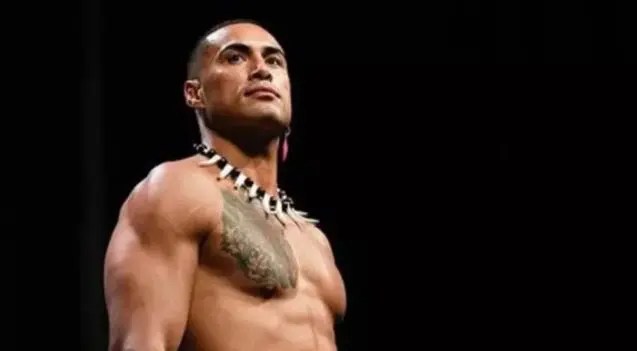
Ulberg pushed the pace and found his moment, flattening Jiri Prochazka with a first-round KO at 3:45 of Round 1 on Saturday, 11. Yet the tactical story changes when you factor in the timeline of the knee problem. Sutterer’s point is blunt: the longer the contest stayed upright, the more the knee became a liability, not just a discomfort.
In his assessment, the issue likely triggered hemarthrosis, meaning blood filling the joint. That kind of escalation doesn’t just hurt. It steals rhythm, reduces explosive drive, and turns every step into a negotiation. From a combat perspective, that’s the difference between a controlled finish and a fight that starts draining gas from the inside.
What Brian Sutterer said about Ulberg’s knee
Sutterer explained that once the fight moved past the first round threshold, Ulberg’s knee would likely start to fill rapidly. His quote is essentially a stopwatch warning: the window to finish was shrinking second by second. The doctor also suggested the most likely structural culprit was a rupture ligamentar involving the ligamento cruzado anterior, the anterior cruciate ligament (ACL).
Why does that matter tactically? Because the ACL is a stabilizer for rotational control and the prevention of excessive tibial displacement. In plain MMA terms, if the knee loses that stability, the fighter can’t trust the base. You feel it in the footwork, in the ability to plant and pivot, and in the willingness to throw power from the outside leg. And once you start hesitating, your timing goes with it.
Hemarthrosis, ACL and why the risk grew with every minute
Let’s connect the physiology to what happens in the octagon. With a suspected ACL tear plus hemartrose (blood in the joint), the knee can develop inchaço articular fast. That swelling can reduce range of motion, alter mechanics, and—most importantly for a striker—mess with the stability needed to absorb contact and generate force.
When an ACL rupture occurs, athletes often describe a sharp moment of injury, sometimes accompanied by an audible “pop,” followed by intense pain and quick swelling. The knee then starts behaving like it’s second-guessing every movement—an instability do joelho scenario in which the fighter feels as though the joint might “give.”
From a strategic standpoint, that’s a nightmare for a championship round extension. The fighter’s options narrow: no full-power drive, no clean pivoting, fewer defensive exchanges, and a faster slide toward fatigue because compensation burns energy. And if the joint is filling, every scramble becomes more dangerous than it looks.
As for recovery, Sutterer’s framework aligns with common orthopedic timelines: an ACL reconstruction typically demands recuperação ortopédica around 9 to 12 months for return to high-level performance, depending on the surgical approach and rehabilitation protocol. That’s not a “next camp” fix—it’s a long rebuild.
How the Round 1 KO prevented a worse scenario
So what did Ulberg’s finish actually do? It acted like a pressure-release valve. The tactical reality is simple: by landing the KO in the first round at 3:45, Ulberg avoided the exact progression the doctor warned about. No extended grappling exchanges. No prolonged exchanges where swelling would keep climbing. No second-round attempt to force the pace while the knee’s structural integrity and joint environment were deteriorating.
This is where merit meets survival. Ulberg still earned the stoppage, no question. But the fight’s duration mattered as much as the punch that ended it. In high-level MMA, the body is part of the game plan—sometimes the loudest part. If Prochazka had survived longer, the “ifs” wouldn’t be fan fiction. They would have been medical math.
What it means for the new light heavyweight champion
For a new champion in the meio-pesado division (up to 92.9 kg), the immediate concern isn’t only future opponents. It’s the feasibility of training intensity while managing a potential ACL rupture, recuperação ortopédica demands, and the specter of recurring inchaço articular during rehab phases. That affects everything: camp structure, sparring frequency, and even how quickly the fighter can regain confidence in rotation and stance.
And here’s the part we won’t sugarcoat: the division might get a champion whose physical ceiling in the short term could be constrained. Even if the belt stays, the timeline of dominance can bend. That’s the trade-off of winning fast—sometimes you collect the title, then you pay the bill later.
O Veredito Jogo Hoje
Ulberg didn’t just win a belt—he cashed in on a shrinking clock. The medical read from Brian Sutterer makes this victory feel less like a pure “one big moment” and more like a perfect storm of timing, explosiveness, and ruthless execution before stability do joelho became a problem too big to mask. If that fight had crawled into Round 2, the narrative likely flips from champion behavior to injury disaster. That’s what separates champions from highlight reels: they finish before the body tells the truth.
Perguntas Frequentes
What is hemarthrosis and why does it matter in MMA?
Hemarthrosis is bleeding into a joint. In MMA, it can cause rapid inchaço articular, reducing mobility and power while increasing pain and instability, which directly harms both striking output and defensive movement.
Could Carlos Ulberg have ruptured his anterior cruciate ligament?
Brian Sutterer suggested a likely ligamento cruzado anterior (ACL) rupture based on how the knee problem was expected to progress. A definitive diagnosis requires medical imaging and evaluation, but the pattern described fits that concern.
How long does recovery from an ACL injury take?
For athletes who undergo ACL reconstruction, recuperação ortopédica commonly takes about 9 to 12 months, depending on surgical details, rehabilitation response, and return-to-sport benchmarks.