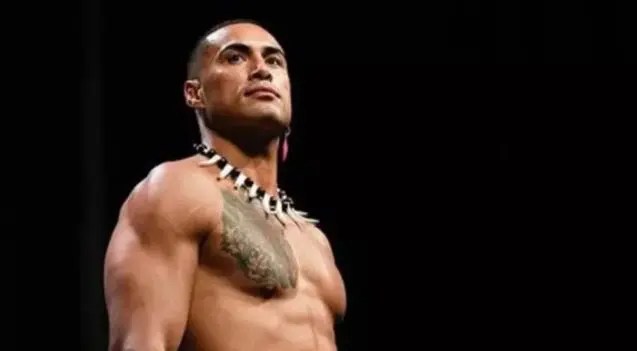
According to editorial coverage of UFC 327 on Jogo Hoje, Carlos Ulberg’s title win over Jiri Prochazka didn’t just hinge on power. It also hinged on time, and the clock was ticking inside his own knee.
Saturday’s main event at UFC 327 delivered the kind of finish that makes highlight reels feel unfair. Ulberg blasted Prochazka with a thunderous knockout (RD1, 3:45), lifting the light heavyweight strap (up to 92.9 kg). But the tactical story takes a turn the moment you listen to the medical read: the knee issue could have made a second-round appearance a long shot.
The medical read on Ulberg’s knee injury
Brian Sutterer, a sports physician and content creator, laid out the most uncomfortable scenario for anyone watching from the second row: if the bout stretched past the first frame, Ulberg’s knee could have started to fail fast. His key point was hemarthrosis, a condition where blood accumulates inside the joint.
From a tactical standpoint, that matters because hemarthrosis doesn’t just “hurt.” It changes the mechanics in real time. As the joint swells, the fighter loses precision in base, can’t trust the plant foot the same way, and every pivot becomes a gamble. That’s where stability of the joelho becomes more than a phrase and turns into a survival issue for a striker.
Sutterer also suggested the likely culprit: a rupture of the anterior cruciate ligament, commonly called the ligamento cruzado anterior (ACL). In plain fight terms, the ACL is the structural “hinge” that helps prevent excessive forward shift of the tibia relative to the femur and assists with rotational control. Lose that, and your game plan can collapse even if your chin holds up.
Why the knee could fail in the second round
Here’s the brutal math: a fighter can compensate for pain, but it’s hard to compensate for a joint that’s filling with blood while the fight clock keeps running. Sutterer’s warning was direct. If Ulberg didn’t get the job done before the first round ended, the knee could quickly become too unreliable to continue.
In the cage, that shows up like this:
- Increased inchaço articular, which short-circuits explosiveness.
- Reduced confidence on the lead leg, especially during level changes and defensive steps.
- More “micro-adaptations” to keep the knee from buckling, which drains energy and sharpness.
And if you’re thinking, “But what about grit?”—sure, grit exists. Still, high-level MMA isn’t a street fight. It’s timing, angles, and controlled rotation. When the stability of the knee goes, the entire body’s choreography goes with it.
That’s why this finish feels even bigger now. Ulberg didn’t just win; he won early enough to outrun the physical problem.
Hemarthrosis and ACL suspicion: what it really means
Let’s separate what we know from what we infer. The hemarthrosis part is the mechanism Sutterer described: blood filling the joint after the injury, making continuation progressively more improbable. The ACL part is his hypothesis—“likely,” not confirmed.
If it is indeed an anterior cruciate ligament rupture, then the typical moment of injury often comes with a sudden “pop,” sharp pain, rapid swelling, and that unsettling feeling of instability, like the knee is about to give way. In MMA, that’s the nightmare scenario because the fight demands constant direction changes with the foot planted.
ACL injuries commonly happen without direct contact, triggered by abrupt pivots, hard decelerations, awkward landings, or hyperextension. And for a striker like Ulberg, who needs clean footwork to generate torque, the margin for error is already thin—thin enough that an orthopedic injury can flip the whole tactical script.
Treatment can vary. Some cases lean conservative with focused physiotherapy and strength-based rehabilitation. But for athletes, the surgical route is often the most reliable path: ligament reconstruction using a graft. When surgery is on the table, recuperação cirúrgica typically lands in the 9 to 12 month range for a full return to elite competition.
How the knockout unfolded—and why it matters tactically
Ulberg’s win over Prochazka at UFC 327 came at 3:45 of round one, a first-round blitz that forced the samurai into survival mode. That’s the part everyone remembers: the finish, the belt, the noise.
But our job is to connect the dots like coaches do. If the knee was already compromised early in the exchange, then every second mattered. Ulberg’s best tactical option wasn’t to “feel it out” for a chess match. It was to end the negotiation before the joint swelling turned into a straight-up handicap.
Once you accept that, the nocaute do primeiro round isn’t just a highlight. It’s the practical execution of a plan under medical pressure: control the distance, force urgency, and cash out before the body betrays you.
What the knee issue could change for the future champion
Winning a belt with a suspected ACL damage is the kind of storyline that looks heroic on the broadcast. But the division doesn’t care about narratives—it cares about availability, training continuity, and how quickly a champion can rebuild confidence in movement.
If Ulberg’s hemarthrose and ACL hypothesis are accurate, then the next chapter isn’t just about who he fights. It’s about whether he can train normally, whether he can trust lateral steps and rotational power, and how long it takes before his knee can handle the load of camp.
Even if he’s cleared to move forward, the recovery timeline implied by surgical rehabilitation suggests a long runway. A champion who returns too early risks turning the belt into a revolving door. And in the light heavyweight picture, where contenders stack up and styles collide, missing training time can be the difference between dictating the pace and simply surviving it.
So yes, Ulberg is champion. But the real tactical question is: can the new champion keep his legs under him when the division starts hunting him with pressure and kicks that test the base?
O Veredito Jogo Hoje
This isn’t the kind of injury update you file away as “unlucky.” It’s the kind that can rewrite a title reign before it fully starts. If hemarthrosis and a probable ACL rupture are anywhere near the mark, Ulberg’s second-round absence wouldn’t have been bad luck—it would have been the inevitable result of a knee losing stability in the middle of a high-intensity fight. He didn’t just win UFC 327; he won it in the only window where his body still allowed him to operate at champion level. That’s why, tactically, the belt story is real—but the recovery story is the one that decides how long he stays on top.
Perguntas Frequentes
What knee injury might Carlos Ulberg have suffered at UFC 327?
A sports physician suggested the injury could involve hemarthrosis with a probable rupture of the anterior cruciate ligament (ACL), which is critical for knee stability and rotational control.
Why can hemarthrosis stop a fighter from continuing?
Because blood accumulates inside the joint and rapidly increases inchaço articular, reducing mobility, explosiveness, and confidence on pivots and planted steps—making continuation progressively less feasible as the fight moves into later rounds.
How long does recovery take after an ACL rupture?
For athletes who undergo surgical reconstruction, recovery and return to elite performance commonly take about 9 to 12 months, depending on rehabilitation progress and the individual’s response to surgery.