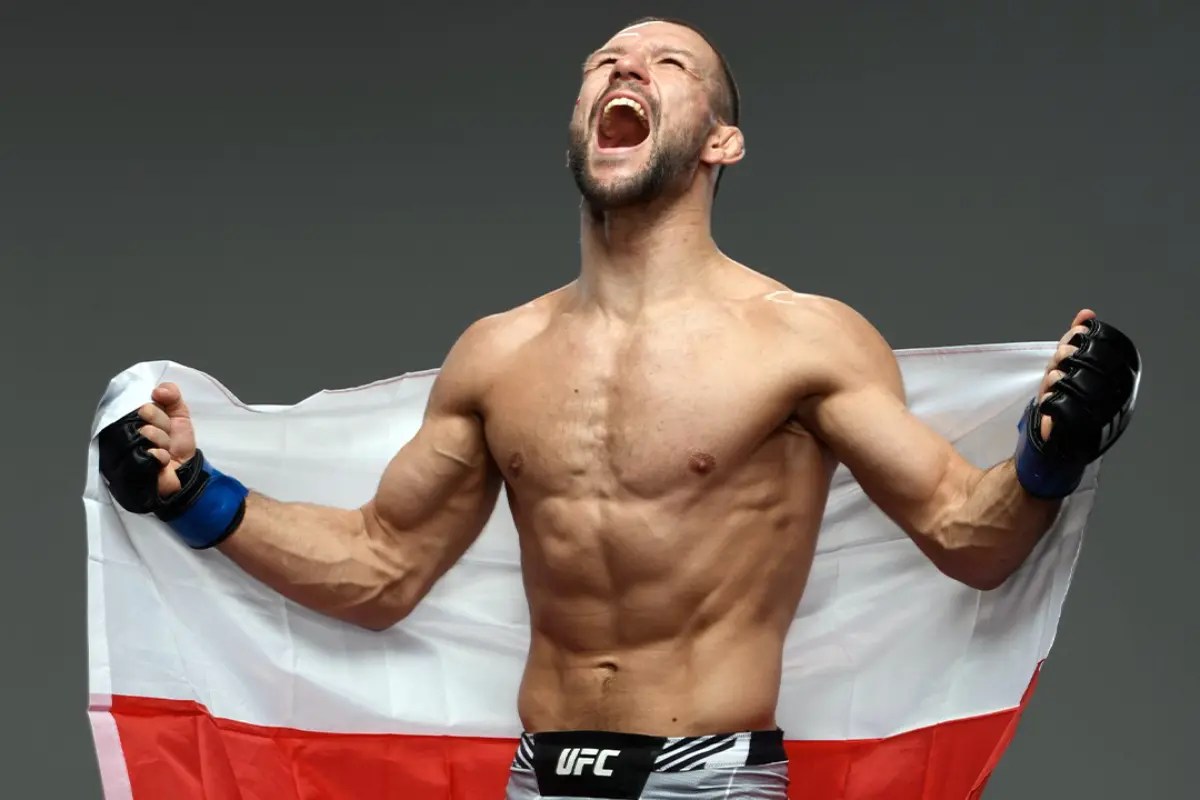
Mateusz Gamrot’s night at UFC 327 wasn’t just a win, it was a tactical statement. And if you want the broader context of the event, JogoHoje was tracking the card from the jump.
Fresh off the setback to Charles do Bronx, the Polish lightweight came out with the kind of calm you only see when the gameplan is clear. Against Esteban Ribovics, he dominated the grappling exchanges and cashed in with a tight katagatame at 4:19 of the second round—an outcome that also mattered for the rankings of the lightweights.
The win that puts Gamrot back in the conversation
Gamrot defended 8th in the rankings of the lightweights, and he didn’t just protect it—he earned the right to be discussed like a problem again. The interesting part? He didn’t rush the finish. He built pressure like a veteran wrestler: enter, secure position, deny the scramble, then turn the fight into a jiu-jitsu seminar with real consequences.
Ribovics tried to be the aggressor and own the center, but Gamrot’s movement was precise—lateral, patient, and stingy with openings. That’s the thing about elite grappling: it looks simple when it’s executed, but it’s all timing and reads.
How the Pole controlled Ribovics on the mat
The fight’s first phase in the pocket of the octagon showed the blueprint. Gamrot worked a jab while staying mobile, then hunted the takedown before Ribovics could fully establish rhythm. Once the bout hit the canvas, the direction was instant: wrestling entries, immediate control, and a grind that didn’t give Ribovics breathing room.
He got to the back and held it against the fence for several minutes, forcing Ribovics to defend without ever getting comfortable. From there, the transitions mattered more than the position itself. Gamrot shifted into control lateral, threatened the submission, and kept Ribovics reacting instead of choosing.
Even when Ribovics managed to recover half-guard, it didn’t change the core issue. In the first round, Gamrot was clearly dictating the pace and the angles—exactly how you want a dominant grappler to look.
The katagatame that decided the second round
Second round started messy for Gamrot on paper. Ribovics ate the initial pressure and then responded with heavy kicks to the legs and head. But this is where smart veterans separate from fighters who just “look tough.” Gamrot didn’t get emotional. He stayed patient, defended the takedowns, and waited for the moment to reassert wrestling control.
Seconds later, he dragged the fight back to the fence repeatedly. That’s where the submission became inevitable. Gamrot showed real jiu-jitsu craft through multiple transitions on the ground, then locked in a katagatame so tight it forced the tap at 4:19. If you’re a fan of technical finishes, you know what this was: a sequence built on positional dominance, not a lucky scramble.
And the key details were there for everyone watching: transitions to the back, the control lateral that set up threats, and the relentless grind that erased Ribovics’ chances to turn the fight into a brawl. That’s control. That’s structure. That’s why the finish landed.
What the result means for the lightweight rankings
Gamrot defending 8th with authority has ripple effects. In a stacked division, one clean, decisive grappling win isn’t just a notch in the win column—it’s a message to everyone above you that the seat isn’t getting warmer, it’s getting occupied.
He proved that his recovery from the Charles do Bronx loss wasn’t a “bounce back” in name only. It was a tactical reset: sharper entries, better control phases, and a late submission that punished Ribovics for surviving too long.
So ask yourself: how many lightweights can you trust to pull off repeated fence pressure, keep the scramble under control, and still finish with a katagatame when the striking threat shows up? Not many. This one checks every box.
Other highlights from UFC 327: Suarez and Padilla x Mederos
While Gamrot was turning grappling into a blueprint, the rest of the card didn’t stay quiet.
- Tatiana Suarez kept rolling and reached her 9th UFC win. She finished Loopy Godinez via mata-leão at 2:29 of the second round, after using wrestling to secure takedowns and work heavy shots on top in ground and pound.
- Chris Padilla x Marquel Mederos ended in a majoriy draw after point deductions and late scoring swings. Padilla stayed aggressive, mixing forward pressure with clinch control against the fence, while Mederos survived to the final horn and even had a point taken after inserting a finger into Padilla’s eyes on two occasions. The final score was 29-27 for one judge, and 28-28 on the other two scorecards.
And yes, Mederos extended his unbeaten run to ten fights, but the bigger story is how much the moment shifted when the referee got involved. These aren’t just margins; they’re the difference between “close” and “stolen,” and the numbers reflected that split.
O Veredito Jogo Hoje
Gamrot’s performance felt like a tactical correction, not a lucky turnaround: he used wrestling to control where the fight could breathe, built control lateral from dominant phases, and then cashed in the katagatame once Ribovics had no real escape path—exactly the kind of grappling-first game that moves the rankings of the lightweights and makes the division rethink its pecking order. Jogo Hoje’s read is simple: this wasn’t just a win, it was a blueprint for how to beat people who think they can survive by defending the scramble—and Gamrot just proved he can do it at UFC speed.
Perguntas Frequentes
How did Mateusz Gamrot beat Esteban Ribovics at UFC 327?
Gamrot dominated the ground exchanges with repeated wrestling entries and fence control, then locked in a tight katagatame to force a submission at 4:19 of the second round.
What was the importance of Gamrot’s finish for the lightweight rankings?
He defended his 8th position in the rankings of the lightweights with a decisive grappling win, reinforcing his status as a legitimate contender and shifting how the division views the matchups around that top tier.
What happened in the fight between Chris Padilla and Marquel Mederos?
It ended in a majority draw, with scoring affected by a point deduction for Mederos after he inserted a finger into Padilla’s eyes twice. The judges scored it 29-27 for one judge and 28-28 on the other two.