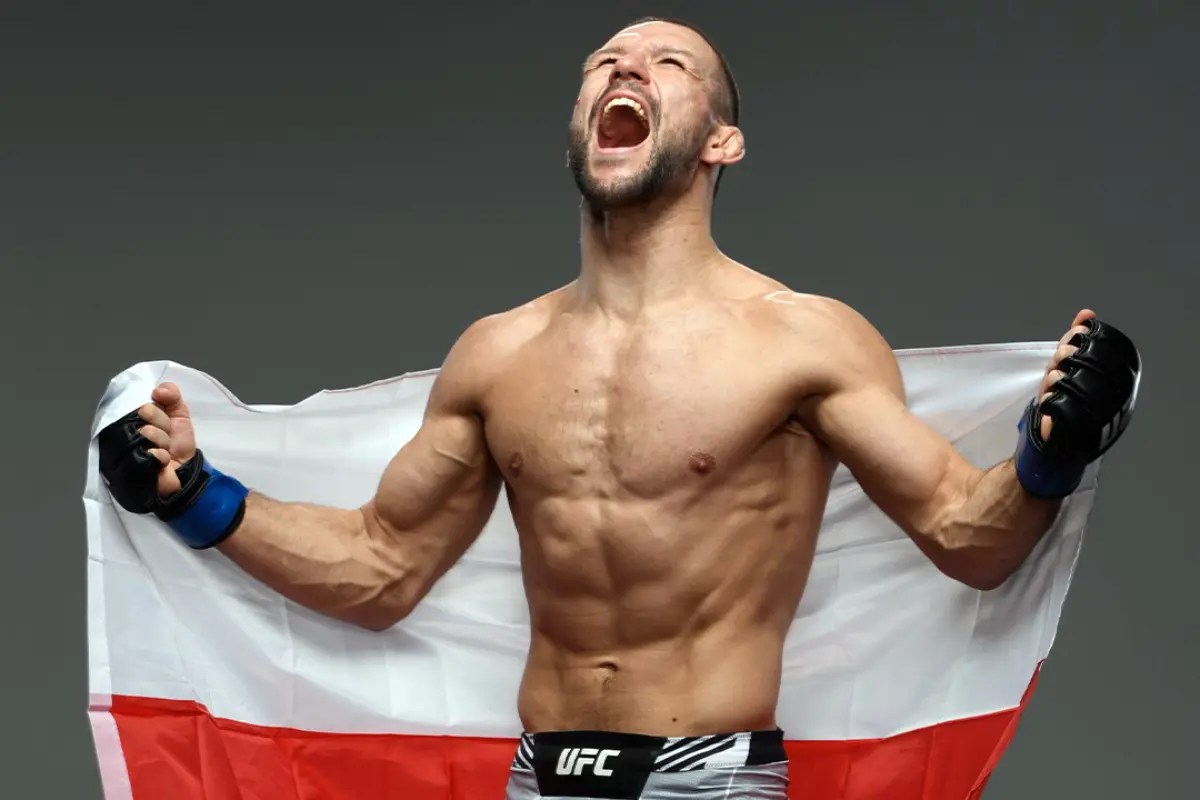
According to our reporting on Jogo Hoje, Mateusz Gamrot’s night at UFC 327 had the kind of storyline that doesn’t wait for anyone: reset, repair, and then take control where it matters most. After the setback to Charles do Bronx, the Polish lightweight wasted no time reminding Esteban Ribovics what wrestling pressure and smart grappling transitions can do in the UFC.
Gamrot dominated the grappling exchanges and closed the show in the second round with a tight katagatame, forcing a tap at 4:19. It wasn’t just a win. It was a statement on how he plans to stay relevant in the UFC’s lightweight chess match.
The win that puts Gamrot back on the lightweight radar
Gamrot walked in as a fighter with momentum to recover, and he immediately showed it by controlling the pace without rushing the issue. In a division where every inch of control in the grade can swing a narrative, he defended the takedown attempts early, then did what elite grapplers do best: he turned the fight into a wrestling problem for Ribovics, not a brawl for spectators.
By finishing on the ground, Gamrot also defended his place at eighth in the ranking dos leves. That’s the big consequence. When you’re inside the top ten, you don’t just want wins, you want wins that look like you belong there for the long haul.
How the Pole dismantled Ribovics in grappling
Let’s break it down tatically. Gamrot didn’t sprint forward; he moved laterally and used a sharp jab to keep Ribovics from setting his preferred angles. Ribovics tried to take the center and be the aggressor, but the moment the fight hit the canvas, Gamrot’s wrestling paid rent.
In the first round, Gamrot secured the takedown on his first serious entry. From there, he controlled Ribovics’ back against the fence for several minutes before switching to lateral control and threatening with an americana. Ribovics did manage to recover some positioning with a half-guard re-set, but the damage had already been done: the Argentine looked like he was surviving a grappling seminar rather than fighting a fight.
The second round started with a rude awakening. Ribovics landed heavy kicks to the calf and the head early, and for a moment you could see the plan: hurt the legs, disrupt the rhythm, and keep Gamrot from getting comfortable. But Gamrot stayed composed. No tantrums, no panic. He defended the entries, then repeatedly brought the fight to the fence as the round progressed.
And when the time came, the finish was pure technique: multiple transições no solo, tight positioning, then the katagatame locked in so snug that Ribovics had no route out. The tap at 4:19 didn’t just end the bout; it capped a full-round lesson in how to win with wrestling, control, and patience.
What the katagatame says about Gamrot’s ground evolution
The katagatame isn’t a random submission you pull out when things get messy. It’s the kind of finish that tells you the fighter has timing, body control, and the ability to chain transições no solo into real danger. Gamrot didn’t only take Ribovics down; he kept him pinned to the fence, constantly shifting hips and angles until the submission became inevitable.
That’s the difference between “having grappling” and having ground and pound level control even when you’re not landing strikes. Gamrot’s grappling looked structured, and his wrestling looked like it had purpose. He used pressure to force movement, then used movement to set up the lock. That is growth you can measure, not hype you can ignore.
Impact on the lightweight race for space inside the UFC
Gamrot’s win has ripple effects. Defending the eighth spot in the ranking dos leves matters because it keeps him within striking distance of bigger eliminations and title-adjacent opportunities. When a fighter at this level wins by submission, especially with a grappling-heavy finish, the UFC matchmakers don’t just see a result. They see a reliable skill set under pressure.
And the division is moving fast. Tatiana Suarez’s night added another layer to that picture. Suarez improved to nine wins in the UFC and now has only one professional loss. She also made history as the first woman to finish Loopy Godinez inside the UFC, turning the fight with wrestling and finishing mechanics.
Meanwhile, the lightweight prelim between Chris Padilla and Marquel Mederos delivered the kind of outcome that forces fans to re-check scorecards. Padilla stayed unbeaten in the promotion with five straight UFC fights without defeat, while Mederos extended his own streak to ten. But the judges’ split created the talking point: a majority draw with final tallies of 29–27 for Mederos on one card and 28–28 on two others.
There was also a key inflection. Mederos received a point deduction after inserting his finger into Padilla’s eyes on two occasions. That kind of moment doesn’t just alter the score; it changes how you remember the fight. It becomes part of the tactical record.
Other card results: Suarez finishes, Padilla-Mederos ends in a scorecard mess
In the women’s strawweight bout, Tatiana Suarez submitted Loopy Godinez with a mata-leão in the second round at 2:29. After Godinez startled her early with a right hand and a high-amplitude takedown, Suarez reset and imposed her wrestling, then worked ground and pound from top position to survive the opening storm.
The second round followed a similar pattern until Suarez decided to close the show. She took the back, transitioned cleanly, and locked the choke. No drama, no waiting for the score. Just execution.
In the lightweight clash, Padilla’s forward pressure and striking in the pocket kept the tempo hot, while Mederos answered with elbows and short-range counters. Padilla opened with aggression and continued to chase angles for takedowns and back control moments, but the fight ended with the judges unable to settle it cleanly, leaving fans with the numbers: 29–27 on one card and 28–28 on two.
O Veredito Jogo Hoje
Gamrot didn’t just win—he engineered the kind of grappling dominance that makes UFC lightweight rankings feel less like guesswork and more like a scoreboard. The way he strung together transições no solo, kept Ribovics pinned to the fence, and then cashed in with katagatame at 4:19 is exactly what the top tier demands. If Charles do Bronx is the past chapter, this is the comeback that writes the next one, and it does so with wrestling intelligence, not wishful thinking. We’re not talking about a lucky finish; we’re talking about a system clicking.
Perguntas Frequentes
How did Mateusz Gamrot defeat Esteban Ribovics at UFC 327?
Gamrot took the fight to the ground using his wrestling, controlled Ribovics against the fence, chained transições no solo, and finished with a tight katagatame at 4:19 of the second round.
What was the final strike or submission of Gamrot’s win?
The finish was a katagatame, a grappling choke/lock that forced Ribovics to tap out.
What does this victory change for Gamrot in the lightweight rankings?
It keeps Gamrot at eighth in the ranking dos leves, reinforcing his position as a top-10 threat and improving his case for bigger matchups inside the UFC’s lightweight division.