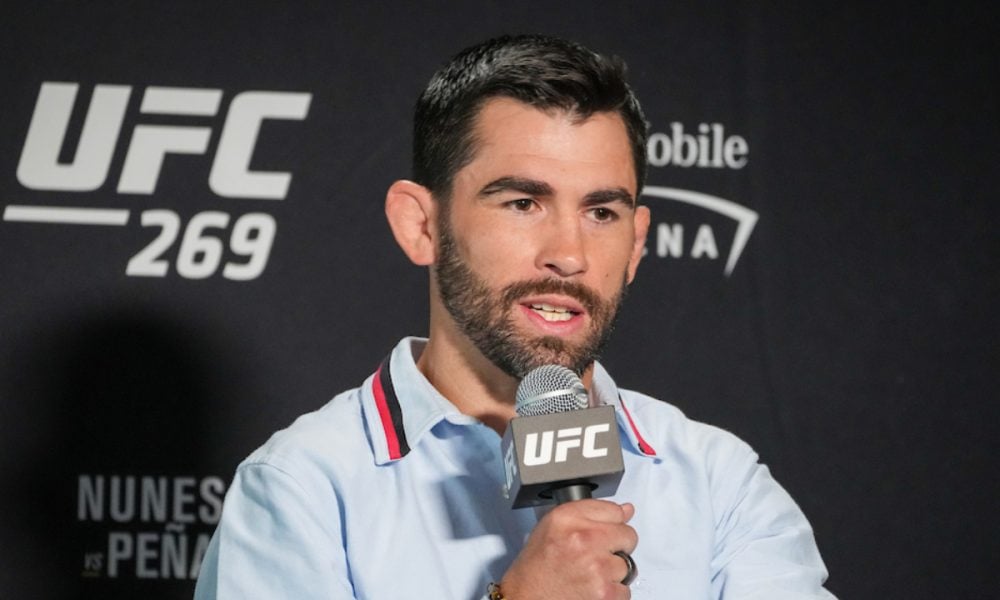
According to Jogo Hoje, the UFC 328 build-up is turning into the kind of week that makes matchmakers sweat. Dominick Cruz, a former UFC bantamweight champion and Hall of Fame member, is warning that the rivalry between Khamzat Chimaev and Sean Strickland has crossed a line, and that the UFC should avoid in-person run-ins before the main event on Saturday, the 9th, in Newark. The belt on the line is the middleweight title at 84 kg, and yes, the promotion has to treat this like a gestão de crise problem, not just a marketing storyline.
The warning from Dominick Cruz
Cruz’s point is blunt and very tactical: if both men are publicly talking about meeting outside the octagon, why on earth would the UFC schedule events that create accidental proximity? He’s basically calling it out as a bad game-plan for encarada, especially when emotions are already high. In his read, they’re signaling a message to each other and to the UFC, and the organization should respond by tightening the coletiva de imprensa and encarada logistics rather than assuming everything will “just play out.”
He also referenced a historical precedent that still haunts fight-week planning: the chaos that erupted around DC and Jon Jones. That’s the kind of memory that forces a promotion to rethink the choreography of a week, because one wrong interaction can snowball fast when the rivalry is no longer just rivalidade verbal.
Why the rivalry has slipped out of control
Let’s call it what it is. This isn’t only trash talk anymore; it’s a full-spectrum escalation that touches media obligations, personal narratives, and the space around the event. Strickland has already shown he’s willing to go hard in public settings, including press-facing moments where he framed potential responses with violence if approached outside the cage. Chimaev, por sua vez, didn’t exactly take the high road either, and the social media shots only sharpened the edge.
When one fighter starts floating extreme hypotheticals and the other answers with personal attacks that hit sensitive family themes, the promotion can’t pretend this is “part of the show.” That’s why Cruz’s warning lands with weight. In fight-week terms, the match is still the main event, but the week itself becomes the battlefield: parking lots, backstage corridors, media lines, and any bastidores da semana da luta moment where a camera isn’t rolling.
And here’s the practical question the UFC must face: if they keep the traditional rhythm of encarada and close-contact media, are they reducing risk or manufacturing it? Cruz’s thesis is that the UFC is one misstep away from an incident that no one can rewind.
What the UFC can do to avoid an incident
If the UFC wants to protect fighters, staff, and the event brand, then it has to adjust the script. Cruz’s comments point straight at operational changes, and the logic is simple. The more contact the promotion creates between two volatile rivals, the more unpredictable the week becomes.
- Limit proximity during any encarada, using controlled staging and clear separation rules for both teams.
- Restructure the coletiva de imprensa so interactions are one-way where possible, with timed entries and exits to avoid crowd bottlenecks.
- Increase segurança reforçada not just at the venue, but around all pre-fight checkpoints, including media holding areas and transport windows.
- Put clear boundaries in place for “outside the octagon” talk, so staff can intervene early rather than react late.
This is classic gestão de crise. You don’t wait for the highlight you don’t want. You build guardrails before the tension turns into a physical problem.
The precedent that still haunts the UFC
Cruz’s reference to the DC vs Jon Jones episode isn’t random name-dropping. It’s a reminder that once a rivalry turns into a fight-week collision, the promotion’s best intentions don’t matter. The organization has to respect how quickly verbal escalation can become a physical scramble, especially when ego, crowds, and timing all converge.
And UFC 328 isn’t just any card. With the cinturão dos médios up for grabs, the stakes are naturally higher. The organization can’t treat this like a routine title chase; it needs to treat it like a live-wire environment where every scheduled moment is part of the risk assessment.
What’s at stake at UFC 328
On Saturday, the 9th, the middleweight title fight is the headline, but the storyline surrounding it is becoming the bigger threat to the event’s smooth execution. If Chimaev and Strickland are heading into this with the kind of mindset Cruz describes, the UFC has to protect the runway to the main event.
From a tactical angle, the belt fight will be decided inside the cage, sure. But from an operational angle, the UFC’s job is to make sure there is a cage fight to begin with. The promotion’s credibility with athletes and broadcasters depends on that. No one wants a week that derails the main event before the first bell.
O Veredito Jogo Hoje
O que o Dominick Cruz está pedindo é o mínimo do profissionalismo: cortar atrito desnecessário na reta final. Se a rivalidade já virou ameaça pública e disputa por “quem chega primeiro” fora do octógono, então a decisão mais inteligente do UFC é reduzir contato e controlar as rotas de encarada e coletiva de imprensa. A gente não compra o argumento de que “faz parte do jogo” quando o roteiro pode explodir antes da luta principal. No UFC 328, o cinturão dos médios pode decidir destino de carreira, mas a gestão da semana decide se a noite vai acontecer inteira. Aqui, a nossa leitura é clara: a prioridade não é a foto bonita, é a execução sem incidente.
Perguntas Frequentes
Why did Dominick Cruz talk about danger involving Chimaev and Strickland?
Because he believes the rivalry has moved beyond rivalidade verbal into public claims about meeting outside the octagon, which can turn scheduled interactions into flashpoints. His concern is less about the fight itself and more about bastidores da semana da luta moments that create uncontrolled proximity.
Can the UFC restrict faceoffs and press conferences ahead of UFC 328?
Yes. The UFC can alter staging, timing, and access rules for encarada and manage the coletiva de imprensa with separation protocols, controlled entries and exits, and segurança reforçada around media and transport areas. That’s standard gestão de crise.
What impact does this tension have on the main title fight for the middleweight belt?
It can affect focus, preparation routines, and the overall event execution. More importantly, it raises the stakes for how the UFC protects the main event on Saturday, the 9th: if the week spirals, the title fight becomes secondary to operational fallout—something no promotion can afford when the cinturão dos médios is on the line.