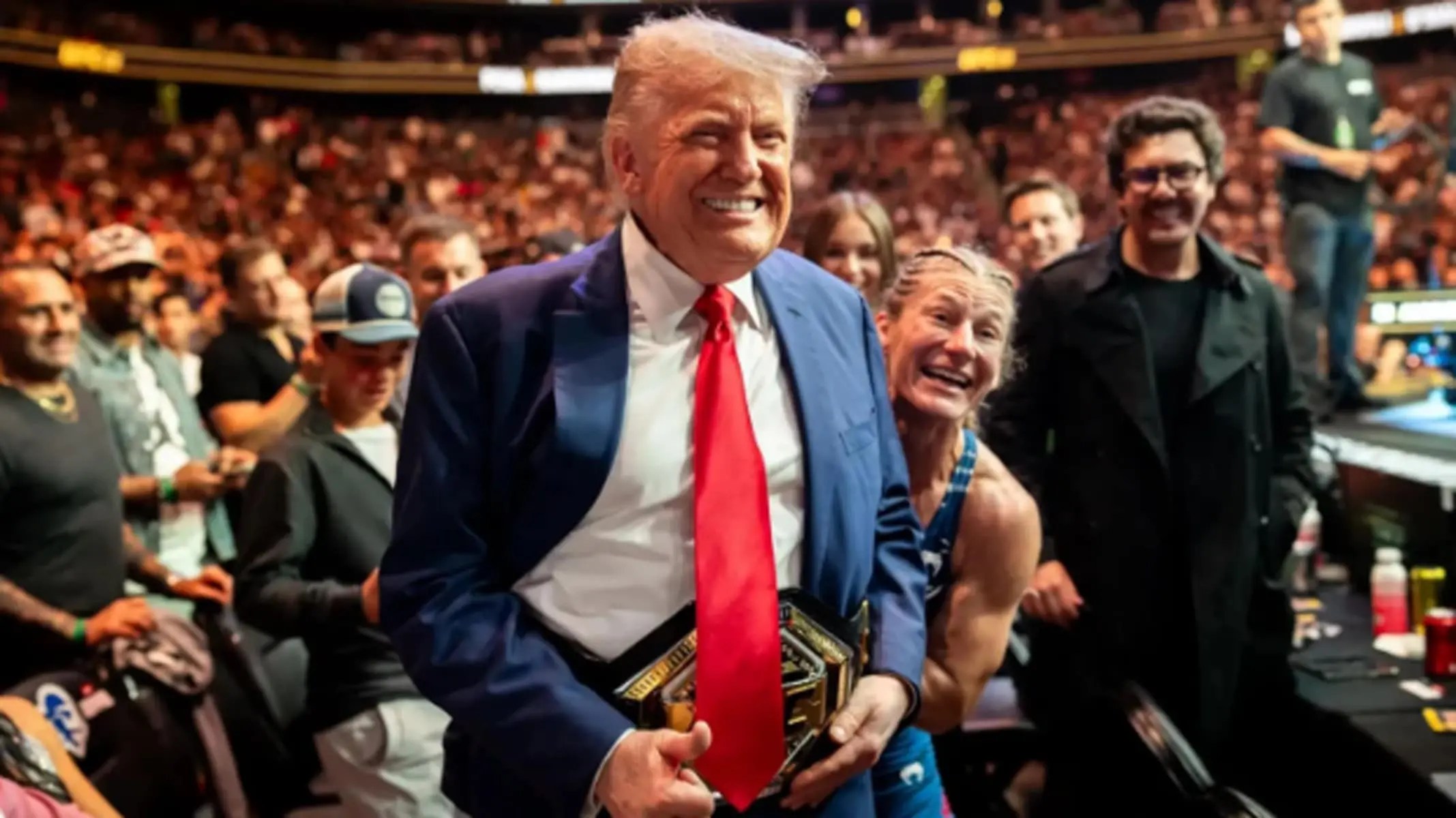
According to Jogo Hoje, the UFC has confirmed an event unlike anything the promotion has tried on this scale: UFC Freedom 250 on June 14, 2026, in Washington, D.C. The main card will land on the South Lawn of the White House, while The Ellipse next door is set to be turned into a festival arena for a massive crowd.
What the UFC confirmed for the White House
Let’s get the logistics straight, because this is the kind of operation that screams “we’re serious.” The South Lawn hosts a VIP audience of up to 5,000 people, and The Ellipse is projected to hold around 85,000 spectators. The production budget is estimated at roughly 60 million dollars, meaning this isn’t just a sports show, it’s a full-blown broadcast machine built to maximize attention, pacing, and global reach.
On the fight side, the UFC has a six-bout main card already lined up, with the kind of matchups that force the analysis to go beyond vibes. The promotion is also leaning into fighters with stable performance metrics and high octagon activity, while steering clear of controversial names such as Jon Jones, a point Dana White underscored when explaining why he won’t be part of the card.
Why this card already belongs in the conversation
When the sport puts its spotlight on the White House, the stakes change. Not because the cage physics suddenly differ, but because pressure, optics, and expectations stack up faster than usual. And the UFC is clearly treating this as a testbed for data-driven matchmaking: age trends, striking efficiency, and defensive profiles are being used to shape the card’s competitive logic.
The numbers being discussed are blunt. Fighters who are younger than their opponents by at least three years win about 58% of the time, and that edge will be checked across the six announced fights. On top of that, the storyline includes the warning that fighters over 32 years old carry a 62% chance of defeat. That’s not fortune-telling. It’s a trend, and trends tend to show up when the pace gets ugly.
Alex Pereira: the challenge of climbing into another weight class
This is the main event you circle on the calendar. Alex Pereira, currently ranked No. 5 pound-for-pound, is hunting a rare pathway: a third division title across different weight classes. He’ll face Ciryl Gane for the interim belt in the heavyweight division, with the South Lawn spotlight turned to full brightness.
Pereira arrives with a cartel of 13 wins and 3 losses, and the finishing rate is the kind that makes betting markets sweat. He has 11 KO/TKO wins in 13 victories, which tells you he doesn’t just land, he converts. His precision of significant strikes sits at 62%, a figure that matters because it’s not just volume, it’s quality.
Gane’s profile is eerily comparable on the surface. He also shows 62% precision in striking, and his height of 1.93m gives him the usual reach advantage. But here’s where the matchup gets tactual: Gane’s defense of significant strikes is listed at 62%, compared to Pereira’s 51%. So if Pereira can’t break that defense early, we might see a long, methodical chess match where the winner isn’t the loudest striker, but the most efficient one.
And then there’s the volume of striking. The numbers suggest a near coin flip in pace: Gane at 5.13 significant strikes per minute versus Pereira at 5.16. That’s basically the same engine, so the deciding factor becomes the moments—short windows where timing, distance management, and shot selection turn into knockouts.
We also have to talk about the activity context. Pereira last fought in October 2025, defeating Magomed Ankalaev. Gane’s last outing came in the same month, with a loss to Tom Aspinall. Similar layoff patterns can neutralize rhythm advantages, and that matters for a fight that could hinge on whether Pereira can land his damage before Gane settles into range.
My read? The weight transition is the biggest variable, not the hype. Pereira’s knockout conversion rate reportedly jumps to 80% when he keeps the fight standing for more than a minute, which is exactly what a striker like Gane tends to invite. But can Pereira impose that “standing for longer” script once the heavyweight power and long-range reads start to bite? That’s the million-dollar question.
Even Alistair Overeem framed the matchup as statistically favorable for Pereira, arguing that Gane is more of a striker than a threat built around grappling danger. If Overeem’s assessment is right, then Pereira’s 62% precision of significant strikes becomes the key that opens the door—because you don’t win at that level by swinging blind.
If Pereira wins, he’d become the first fighter to claim belts in three different weight categories in UFC history, joining his titles in the middleweight and light heavyweight divisions. That would be a clean, measurable legacy arc—exactly the kind of performance metric-driven milestone this card is built to showcase.
Mauricio Ruffy and the risk of a weight-leveled shock
At lightweight, Mauricio Ruffy steps into the spotlight with a cartel of 13-2 and a streak that reads like a highlight reel: 12 knockouts. He’s sitting at No. 9 in the ranking and will face the veteran Michael Chandler, a matchup where the “talent vs. timing” question becomes very real.
Ruffy’s striking profile is the alarm bell for anyone betting against him. He’s listed at 58% precision of striking, and he averages heavy early-round impact, including multiple wins that come fast. Chandler, meanwhile, is more volatile by nature. He has 13 first-round wins and 11 knockouts, but his defense is described as less reliable, absorbing 4.97 significant strikes per minute.
Now add the age math. Chandler is 39, which puts him squarely into the decline zone cited by the data trend: fighters above 32 hold a 62% chance of defeat. Ruffy is 27, positioned closer to peak biological performance. If this fight follows the statistical script, Ruffy’s best weapon is not just power—it’s the ability to make the opponent feel behind before the match even settles.
Diego Lopes and the Brazilian footprint across the card
Diego Lopes represents the wider Brazilian footprint, and that matters because the UFC Freedom 250 isn’t built around one storyline. It’s a card designed to stack momentum: multiple Brazilian threats, each with their own statistical angles, each with their own ways to win.
For Lopes, the tactical question is simple: can he turn his game plan into repeatable sequences? That’s where the best fighters separate themselves. Not with one big moment, but with consistent decision-making—when to pressure, when to reset, when to hunt volume of striking, and when to protect the defense of significant strikes so the opponent can’t drain you with low-risk shots.
The Brazilian presence here isn’t just a marketing talking point. It’s a competitive pattern, and the UFC is betting that the metrics will do the talking on the biggest possible stage. Whether it becomes a series of dominant performances or a collection of tight fights depends on who controls the fight’s tempo early, because that tempo usually decides the judges’ reality, even when the outcome is finished by knockouts.
What this card could change for the UFC in 2026
If UFC Freedom 250 delivers the kind of clean, data-aligned results the promotion is hinting at, it could reshape how the UFC builds future matchups. The visible emphasis on precision of significant strikes, defense of significant strikes, and volume of striking suggests the UFC wants to formalize what analysts have long suspected: matchmaking can be engineered, not just guessed.
And if Pereira truly does what the numbers and style profiles imply—weaponizing his striking efficiency while surviving the weight transition—then the promotion gets a new headline narrative that’s measurable, not just emotional. That’s how you grow a market. That’s how you sell the sport to casual fans without dumbing it down for hardcore ones.
Plus, there’s the commercial gravity of staging it on the gramado sul da Casa Branca, with the festival-like spillover at The Ellipse. When the UFC does that, it doesn’t just sell tickets; it sells legitimacy and visibility. In 2026, that could translate into a new tier of mainstream attention for MMA’s biggest stars—especially those who can prove their worth through the kind of performance metrics that don’t lie.
O Veredito Jogo Hoje
O UFC Freedom 250 tem cara de “evento de Estado” e, taticamente, também. O que decide o combate principal não é só o cinturão interino em jogo ou o tamanho do palco, é o duelo de eficiência: 62% de precisão de golpes significativos do Pereira contra a defesa de 62% do Gane, num cenário em que o volume de striking parece empatado. Se a transição para o peso-pesado não trair o timing, o script vira knockouts em sequência. A gente não chama isso de sorte, chama de execução. E, do jeito que esses números estão desenhados, Brasil tem caminho real para arrancar o troféu do gramado sul da Casa Branca.
Perguntas Frequentes
When will the UFC event at the White House take place?
It will take place on June 14, 2026, in Washington, D.C.
Which Brazilian fighters are confirmed on the card?
The Brazilian athletes highlighted on the card are Alex Pereira, Mauricio Ruffy, and Diego Lopes.
Which fight involving Alex Pereira is scheduled for the event?
Alex Pereira will face Ciryl Gane for the interim belt in the heavyweight division.