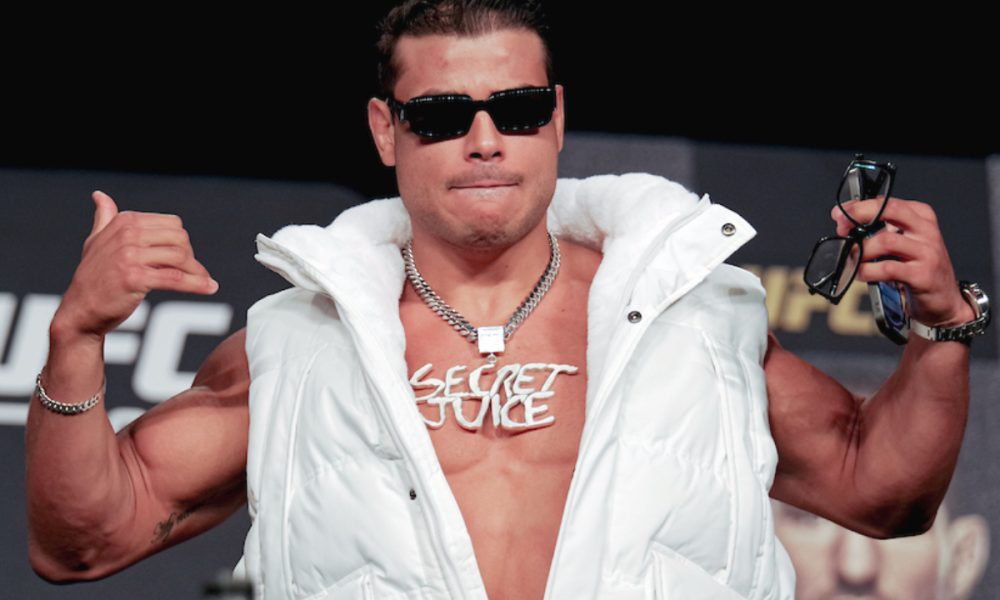
UFC 327 is set for Miami, and the stakes in the light heavyweight picture are bigger than a belt on the line. According to information we gathered at Jogo Hoje, the night’s main storyline is the vacant title fight between Jiri Prochazka and Carlos Ulberg, but the real division chess is happening in the co-main event. That’s where Paulo “Borrachinha” gets his chance to step into the spotlight left behind by Alex Poatan.
Why the light heavyweight division got “orphaned” after Poatan
When Poatan moved up and chased something historic, the light heavyweight ranks didn’t just lose a champion. They lost a magnet. A guy who made casuals care, made highlight reels feel inevitable, and turned fight-week noise into real audience pull. Now, with the title up for grabs at 93 kg, the division is also hunting for a face that can carry both performance and momentum.
Let’s be blunt: the current elite has names, but not always the mass appeal. Fighters like Magomed Ankalaev and even Murzakanov can be dangerous, yet they don’t consistently “break through” beyond the core MMA crowd. On the other side, veterans with some brand value are starting to look like their best chapters are behind them. That’s a messy transition period for any promotion, and it’s exactly why this successsion of the division matters right now.
And while the main event in Miami is for the vacant title, don’t confuse the belt with the buzz. In fight business, the loudest market signal often comes from the guy who can sell a fight before the first exchange even lands.
What Borrachinha brings besides raw power
Borrachinha isn’t walking into the light heavyweights as a random jumper. He’s a middleweight by origin, moving up with intent, and the tactical question is simple: can his pressure and striking translate without getting neutralized by the length, timing, and grappling threats that light heavyweights bring?
From a game-plan standpoint, he offers something the division currently lacks: a striker-forward identity that can still get under opponents’ skin. That matters in a sport where psychological edges can turn into route-running advantages. He’s not just trying to win rounds. He’s trying to own the moment.
Commercially, Borrachinha is a different product from Poatan. Poatan was a scalpel with a superstar aura. Borrachinha is the kind of polarizing character who can generate hate and still sell out the arena vibe. You can argue about taste, sure, but the UFC doesn’t survive on polite opinions. It survives on attention, and he has it.
Murzakanov is the test that reveals Borrachinha’s ambition
Azamat Murzakanov isn’t a stepping-stone. He’s the number 6 in the category and he’s undefeated in professional MMA. That’s not a “prove you belong” matchup. That’s a “prove you’re ready to headline the conversation” matchup.
And the ceiling is obvious: if Borrachinha wins, he’s not just collecting a name. He’s forcing the rankings to rearrange themselves around him. He’d be taking a real scalp from an opponent who has earned credibility on the way up.
Tactically, this fight will also answer a bigger question: does Borrachinha carry his offense through the higher weight class without losing efficiency? Because light heavyweights can punish sloppy footwork, and Murzakanov’s profile suggests he’s built to make you pay for hesitation. So the question isn’t only “can Borrachinha hurt him?” It’s “can Borrachinha break the rhythm and keep the fight on his terms?”
How a win could fast-track Borrachinha toward a title shot
Let’s connect the dots. The division has a vacant title on the main card, but the route to a title shot isn’t automatic for everyone who shows up. The UFC tends to reward the fighter who delivers a clean, convincing narrative with real audience impact. That’s where Borrachinha’s profile becomes strategically useful.
If he beats Murzakanov in the co-main event, he would cement a spot among the names who can realistically force the promotion’s hand. Not because he’s famous, not because he’s loud, but because he’d have a quality win that aligns with the timing of the new hierarchy.
And if he also plays the role of showman without sacrificing discipline, then the UFC gets what it wants: a fighter who can compete at the top level and still keep the mainstream watching. That’s the overlap between sport and spectacle, and it’s where the next era of light heavyweight often gets decided.
Why charisma alone doesn’t fill Poatan’s shadow
Here’s the part some people get wrong. Charisma doesn’t guarantee legacy. It doesn’t automatically translate into elite-level credibility. You can be polarizing and still get brushed aside if the technique doesn’t hold up.
Poatan wasn’t just a character. He was a threat with execution. That’s why his absence feels so sharp: the division didn’t only lose marketability, it lost a consistent problem for contenders to solve. Borrachinha can be the apelo comercial angle the UFC loves, but he still has to win the technical battle in a weight class that punishes shortcuts.
So yes, the scenario is polémico e estratégico. But the division’s “next face” won’t be crowned by memes or press-room energy. It’ll be crowned by results. And tonight, the result starts with one thing: his hand up after the final bell.
O Veredito Jogo Hoje
We’re not buying the story that Borrachinha is the answer just because he’s loud or because the crowd reacts. The light heavyweight division is in transition, and the UFC won’t hand over the spotlight to a hype train with no proof. If Borrachinha beats Murzakanov, though, then we’re looking at a real successsion of the division moment: a fighter who can combine violence with narrative control, and who can turn the vacant-title era into his era. That’s the difference between being a topic and becoming the plan.
Jogo Hoje verdict: Borrachinha inherits the momentum only with the victory. Without it, he’s just another moving up and hoping.
Perguntas Frequentes
Why can Borrachinha potentially replace Poatan in relevance for the division?
Because he offers a rare mix for a post-Poatan light heavyweight era: a credible skill set after moving up from middleweight, plus an identity that grabs attention. If he backs it up with a win over Murzakanov, he becomes the kind of name the UFC can build around while the hierarchy resets.
What does Borrachinha gain if he defeats Azamat Murzakanov?
He gains a major ranking statement against a top contender who is undefeated in professional MMA, which can quickly elevate him into the conversation for a title shot in the new light heavyweight order.
Does a win already put Borrachinha close to a title shot?
It puts him in the fast lane. The main event determines the immediate champion, but a strong co-main win over a top-6 opponent typically accelerates matchmaking and strengthens the case for the next title opportunity.