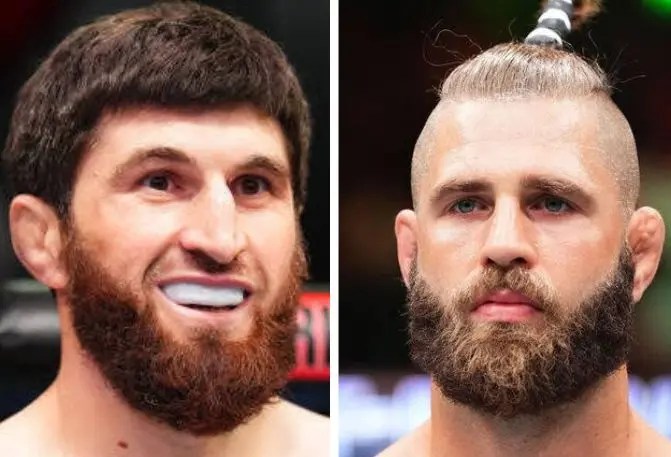
Fresh off Jogo Hoje’s latest breakdown of the light-heavyweight division reshuffle, Magomed Ankalaev has made his stance crystal clear after UFC 327: Jiri Prochazka shouldn’t even be mentioned in the title conversation anymore—unless there’s a fight between them. It’s not just trash talk. It’s a tactical attempt to rewrite the category hierarchy in real time.
What Ankalaev said after UFC 327
After Carlos Ulberg stopped Prochazka with a knockout in the first round at 3:45, Ankalaev took to X on April 12, 2026 to deliver a message that landed like a jab right on the chin. His theme was simple: Prochazka is no longer a serious “desafiante ao título” in his eyes, and the Czech should stop bringing Ankalaev’s name into the conversation.
Ankalaev’s first post was a direct line in the sand:
- “Jiri, never talk about me again. You can only talk about me if you want to fight. None of these guys are on my level. Congratulations, Carlos.”
Then he backed it up with a numbers-driven argument, pointing to Prochazka’s recent stoppage history:
- “Prochazka was knocked out in three of his last six fights. I don’t want to hear his name in the title picture anymore. Enough is enough.”
Why the words carry weight in the title race
In a division as volatile as the light-heavyweights, hierarchy isn’t built on vibes—it’s built on proof. That’s why Ankalaev’s angle matters. He’s using Prochazka’s retrospecto recente as an evidence file: when a contender keeps getting finished, the champion-and-contender pathway gets narrower, faster, and harsher.
And let’s be honest: Ankalaev isn’t shy about controlling the narrative. By trying to cut Prochazka out of the title picture, he’s signaling to everyone—champion, matchmakers, and fans—that his lane is straight and his standards are high. If Prochazka wants to stay relevant at the top, Ankalaev is implying, he’ll have to earn it with a fight, not headlines.
The recent run Ankalaev used as his argument
Here’s where the tactical analyst in Ankalaev shows up. He didn’t just say Prochazka “looked bad.” He cited a pattern: Prochazka has been knocked out in three of his last six bouts. That matters because title contention is a momentum game—and knockout losses are like punctuation marks that change the meaning of everything before them.
When you’re talking about a nocaute no primeiro round and you stack it on top of a streak of recent stoppages, you’re not just talking about one night. You’re talking about risk tolerance, matchup durability, and whether a fighter can survive the first moments of elite-level exchanges.
In short: Ankalaev is arguing that Prochazka’s current ceiling isn’t “title challenger.” It’s “dangerous until the lights go out.” That’s a hard sell for anyone trying to book the next guaranteed big-money shot at the belt.
How Ulberg changes the light-heavyweight hierarchy
Ulberg’s belt-winning performance is the real earthquake under all this. In the light-heavyweight division, one dominant win can reorder the entire hierarquia da categoria. With Ulberg knocking out Prochazka at 3:45 of Round 1, the storyline flips from “who’s next” to “who’s truly built for the championship rounds.”
And that’s where Ankalaev’s timing is sharp. By attacking Prochazka right after the belt change, he’s attempting to attach himself to the new reality: the current top tier is the one that can impose violence early, stay composed, and punish openings before the fight becomes a chess match.
Ulberg’s win also forces a question for the whole division: if Prochazka is the former headline act, what does that make the next wave of challengers? If the gatekeepers are getting knocked down, the checklist gets rewritten—especially at up to 92.9 kg.
What could happen next in the division
Expect ripple effects. Matchmakers don’t ignore noise, but they also don’t ignore market logic. Ankalaev’s comments are a public audition for priority. He’s essentially telling the UFC: “I’m the next credible threat, and I’m willing to fight the guy who’s currently being treated like a top name.”
Meanwhile, Ulberg’s new status as champion (earned through that first-round destruction) tightens the title bracket. That likely pushes the division toward clearer, higher-stakes matchups—fighters who can survive the early storm and convert pressure into finishing sequences.
So where does that leave Prochazka? In a purgatory of reputation unless he responds with an immediate statement performance. Right now, the narrative is that he’s not stable enough for the top slot—despite his history of brilliance.
And that’s the key: this isn’t only a feud. It’s a battle over who gets classified as a desafiante ao título and who gets labeled “too inconsistent” for the championship conversation.
O Veredito Jogo Hoje
Ankalaev didn’t just throw shade after UFC 327—he tried to install a new rulebook for the corrida pelo cinturão. The first-round knockout and the retrospecto recente stats give him a real tactical foundation, not empty venting. But here’s our call: if the UFC keeps Prochazka anywhere near the top without a direct collision, the hierarquia da categoria will look convenient, not earned. And in the light-heavyweight division, convenience doesn’t win belts—durability and timing do.
— Analista Tático, JogoHoje
Perguntas Frequentes
What did Ankalaev say about Jiri Prochazka after UFC 327?
He told Prochazka to stop mentioning him unless Prochazka wants to fight him directly, and he also argued that Prochazka shouldn’t be part of the title picture after being knocked out multiple times recently.
Why did Prochazka lose momentum in the title race?
Ankalaev pointed to Prochazka’s recent pattern: he was knocked out in three of his last six fights, including a nocaute no primeiro round loss to Ulberg at UFC 327.
Who could be the next strong name in the light-heavyweight division?
With Ulberg now holding the belt after a first-round knockout, the next major challenger conversation is likely to circle around the fighters who can handle early chaos at up to 92.9 kg—and Ankalaev is positioning himself as one of those most credible threats.