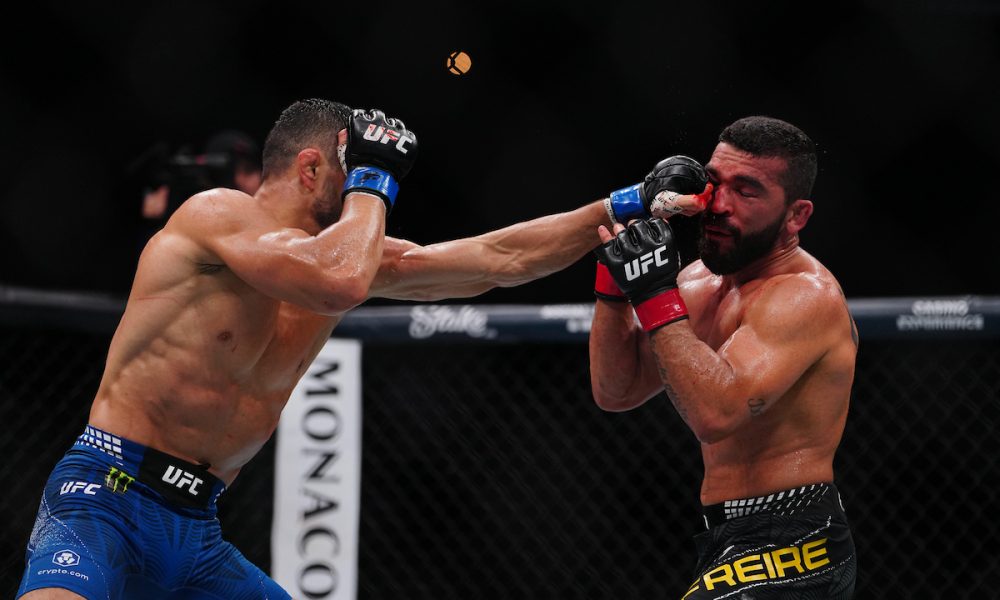
On Saturday (11) in Miami, UFC 327 gave us the matchup fans had circled for years: Aaron Pico versus Patrício ‘Pitbull’ in the featherweight (66 kg) division. According to Jogo Hoje, the symbolic clash between two Bellator-era elites finally played out in full— and Pico walked away with decision unânime, unanimously.
This was never just about legacy. It was about adaptation, timing, and who could win the chess match inside the cage. And tactically? Pico won the boring minutes, the dangerous exchanges, and the momentum swings— the parts that don’t always trend, but decide rounds.
The result and what was really at stake
Let’s frame it cleanly. Pico’s primeira vitória in the promotion came in a fight where Pitbull carried pressure from the first bell. The Brazilian, meanwhile, absorbed his second loss in three UFC fights, which means the margin for error is shrinking fast in this new phase of his career. When you’re learning the UFC’s pace, every slip in controle de distância becomes expensive.
And on this card, the featherweight storyline didn’t exist in isolation. The evening delivered enough finishes and momentum shifts to underline one truth: the game is ruthless, and details are currency.
How Pico controlled the distance and neutralized Pitbull
The tactical key was simple to describe and hard to execute: Pico repeatedly managed range to keep Pitbull from dictating the rhythm. In a peso-pena matchup, where one clean entry can flip a round, the fighter who controls the space controls the options.
Pico’s approach leaned on three pillars:
- controle de distância through disciplined footwork and long-range positioning
- volume de golpes with combinations that forced responses, not just reactions
- timed queda attempts that weren’t random— they were answers to openings created by striking pressure
Pitbull had moments, sure. He landed the kind of shots that still carry danger. But Pico’s defensive structure and spacing prevented those moments from stacking into sustained control. That’s why the fight didn’t become a one-way highlight reel; it became a measured dismantling.
Key moments across the three rounds
Round one started with Pitbull looking a little more studied, while Pico took the initiative in bursts rather than committing to one lane. Early on, Pitbull tried to threaten with counter timing, and Pico showed he could feel the impact— you could see it in how he adjusted his entries.
Then the first real tactical swing: Pico shot for the legs, and the attempt didn’t land clean. But that failure mattered less than the adjustment that came next. When Pico finally got the queda in the second attempt, the fight shifted. Pitbull stood back up, yet the confidence Pico gained from forcing that threat changed how he approached the rest of the round.
Round two was the flashpoint for the “flashdown” sequence. Pico landed a strong right, and Pitbull’s recovery didn’t match the moment. That’s the thing about a well-timed shot at featherweight: it doesn’t just hurt, it steals options. From there, Pico kept the pace controlled, and even when Pitbull survived the pressure, he struggled to re-enter the fight on his terms.
Round three looked like the same script— until the ending. Pico used his reach and distance to land combinations with frequency, while Pitbull had trouble generating offense that could reverse the control. And then, late, Pitbull committed the kind of mistake that coaches hate: he ceded his back. Once Pico got that advantage, he didn’t need magic. He managed the clock, added further queda threats, and closed the door to any comeback narrative.
That’s why the judges went unanimous. This wasn’t a fight decided by one lucky moment; it was decided by sustained fight control, built on volume de golpes and distance mastery.
What the loss changes for Patrício Pitbull in the UFC
Pitbull’s second loss in three fights doesn’t erase his talent, but it raises a hard question: can he adapt fast enough to the UFC’s pace without sacrificing his most dangerous pathways?
Against Pico, the Brazilian couldn’t consistently find the right range to let his counters build into offense. Even when he landed something meaningful, he didn’t get enough follow-up to turn it into round control. And the takedown threat from Pico— even when not perfectly finishing— forced Pitbull to think more than he wanted.
At this stage, that’s the kind of gap that turns “competitive” into “survivable, but not winning.” If he wants to climb the featherweight ladder, he needs either cleaner entries, faster tempo changes, or a wrestling plan that starts earlier—not after the damage is already done.
What the victory means for Aaron Pico
Pico’s win is more than a personal milestone. It’s a statement about arrival. His first UFC victory came with a blueprint: manage controle de distância, pile up volume de golpes, and weaponize the queda threat as a pressure tool.
There’s also the confidence factor. Getting Pitbull to feel the threat of takedowns and then landing combinations afterward is exactly the kind of chain that makes opponents hesitate. In the UFC, hesitation is lethal— it’s the difference between winning a round and getting stolen from.
So yes, Pico “freed” himself from the early UFC uncertainty. But the deeper takeaway is that he didn’t need to gamble. He didn’t chase chaos. He controlled the fight the way a top-tier featherweight has to.
UFC 327 main card recap
- Aaron Pico def. Patrício Pitbull by decisão unânime
- Vicente Luque def. Kelvin Gastelum by finalização in the first round
- Mateusz Gamrot def. Esteban Ribovics by finalização in the second round
- Tatiana Suarez def. Lupita Godinez by finalização in the second round
- Kevin Holland def. Randy Brown by decisão unânime
- Chris Padilla vs. MarQuel Mederos ended in a draw
- Charles Radtke def. Francisco Prado by decisão unânime
O Veredito Jogo Hoje
Pico didn’t just beat Pitbull— he out-coached him. The reach, the spacing, the controle de distância that denied setups, and the way he turned takedown attempts into lasting pressure made this a decisão unânime that actually matches the fight. Pitbull had moments, but when the round rhythm goes away and the flashdown lands, you don’t get it back with pride—you get it back with a plan. On this night, Pico had the plan.
Perguntas Frequentes
Who won the fight between Aaron Pico and Patrício Pitbull at UFC 327?
Aaron Pico won by decisão unânime at UFC 327 in the featherweight (66 kg) division.
How did Aaron Pico manage to get the better of Patrício Pitbull?
Pico controlled controle de distância, used volume de golpes to force reactions, and created openings with takedown threat (queda), including a momentum-changing flashdown sequence in the second round.
What does the loss mean for Patrício Pitbull in the UFC?
It’s his second defeat in three UFC fights, highlighting the adaptation challenges in this phase and increasing the pressure to adjust his range control and offense to the UFC’s tempo.