Some leagues chase the loudest number on the invoice. Germany, with its peculiar mix of governance, tradition and the stubborn muscle of the crowd, has kept insisting that matchday is a public ritual. On this front, Jogo Hoje follows the international game with a social lens, because what happens in a stadium tells you more than transfer fees ever will.
Year after year, the Bundesliga stays among Europe’s best at filling seats and, crucially, keeping the cultura de estádio alive. And no, that doesn’t happen by accident. When prices are engineered to welcome regular people, the terraces fill, the drums start, and the whole place starts breathing as one organism.
The Bundesliga as Europe’s outlier
In today’s football economy, “demand” is often treated like a blank cheque. Yet Germany’s top flight behaves differently. The Bundesliga doesn’t treat the season ticket as a luxury product. It treats it as infrastructure for identity: the kind of infrastructure that keeps the stadium atmosphere non-negotiable.
This is where the conversation becomes properly sociological. Who gets priced out? Who stays in the room? Who gets to feel like the club belongs to them? When those questions are answered with restraint, you get standing noise, not corporate silence.
How much tickets cost in 2025/26: Germany vs England, Spain and Italy
Let’s put numbers on the table, because symbolism still needs math. For 2025/26, the Bundesliga’s cheapest season ticket packages range from 150 to 260 euros. Meanwhile, in the Premier League, season ticket prices for the same season stretch from 345 to 1,127 pounds.
That gap isn’t just a spreadsheet difference. It’s a social decision. It shapes who shows up early, who argues in the concourse, and who stands in the arquibancada em pé without feeling like they’re trespassing.
Now, here are the most telling comparisons, the kind that make you blink twice:
- Bundesliga 2025/26: cheapest season ticket ranges from 150 to 260 euros
- Premier League 2025/26: 345 to 1,127 pounds
- Bayern Munich: annual season ticket from 175 euros in Category 5
- Fleetwood Town: most affordable package at 199 pounds, ironically more expensive than Bayern’s cheapest annual option
And when you zoom in on the matchday rhythm, the Bundesliga keeps talking in values that fans can actually feel. In 2022/23, the average season ticket price for watching from standing terraces without seats was 196.80 euros, which works out to 11.57 euros per match.
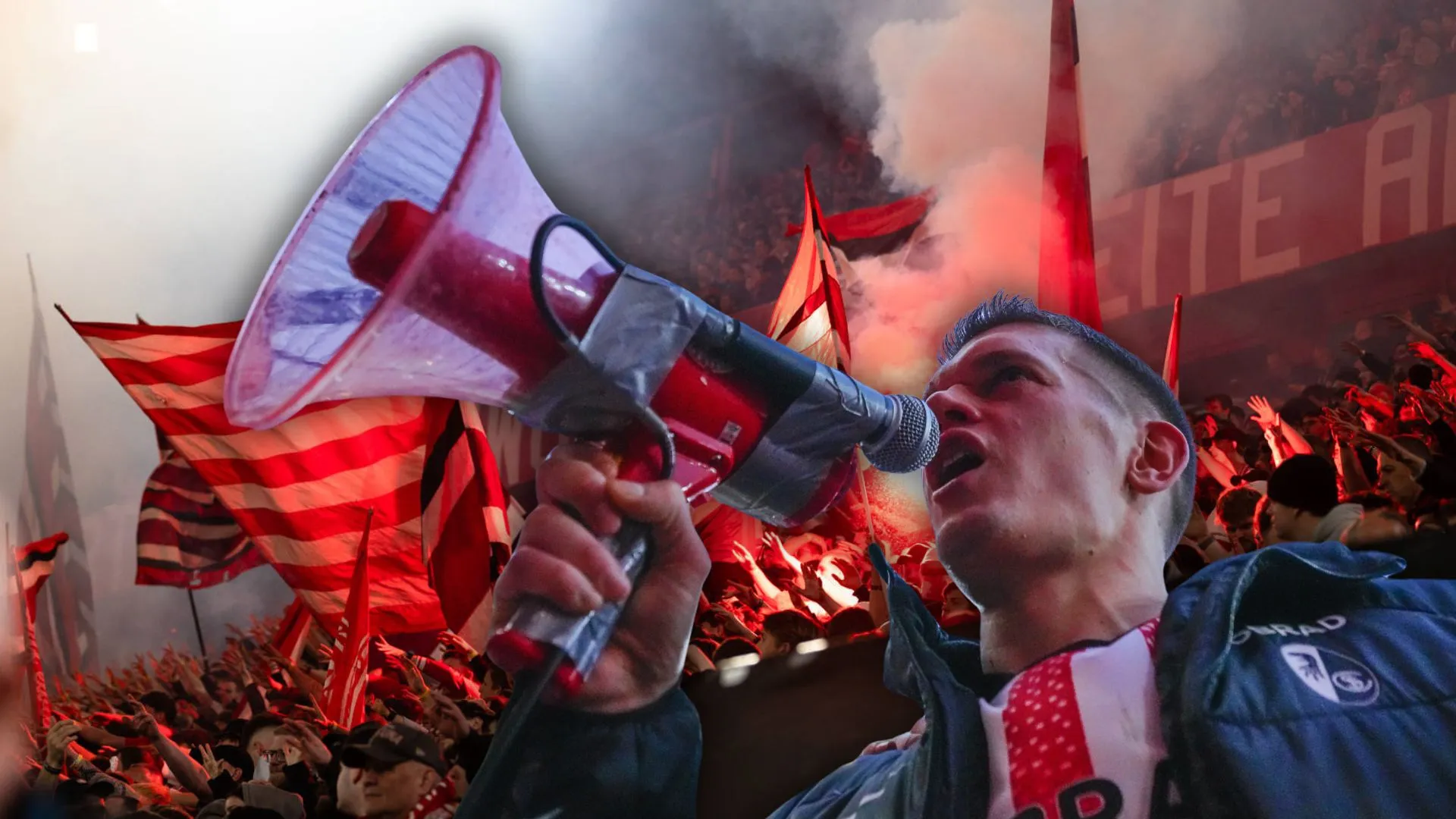
Dortmund’s “Muralha Amarela” is the archetype of this culture. In 2022/23, the price sat around 240 euros (about 14.11 euros per game). Then it rose to 250 euros in 2023/24, and you could sense the friction in the stands. That matters, because a price hike in a fan-driven ecosystem is never just “business”. It’s a message.
The 50+1 rule and why ticket policy isn’t purely market logic
Here’s the part the marketing department hates: the Bundesliga’s pricing is constrained by regra 50+1 and by the overall structure of governança dos clubes. Economics is still economics, of course. But the levers aren’t pulled by pure extraction.
Dominik Schreyer, professor of Sports Economics at WHU – Otto Beisheim School of Management, puts it bluntly: in Germany, pricing is less dominated by raw market logic and more shaped by culture and club policy. That’s the difference between a stadium as a product and a stadium as a civic space.
And the regra 50+1 model matters because it changes the political weather inside clubs. Big increases can trigger resistance at assemblies and in club councils. When the crowd has real weight, the club can’t pretend fans are just a demographic segment.
In other words, the torcida organizada isn’t a peripheral customer. It’s part of the product. That’s why Schreyer argues that coordinated protests are a rational response to perceived over-commercialization. In this ecosystem, ticket prices carry symbolic weight. Raise them too fast, and you don’t just lose money. You risk losing trust.
Fan pressure, social limits and the ceiling for increases
Let’s talk about the psychology of the terrace. In Germany, the matchday experience is built on cultura de estádio and the expectation that the club should remain “for us”, not “for them”. That’s why precificação de ingressos can’t be treated as a simple revenue-maximization exercise.
Ultra scenes and organised groups are influential because they’re not marginal. They’re central to the match atmosphere. So when clubs adjust pricing, they do it with a kind of social accounting: What will the room accept? What will trigger demonstrations? What will turn the stadium into a battlefield instead of a festival?
That’s also why the Bundesliga’s identity survives even as football elsewhere gets increasingly dressed in corporate suits.
Practical examples: Dortmund, Bayern, Real Madrid, Manchester United and Milan
Enough theory. Let’s look at the clubs and the prices, because the market tells its story through categories.
Borussia Dortmund shows the fan-terrace logic at full volume. For 2025/26, Dortmund’s season ticket pricing lands at 1,100 euros in Category 15 and 905 euros in Category 1. For the arquibancada em pé, the standing sector is 260 euros. That’s not just cheap; it’s legible. Fans can map themselves onto the stadium.
Meanwhile, Bayern de Munique keeps the same philosophy in its own way. In 2025/26, Category 1 is 890 euros, while the standing option is 175 euros in Category 5. It’s a clear signal that the club can chase trophies without turning the turnstiles into a paywall.
Now contrast that with elite clubs where the stadium often functions like a premium venue. Real Madrid season tickets for LaLiga home games in 2025/26 range from 305 to 2,462 euros, depending on the premium package. In the biggest fixtures, the VIP layer can get downright stratospheric.
Manchester United sits in a similarly steep bracket: season tickets around 710 to 1,330 euros for the home league games. And Milan, via premium experiences at San Siro, has seen season ticket ranges from 300 to 3,700 euros.
Even when stadiums are modern and demand is massive, the pricing architecture often selects who gets to belong. That’s the real divide: not just affordability, but governança dos clubes and whether the club treats fans as stakeholders or customers.
Why stadiums stay full despite massive demand
Here’s the uncomfortable truth for the rest of Europe: you don’t keep the atmosphere by building bigger marketing funnels. You keep it by making the culture of stadium sustainable for ordinary people.
Bundesliga clubs have built a system where the crowd is part of the governance logic. So even when demand rises, the precificação de ingressos doesn’t sprint ahead of the social contract. That’s why the Bundesliga and Bundesliga 2 combined had six teams in the top 20 European attendance averages in 2025, with Borussia Dortmund and Bayern de Munique leading the chart.
And yes, there’s also a feedback loop: fuller terraces create a better show, which feeds more interest, which keeps pressure on clubs to protect the terraces. That’s how identity becomes a strategy without looking like a strategy.
What the German model teaches the rest of football
Other leagues can copy logistics. They can copy stadium tech. They can copy even the language of “fan engagement”. But they can’t copy the underlying social bargain without changing club structures.
Bundesliga pricing is an outcome of regra 50+1, fan inclusion in governança dos clubes, and the awareness that torcida organizada can mobilise. It’s a system where ticket decisions aren’t only financial. They’re cultural.
So when someone says “the market decides”, we should ask: which market, and whose market? If the terraces become empty because prices skyrocket, that’s not capitalism at work. That’s a slow demolition of stadium identity.
Germany has chosen to keep the matchday as a shared space. And that’s why the Bundesliga doesn’t just survive demand. It converts it into noise.
O Veredito Jogo Hoje
Jogo Hoje calls it like we see it: the Bundesliga doesn’t “accidentally” have cheaper tickets. It protects its terraces because its governance and regra 50+1 make fan pressure real, not performative. When you let the crowd stay at the centre, precificação de ingressos becomes a civic decision, not a revenue hack. That’s why their stadiums stay full while other leagues keep chasing the next payer. In plain terms: the Bundesliga bars the ticket farce because it still treats the stands as the club’s beating heart. Assinado, Sociólogo de Arquibancada.
Perguntas Frequentes
Why are Bundesliga tickets cheaper than Premier League season tickets?
Because Bundesliga pricing is shaped by club governance, fan inclusion and the social limits around increases, reinforced by the regra 50+1 environment. The result is a season ticket model that sustains cultura de estádio and keeps the terraces affordable, instead of pushing pricing toward pure extraction from demand.
Does the 50+1 rule influence ticket prices in Germany?
Yes. The structure that elevates fan and stakeholder influence can make large ticket hikes politically and socially costly. Resistance in assemblies and councils is more likely when clubs are expected to balance financial goals with the lived expectations of torcida organizada and the matchday community.
Which Bundesliga clubs have the most accessible season tickets?
In 2025/26, the cheapest season ticket packages across the league are reported in the 150 to 260 euros range. Specific examples include Bayern de Munique with a season ticket annual price of 175 euros in Category 5, and Borussia Dortmund with standing options in the 260 euros bracket for the arquibancada em pé sector.