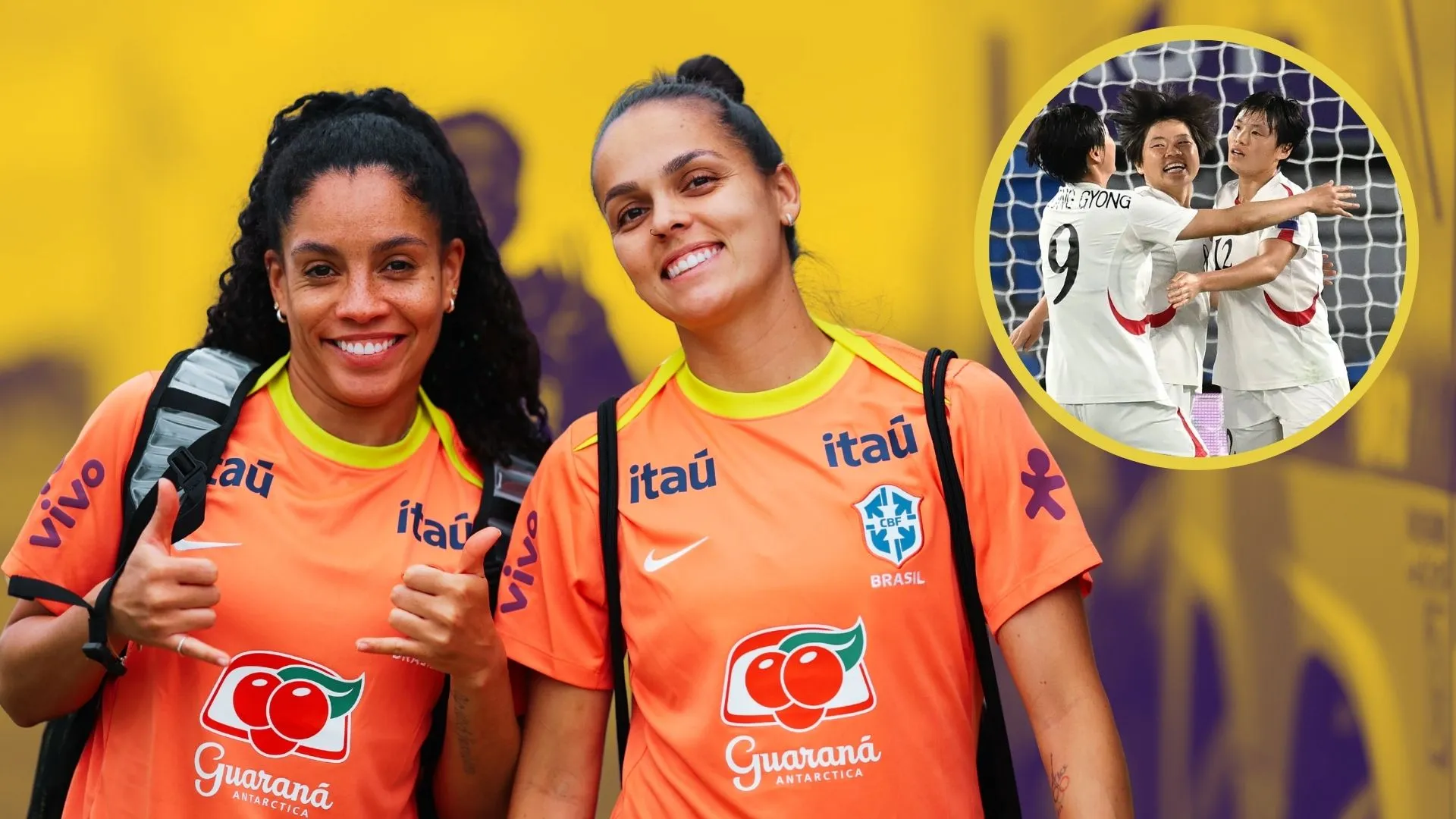
Brazil and South Korea meet this Saturday (11) at 22:30 Brasília time in the Arena Pantanal, kicking off the FIFA Series in a fixture that feels more like a time capsule than a routine friendly. It has been 11 years since the teams first crossed paths at the 2015 Women’s World Cup, when Brazil won 2-0. For readers tracking this matchup through Jogo Hoje, the bigger storyline isn’t nostalgia. It’s how two teams, both aiming at the 2027 Women’s World Cup, are responding to different pressures.
And here’s the twist: on paper, Brazil might look like the one using the tournament as a testing ground, while South Korea look like the one arriving with momentum. But tactically, the game could swing on one very specific question. Will Brazil be able to break a Korean structure that’s built to absorb, compress, and strike?
Brazil’s FIFA Series opener and a reunion after 11 years
This is more than a scheduled meeting. It’s a reunion between two squads that have grown into different identities since 2015. Brazil, now already locked in for the 2027 World Cup thanks to hosting, has used the lead-up with friendlies to refine its footballing language and consolidate its identity. South Korea, meanwhile, earned their World Cup ticket for the fourth consecutive time by wiping out Uzbekistan 6-0, then showing resilience and control with a 3-3 draw against Australia in the group stage of the cited campaign.
So when the whistle goes in Cuiabá, the context matters. FIFA Series is being used like a laboratory for teams already qualified for 2027. But South Korea’s lab has an extra problem set: the football is evolving, yet the environment around the women’s program has been volatile. That combination—on-field progression and off-field strain—can create either focus or fracture. Which one shows up for South Korea?
How South Korea arrive: recent campaign, renewal, and key names
Let’s talk about the football first, because that’s where the clues live. South Korea aren’t just winning; they’re doing it with a squad that mixes experience with players who look like they’ve been coached to play fast, disciplined, and collective.
In the recent pathway referenced, South Korea finished top of their group and stayed unbeaten. The headline numbers are loud—6-0 versus Uzbekistan—but the tactical signal is quieter: the team can manage phases, protect key zones, and still carry enough threat to punish mistakes.
Most importantly for Brazil, South Korea are signaling renewal rather than pure dependency. The narrative has shifted away from assuming everything runs through Ji So-yun. Of course, she still matters. But the squad’s depth has been tested, and the performances from the new wave—Jeon Yu-gyeong, Casey Phair, Park Soo-jeong, and Kim Shin-ji—suggest a collective engine.
Yes, South Korea were eliminated in the semifinal by Japan, the Asian Cup winner. But losing in the right way can be a lesson. If their coaching staff has built a plan that keeps evolving under pressure, Brazil should be ready for a Korea side that doesn’t panic when the game tightens.
What Brazil can find on the pitch: organization, transitions, and tactical discipline
If Brazil want to win this, the game plan can’t be built only on possession or hope. South Korea are the kind of opponent who can turn the match into a chessboard where you feel the pressure even when you’re not losing the ball.
The first thing to watch is their defensive posture. Expect a compactation defensiva that’s designed to squeeze space between lines. When Brazil try to play through the middle, the Koreans can fall into a bloco baixo approach—inviting the ball, then closing passing lanes with intent. Their likely trigger moments will revolve around marcação por zona, with the midfield and back line coordinating like a unit rather than chasing shadows.
Second, the transition threat is real. South Korea’s best moments often arrive through transição rápida: recover, turn, and go before the opponent resets. Brazil must be careful with wasted touches in the defensive third. Because if the ball is loose, Korea don’t negotiate. They accelerate.
Third, discipline across phases matters. Even when they’re not dominant in possession, South Korea can be dangerous by staying structured and using their shape to create clear references for their attackers. If Brazil overcommit, Korea can punish with directness and angles, especially when the back line is forced to defend in a hurry.
And don’t sleep on the bola parada. Teams that defend in a tight block and attack in fast bursts often turn set pieces into a second route to goals. If Brazil don’t win the duels and clean the second balls, the match can get ugly quickly.
One more tactical question, and it’s a big one: will Brazil try to force the game through the center, or will they stretch the zonal structure by attacking the seams and then switching the point of attack? That decision could determine the tempo from minute one.
The crisis off the pitch: the 2025 letter, the KFA, and working conditions
Now the off-field part—the part that rarely makes the highlights but often decides the mood inside the dressing room. South Korea’s women’s program has been dealing with a structural struggle for better working conditions, and the referenced timeline shows how that tension escalated.
In 2025, before the Asian Cup began, the Taeguk Ladies sent a confidential letter to the Korea Football Association (KFA) through the Korea Professional Football Players Association (KPFA). The concerns weren’t vague. They covered training facilities that weren’t consistent, inadequate accommodation far from the stadium, long-distance travel on ordinary buses, limited access to medical and recovery support, recurring equipment shortages, and the lack of a dedicated training base.
The KPFA framed the letter as a request for structured dialogue on minimum standards for selection players: training environments, travel logistics, recovery, medical support, schedules, and equipment. It also mentioned the possibility of collective action, including suspending training, as a last resort if no official response arrived by October 17, 2025.
The KFA responded that many issues were already under internal discussion and analysis. But the situation turned hotter after parts of the document were reportedly leaked without players’ consent, with allegations of a potential “boicot.” Whatever label the media attached, the practical impact was clear: the players’ effort to raise legitimate concerns constructively became tangled in a narrative that intensified pressure.
FIFPRO later stepped in, defending the players and calling for negotiations with an “open, structured, respectful” dialogue—arguing this moment shouldn’t be defined by misunderstandings or misleading headlines. That matters because when players feel their preparation is being compromised, it can show up as either sharper focus or shaky execution. In a tournament setting, both outcomes are dangerous.
What this changes for the match in Cuiabá
Here’s where the tactical and the structural meet. South Korea’s reported push for better conditions doesn’t automatically translate into a weaker team—if anything, it can fuel a squad’s urgency. But it can also create distraction, fatigue, or a sense of instability that leaks into training intensity and match rhythm.
For Brazil, the best approach is to treat this as a high-scrutiny game where details matter. If South Korea come out well-drilled, it will likely be because their internal processes—coaching, roles, and preparation—are holding steady despite the noise. If their intensity stutters, Brazil should smell blood early and attack the moments when the Koreans are slow to reset.
Brazil should also anticipate a Korea side that wants to control the “in-between” spaces. With marcação por zona and compactação defensiva, they can protect the center while daring Brazil to play wide and then recycle possession. Brazil will need patience without losing edge—then strike quickly in the moments when the Korean block opens.
And because South Korea have shown they can hurt you without overextending, Brazil must be ruthless with ball security. One sloppy clearance, one mistimed touch, and the game becomes a transição rápida highlight reel against Brazil.
Ultimately, the off-field story raises the stakes. Not because it replaces tactics, but because it affects how teams handle pressure. In a match like this, pressure management is a skill. Who handles it better?
O Veredito Jogo Hoje
We’re not buying the idea that this is just another “qualified for 2027” warm-up. South Korea look like a team undergoing renewação geracional in a way that’s already on the pitch, but the “silent crisis” off it can still be a hidden metronome—either tightening their focus or making the timing slip under duress. For Brazil, the real challenge isn’t stopping Ji So-yun alone; it’s breaking a disciplined structure that dares you to rush. If Brazil don’t punish South Korea’s moments of transition vulnerability, Cuiabá won’t forgive them.
Perguntas Frequentes
When do Brazil and South Korea face each other in the FIFA Series?
They play this Saturday (11) at 22:30 Brasília time at Arena Pantanal.
Who are the main highlights of the South Korea women’s team?
South Korea’s squad blends veterans with a new wave, with names such as Jeon Yu-gyeong, Casey Phair, Park Soo-jeong, and Kim Shin-ji standing out, alongside the still-relevant influence of Ji So-yun.
Why is South Korea experiencing tension away from the pitch?
Because players raised concerns about training conditions, travel, recovery support, medical access, equipment shortages, and the lack of a dedicated training base—leading to a public dispute around a confidential 2025 letter to the KFA and the way it was handled in media coverage.