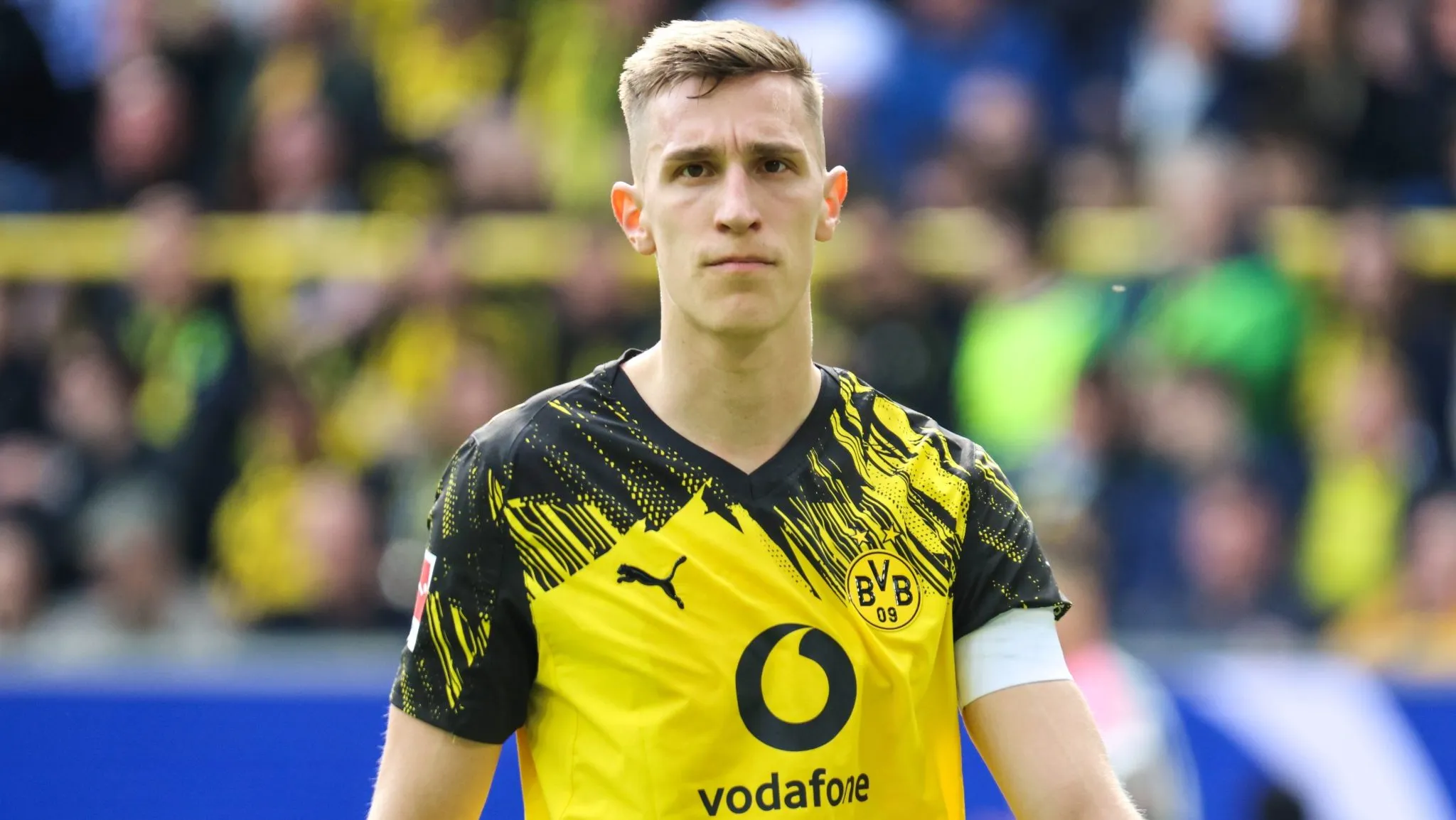
According to Jogo Hoje, the latest Nico Schlotterbeck contract news has landed like a curveball at Signal Iduna Park. Borussia Dortmund moved to lock the 26-year-old defender down until 2031, a move that was supposed to shut down the chatter and cool the temperature inside the stadium. Instead, it sparked fresh heat: when Schlotterbeck’s name popped up during the matchday lineup, the arquibancada let him have it.
Let’s be blunt. In the transfer market, players don’t only get judged by performances; they get judged by what their contracts allow. And Dortmund’s communication around the cláusula de rescisão has left a section of the fanbase convinced the club has protected the wrong thing at the wrong time.
The extension that was meant to end the saga
Dortmund announced Schlotterbeck’s extension after a long-running story, with the club’s intent clear: keep a key figure in the defensive group and provide a leadership anchor as the season grinds on. The timing also mattered. Dortmund have been hit hard on multiple fronts, including Champions League and DFB-Pokal exits, and they’re chasing the Bayern Munich gap in the Bundesliga, sitting 12 points behind with just five matches left.
Schlotterbeck, who has already made 156 appearances for Borussia Dortmund since joining in 2022 from Freiburg, is widely viewed as one of the most valuable defenders on the market. That’s exactly why big clubs keep sniffing around. The valor de mercado story is obvious: if the player is both reliable and attractively priced, the “maybe next window” rumors never really die.
In fact, Real Madrid were mentioned as a realistic destination, especially with concerns around the future of Antonio Rüdiger. The point is not whether Madrid will move. The point is that Dortmund’s extension didn’t remove the possibility; it may have made it easier to price.
The contract detail that set the crowd off
The trigger for the backlash wasn’t Schlotterbeck’s ability. It was the fine print. Dortmund were not fully transparent about the numbers and mechanics, and then German outlet Bild reportedly put figures on the table.
According to the report, the cláusula de rescisão could be as high as 60 million euros for “some clubs” as early as the next transfer window, roughly €60m, cited at around R$ 350 million. That number is not pocket change. But in modern football’s accounting language, it can still read as a bargain for a club that wants to strengthen immediately.
And here’s the transfer-journalist reality check: if a top side can pay a known amount, the whole idea of blindagem contratual shifts. Instead of “Dortmund safe, player staying,” it becomes “Dortmund safe… for now.” The crowd at the Signal Iduna Park clearly sensed that.
So yes, the players were booed during the 1-0 loss to Bayer Leverkusen. But the boos weren’t about the result alone. They were about the sense that Dortmund’s gestão de elenco may still be vulnerable to the next bidder.
Why Dortmund accepted the clause
From a front-office standpoint, a release clause can be a rational tool. It can protect a club in two ways at once. First, it ensures there’s a financial ceiling on an exit, so the player is not leaving saída sem custos in a way that hurts the balance sheet. Second, it can be used as a negotiation lever: “We’re serious about keeping you, but we also respect the market.”
That’s the logic Dortmund were trying to sell. The extension is framed as a long-term plan, with contract terms designed to keep a transfer fee attached if an elite club comes calling. In other words, Dortmund wanted compensation for their investment, not just vibes.
But fans don’t read balance sheets. They read risk. And when the mercado da bola hears there’s a path to move a player with a relatively defined price, the valor de mercado becomes a question mark. Is this truly a “commitment until 2031,” or is it a bridge with an exit ramp?
That tension is exactly what Dortmund tried to smooth over with the announcement, yet the stadium reaction suggests the messaging didn’t land.
Schlotterbeck’s weight in the squad and the market
Let’s talk about football value, not just contract value. Schlotterbeck is a 26-year-old center-back with a profile that scouts love: composure, defensive structure, and the kind of age window that makes coaches and recruitment teams salivate. He’s also a captain-type presence in the making, and Dortmund’s intent was to hand him more of a leadership role, including as a successor to names like Mats Hummels and Marco Reus in spirit, if not in exact duties.
When you’re building an 11 that must compete for the Bundesliga and Europe in the same breath, you don’t treat a defender like a disposable commodity. You build around him. That’s why the boos sting more than a normal fan frustration. It signals a fear that Dortmund might be protecting a player on paper, while the next window could still rewrite the plan.
And yes, Dortmund are currently in a rough sporting patch. They’re behind the league leaders, they’re trying to salvage the season’s finishing order, and they’re down to five matches. With two home games remaining at Signal Iduna Park, against Freiburg and Eintracht Frankfurt, the atmosphere becomes part of the tactical environment. If the arquibancada turns, it affects rhythm, confidence, and even how brave the press can be.
Carsten Cramer and the communication crisis
Carsten Cramer, Dortmund’s CEO, didn’t mince words after the booing episode. In the mixed zone, he criticized the crowd’s reaction and emphasized that players who wear the shirt deserve support on the pitch.
But here’s the tough take from the transfer side: you can’t scold fans for questioning the terms of a deal. You can only do two things. You either make the contract details crystal clear from day one, or you structure the blindagem contratual so there’s no plausible “easy exit” narrative.
Dortmund tried the first route too late, and the second route never fully reassured the supporters. That’s why the reaction has a political flavor now. It’s no longer only about Schlotterbeck; it’s about trust in the club’s decision-making.
What could happen in the next window
If top clubs like Real Madrid view the number as acceptable, then the next transfer window becomes a real chess board again. The clause being tied to “some clubs” is the kind of detail that changes scouting calendars. It’s not just about whether Madrid want Schlotterbeck; it’s about how quickly they can move once they decide.
Dortmund still have a few levers, and they’re all about management. If they want to neutralize the risk, they’ll need to do three things with urgency.
- Keep Schlotterbeck’s role central on the pitch, so the contract story matches the sporting reality.
- Improve transparency around the cláusula de rescisão so supporters understand what “protected” actually means.
- Signal in the market that Dortmund are building a core, not just collecting assets for sale.
The remaining fixtures don’t just decide points; they decide narrative. With Bayern potentially clinching the title early if results go their way, Dortmund will be hunting for pride and momentum. If the crowd expects a future exit, every home game becomes a referendum.
O Veredito Jogo Hoje
From a transfer specialist’s chair, Dortmund’s deal looks like classic “we wanted the best of both worlds,” but they paid for it with trust. A release clause can be smart for saída sem custos avoidance and compensation security, yet if the communication leaves the arquibancada guessing, the club ends up losing the most valuable currency in football: certainty. Schlotterbeck deserves support, but the fan anger is also a reminder that modern mercado da bola decisions live or die on details, not slogans.
Perguntas Frequentes
Why was Schlotterbeck booed by Borussia Dortmund fans?
Because supporters reacted to the reported contract terms, specifically the cláusula de rescisão that could allow certain clubs to trigger an exit during the next transfer window, reigniting fears about his future at the club.
What is the release clause in Schlotterbeck’s new contract?
According to reporting from Bild, the cláusula de rescisão could be up to 60 million euros for “some clubs,” potentially as early as the next transfer window.
Can Real Madrid still sign Schlotterbeck?
Yes, in principle. If Real Madrid fall under the category of clubs covered by the clause conditions, they could pursue the player by paying the stated amount, making the next window a realistic moment for talks.