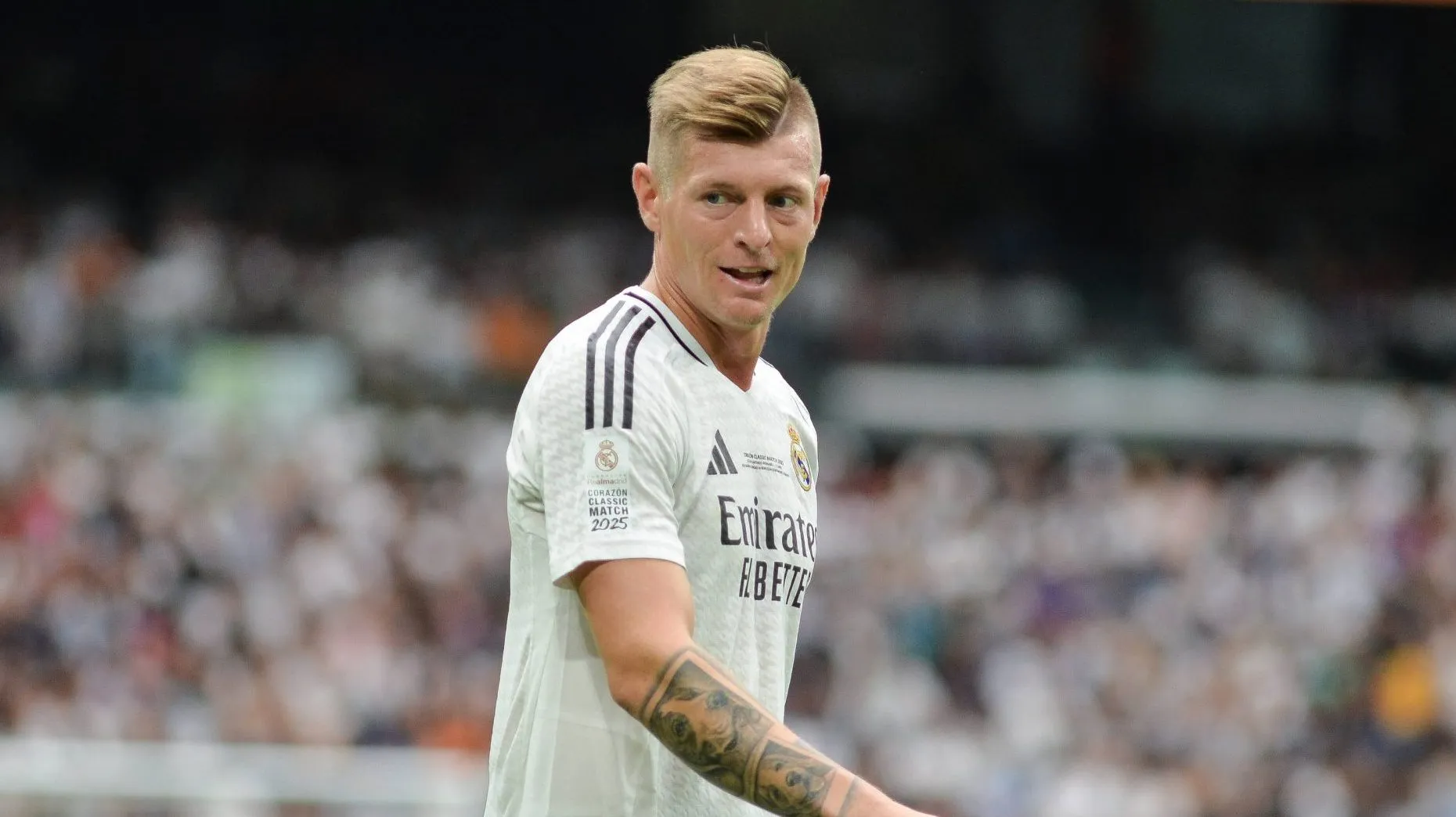
Real Madrid’s off-the-pitch chessboard is moving again, and according to Diario AS the club is preparing to bring Toni Kroos back into its orbit in a new role. As reported by Jogo Hoje, the story has been corroborated by Fabrizio Romano, and the timing is what really grabs your attention.
We’re not talking about a ceremonial return. This looks like a direct attempt to rebuild what has been wobbling since the end of Kroos’ playing days: control of the game, internal hierarchy sports, and the club’s full football structure from the training ground to the dressing room.
What Real Madrid decided and why it matters
In short, Real Madrid want Kroos back, but not as a player. The plan is to integrate him into the club’s leadership framework, with the move discussed as part of the next season’s internal reshuffle. The key point is urgency: the club believes Kroos’ departure left a measurable gap, both in the organization tática of the squad and in the way decisions get translated from strategy to daily execution.
And honestly, when you watch Real Madrid’s recent struggles to dictate matches across different contexts, you start to understand why Florentino Pérez would push for an answer fast. Who else can stitch together identity and methodology so naturally? The club clearly thinks Kroos can.
Why Kroos became a priority behind the scenes
After Kroos announced his retirement at the end of the 2023/24 season, the club’s internal calculus shifted. Kroos wasn’t just a midfielder; he was a reference point for tempo, spacing, and game reading. Take that away, and you don’t simply lose a “role” in the lineup—you lose a kind of internal compass.
That’s why the conversation about integrating him into Valdebebas started immediately after retirement. The training centre isn’t just bricks and grass; it’s where the club’s identity gets rehearsed every day. If Real felt the leadership de bastidor was fraying, bringing Kroos into the system becomes a logical, almost surgical, fix.
But then the pressure ramps up. Carlo Ancelotti left in June 2025, and the subsequent period under Xabi Alonso and now Álvaro Arbeloa has been a real test of continuity. When the technical staff changes, the “football structure” has to stay coherent—otherwise the players start guessing instead of executing. Kroos, in theory, is the bridge.
The void left by Kroos after retirement
Kroos opened a new chapter at the exact time Real Madrid were searching for stability. The retirement did not only remove a passer of rare quality; it removed a metronome. And in high-level football, a missing metronome shows up in the smallest details: the timing of first touches, the speed of the second phase, the comfort on the ball under pressure.
From our side, we see it like this. Kroos’ influence on control de jogo was never limited to match days. It was also about how the team understood risk, how it managed transitions, and how it built trust in the plan. When that disappears, you feel it in the middle of the pitch—where matches are usually won or lost.
So when we hear that Real Madrid want to recover equilibrium in the bastidores merengues, it reads less like nostalgia and more like a tactical necessity. The club wants the kind of stability that turns “good moments” into repeatable patterns.
The role of Florentino Pérez in the operation
Florentino Pérez is described as the main driver of the idea, and it makes sense. Pérez doesn’t build decisions on vibes; he builds them on identity and long-term control. If Real Madrid perceive they lost balance in the decision-making ecosystem, he’d want Kroos back quickly—someone with credibility, clarity, and the ability to influence how football is taught inside the building.
There’s also a political dimension, even if you hate that word in football. Kroos is respected across the club, and his “voice” carries weight. That’s hierarchy sports in action: when the message comes from the right place, the staff and players stop interpreting it differently.
In a period where the club wants to reset the organization tática and rebuild trust in the process, Kroos becomes a high-value asset—especially if the role is designed to protect the club’s methodology, not replace it.
What Kroos already does off the pitch and how it fits
Kroos has stayed close to football since hanging up his boots. He remains in Madrid with his family and has already launched a football academy in Boadilla del Monte. The project isn’t a side hobby; it’s a structured attempt to recruit and develop young players.
Here’s where the academia de formação connects to the big picture. Recent weeks have seen teams from his academy visiting Valdebebas, the club’s training hub. That kind of interaction matters because it can feed Real’s future ecosystem with the same philosophy—if Real Madrid chooses to align his work with their own internal training model.
If the club appoints him in a leadership capacity, Kroos’ day-to-day experience with youth development could become a pipeline tool. Not just “development,” but identity transfer: how players learn to think, position, and play under pressure.
What still needs to be defined: role, contract, and timing
Even with the move largely in motion, details are still under analysis. Reports point out that the specific job title has not been confirmed, and contract terms are still being aligned. That’s normal at this stage, but it matters: Real Madrid can’t just “have Kroos around.” The club needs a role that directly targets the problem they believe exists.
So the question is: will he be closer to coaching methodology, recruitment and formation, or internal leadership within the football department? The answer will determine whether this is a smart fix for control de jogo and estrutura de futebol, or simply a symbolic gesture that doesn’t change the daily rhythm inside Valdebebas.
O Veredito Jogo Hoje
Real Madrid moving this fast for Kroos is a statement: they’re admitting the middle needs a brain again, not just legs. Kroos’ absence was felt because his influence was structural—tempo, decision-making, and leadership that stabilizes the whole ecosystem. If Pérez uses him to reinforce methodology and liderança de bastidor at Valdebebas, this becomes more than a headline; it becomes a tactical reset with long-term payoff. Caso contrário, vira barulho. E o Real Madrid, hoje, não pode se dar ao luxo de errar o timing.
Perguntas Frequentes
What will be Toni Kroos’ role at Real Madrid?
Spanish reporting indicates he’s set to join the club’s football structure in a new function, but the exact title and responsibilities are still being discussed. The focus appears to be leadership and methodology, potentially linked to Valdebebas and the club’s formation ecosystem.
Why does Real Madrid want Kroos back so quickly?
Because the club believes Kroos’ retirement created a real imbalance in how the team controls matches and how the internal football framework operates. With changes on the coaching side since Ancelotti left in June 2025, the club wants to restore stability in hierarquia esportiva and organização tática without waiting for the situation to drift further.
Can Kroos work with the academy or in professional football?
Both are plausible. Kroos already runs an academy in Boadilla del Monte and has had youth teams visit Valdebebas. If Real Madrid aligns his off-the-pitch work with its internal training philosophy, his role could bridge formation and the professional structure.