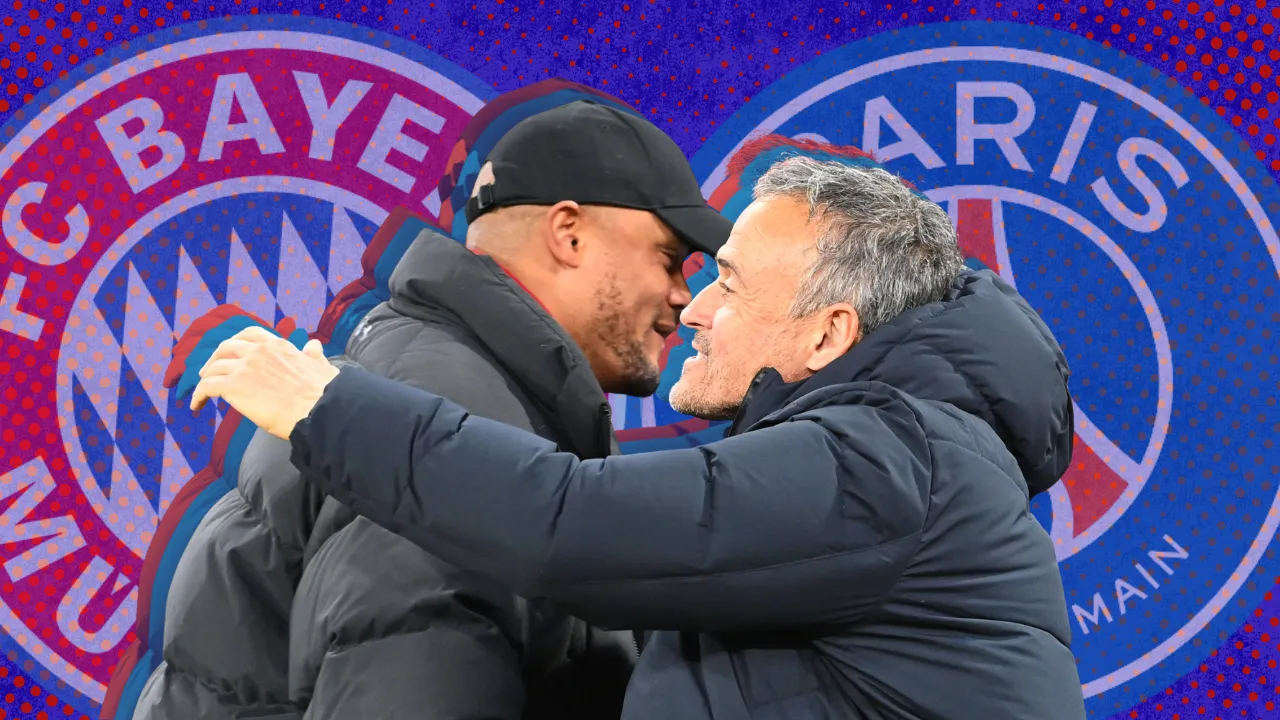
According to Jogo Hoje editorial analysis, PSG vs Bayern wasn’t just a spectacular scoreline. It was a loud symptom: the sport may be drifting toward a more aggressive, more intense, and possibly shorter model of itself. And the 5-4 from the first leg of the Champions League semi-final on Tuesday, the 28th, made the argument impossible to ignore.
Five goals for one side, four for the other, and a match that felt like it was being played at emotional maximum capacity. Yet the real question isn’t “how did it end that way?”. The real question is “why can’t we get more games that feel like this?”.
The game that turned from entertainment into a thesis
PSG vs Bayern delivered that rare kind of football where the game doesn’t merely happen inside a tactical plan, it keeps rewriting the plan in real time. It was constant give-and-take, a meeting of offensive talent so stacked it made two elite defenses look, at times, oddly porous. But calling it a defensive collapse would miss the point. This was a match where pressure, space, and timing were the main characters, and everyone else was reacting a beat late.
We’re used to treating goal-fests as anomalies. But what if they’re not? What if the league of elite coaching has simply started testing a different “operating system” for high-level matches, and PSG and Bayern were the clearest demonstration?
That’s where the philosophical angle comes in. This wasn’t just a highlight reel. It was a glimpse of how football behaves when aggression becomes the default setting rather than a late-game emergency. When the press is brave, when the block is high, when the duel is continuous, the match stops being a chessboard and becomes a storm.
Why PSG and Bayern look like they’re pointing to a new standard
Vincent Kompany and Luis Enrique aren’t clones, but their thinking carries a shared DNA: manipulations of space, pressure that doesn’t politely wait its turn, and a desire to dominate vertically instead of surviving horizontally. That’s the common thread. Not identical systems, but similar intentions. And intentions matter because they shape risk, and risk shapes the rhythm of the whole match.
Both teams wanted to impose their football, even if it meant leaning into chaos. That’s why the scoreline inflated. Not because they forgot defending, but because their attacking principles were built on a willingness to trigger pós-perda moments like they’re part of the plan, not a failure mode.
Here’s the part that should make everyone in the stands and on the sidelines uncomfortable: if this model is replicable, then why is it still treated like an exception?
Imagine a league where more teams adopt the same intensity package. More pressão alta. More frantic trocação after turnovers. More marcação individual and more aggressive attempts at ocupação de espaços, forcing opponents to be pulled across the pitch like furniture being dragged in a hurry.
Even the body language of individual players screamed the idea. Alphonso Davies chasing Désiré Doué sometimes looked less like a flank assignment and more like a full-pitch pursuit. That’s what happens when transição ofensiva and defensive recovery are treated as one continuous action. The match becomes a loop: attack, lose it, scramble, attack again. That loop is exhausting, and it’s exactly why it’s so compelling.
What changes when pressure becomes the rule
When pressão alta becomes the rule, the game’s physics shift. You’re no longer managing space only to protect your goal. You’re managing space to steal it, to weaponize it, and to punish the opponent’s first touch.
In a high-stakes environment, that turns duels into dominoes. A team’s first press trigger affects the opponent’s next passing lane. The opponent’s attempted escape affects the next defensive shape. The next shape affects the next pós-perda moment. That’s why games like this stick in memory: the chaos is not random, it’s engineered.
And yes, this is where the match can “amornar” late. PSG vs Bayern carried massive intensity for a long stretch, but even in a game of this magnitude, the last 15 or 20 minutes felt like the system started losing grip. It’s not a moral failure. It’s physiology. It’s tempo decay. It’s the brutal math of 90 minutes in a sport where the best teams are also the most demanding to play for.
That’s the core tension: we want more games where pressure, bloco alto, and aggressive recovery run like a machine. But the current format doesn’t always allow the machine to stay at full throttle for long enough.
The 60-minute thesis: real solution or useful provocation?
Let’s talk about the idea that refuses to die: reducing match time, with defenders of 60-minute football arguing it would force teams to be more offensive because there’s less runway to “manage” the game. Less time to absorb a setback. Less time to recover after conceding. Less time to play not to lose.
That argument is persuasive because it targets the incentive structure, not the aesthetics. If you know there are fewer minutes available, you don’t get to treat the first half as a feeling-out process forever. You don’t get to park the bus and call it patience. You have to take risks earlier, and you have to commit to your pressing identity longer while you still have legs.
There’s also a practical angle: the sport already loses minutes to stoppages and time-wasting. So “90 minutes” is a promise more than a reality. And when you stack cera culture on top of it, the effective game time often doesn’t reach what fans believe they’re buying.
That’s why comparisons to formats that pause the clock when the ball is out of play keep resurfacing. The futsal model isn’t a perfect transplant to the Champions League, but the principle is clear: if the clock respects the game, the game respects the clock. The urgency increases. The margin for “game management” shrinks.
Would 60 minutes automatically manufacture PSG vs Bayern every week? No. Football isn’t a vending machine. But in a sport already asking for structural change, it’s at least a route worth testing seriously, not dismissing with a shrug.
And if the sport genuinely wants more matches of this texture, then the debate shouldn’t be limited to praising the next Bayern x PSG. It should be about building conditions where aggressive football becomes normal rather than rare.
What this debate says about the public and football today
Here’s where the philosophy stops being abstract and becomes uncomfortable. Football’s audience isn’t waiting for perfection. It’s waiting for intensity that delivers fast.
Not having that level of sustained entertainment has pushed some viewers away, particularly younger fans who don’t experience football as a weekly ritual the way previous generations did. The sport is competing against infinite feeds, and the attention economy doesn’t care about tradition.
In Brazil, the numbers are brutal. According to a Datafolha survey, 54% of Brazilians say they don’t even intend to watch the World Cup. That’s not just apathy; it’s a signal. When the sport loses the habit of excitement, it loses people.
So the rise of new formats isn’t a novelty trend. It’s a response. When something like the Kings League grows, it’s because the audience senses that football needs a faster emotional return. Ninety minutes, with effective time often below what fans imagine, can’t always guarantee the intensity arc people crave.
Meanwhile, teams and styles are judged through a different lens. Arsenal and Atlético de Madrid, for instance, are frequently criticized for being more pragmatic than flashy. Whether that criticism is fair is a separate issue. The point is that the conversation has shifted: supporters increasingly demand a pace and a pressure profile that feels like a constant event.
In that context, the pressing chaos of matches like PSG vs Bayern reads like a cultural argument. Not only about tactics, but about what the public is willing to keep paying attention to.
O Veredito Jogo Hoje
PSG vs Bayern didn’t prove football is “better” when it’s louder. It proved football is still capable of being dangerous, aggressive, and relentlessly watchable when coaches treat pressão alta, transição ofensiva, and pós-perda as a single philosophy instead of separate departments. The real sin is pretending this intensity belongs only to special nights. If the sport wants to stop bleeding engagement, it has to redesign incentives, not just celebrate outcomes. And yes: the 60-minute debate is not a gimmick. It’s a provocation the game can’t afford to ignore. — Filósofo Esportivo, do Jogo Hoje.
Perguntas Frequentes
PSG vs Bayern could influence how football is played in the future?
It can, because elite coaching doesn’t just copy formations; it copies operating principles. A match that showcases pressure intensity, aggressive recovery, and chaotic space occupation can push other managers to test similar behaviors—especially if fans and broadcasters respond positively to the tempo.
Why did the idea of 60-minute matches gain traction again?
Because the sport’s intensity decays late, and fans increasingly experience “90 minutes” as less than that. Reducing match time is seen as a way to compress incentives, force earlier urgency, and make high press and pressing recovery more sustainable through the whole game.
What would change tactically if football had less time?
Teams would likely start pressing earlier and commit to risk sooner, since there’s less time to recover after a goal. Expect more vertical play, more time spent in bloco alto, and more structured aggression in pós-perda phases—because “we’ll fix it later” becomes harder to believe.