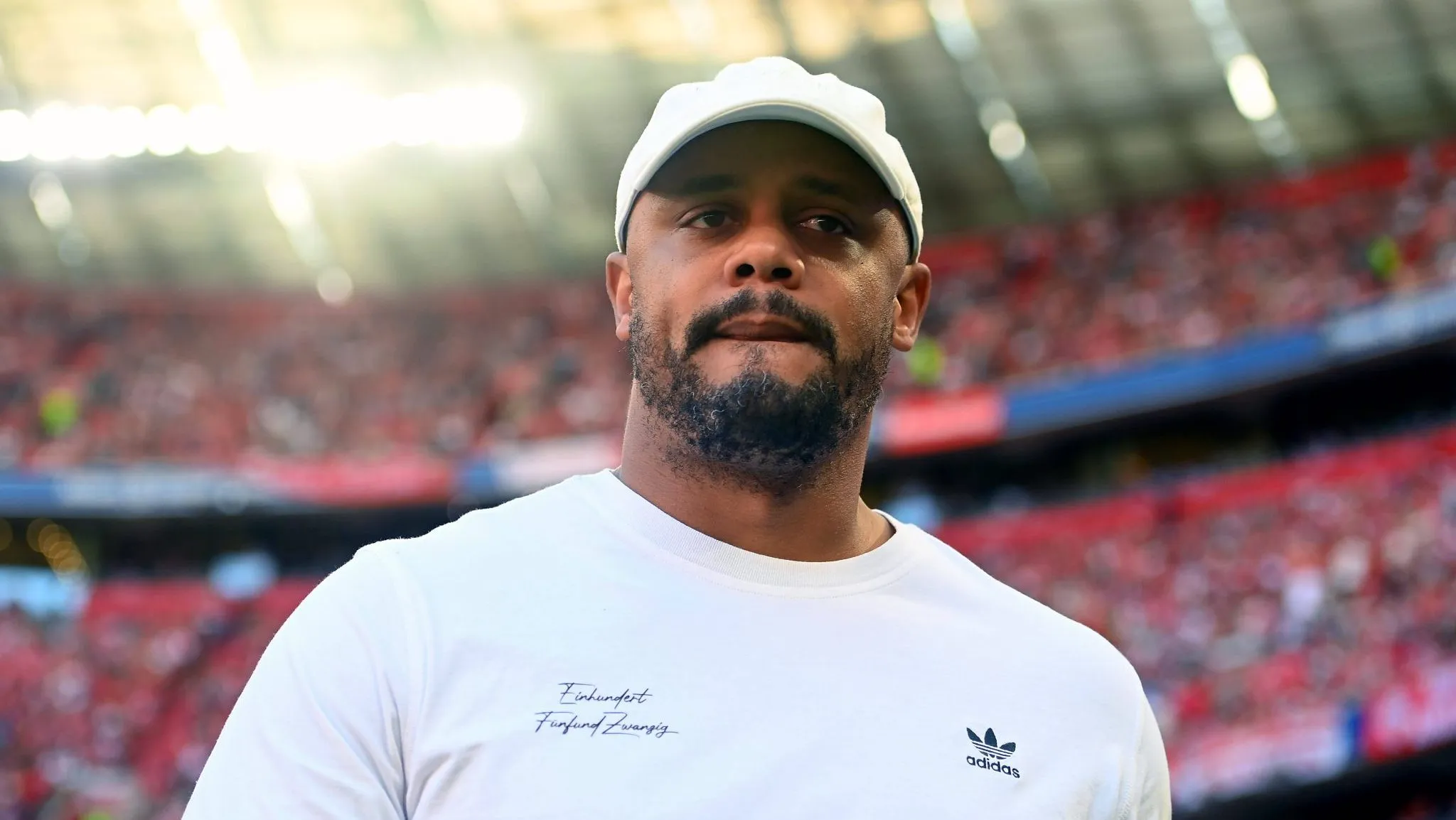
Ahead of the Champions League second leg, where the noise at the Allianz Arena feels like it’s already humming, Vincent Kompany didn’t bother with empty politeness. According to our coverage at Jogo Hoje, this tie has been unfolding like a tactical chess match with emotion turned up to maximum, and Kompany’s comments basically tell you why. PSG, he said, have the structure to stay elite for years, not just for a single sprint toward the final in Budapest on 31 May.
Komapny’s praise and what he really says about PSG
Let’s be honest: the quotes are admiration, yes, but they’re also a warning label. Kompany framed PSG as the strongest collective in Europe over the last two years, then pointed to the thing that keeps showing up in their best stretches: youth with a winning mentality.
He’s not talking about talent on a highlight reel. He’s talking about the operational engine behind it. The kind of squad that can keep the intensity without the emotional hangover, week after week, game after game. And in a semifinal after a PSG 5 x 4 Bayern first leg, you don’t get to hide behind sentiment. You either control the match phases or you get punished by them.
PSG’s profile under Luis Enrique is exactly that: jogo posicional when they need control, acceleration when the game turns chaotic, and a readiness to absorb pressure and respond. Kompany even underlined that the club’s work is already producing results at the highest level, with the added advantage of a young core.
Why the youth in the squad matters in this semifinal
The numbers from the first leg are the clearest tactical clue you’ll get. In the PSG starting XI for the 5-4 shoot-the-lights-out affair, there was only one player above 30: Marquinhos (31). Seven starters were 25 or younger.
That matters because youth changes how a team handles the match’s emotional temperature. In a tie like this, the margin is psychological as much as it is tactical. When PSG are pressing, when they’re trying to trigger pressão alta and win duels higher up the pitch, you need legs that can repeat sprints and recover quickly. You need players who can keep their decision-making sharp after a rough spell. And, crucially, you need recuperação pós-perda to be functional, not just enthusiastic.
When PSG lose the ball, they don’t just wave their arms and hope. They try to reset the structure fast enough to prevent Bayern from getting a clean runway into the half-spaces. That’s the difference between a team that survives chaos and a team that weaponises it through transição defensiva.
What Bayern and PSG took from the 5-4 first leg
The first leg wasn’t merely “open.” It was a showcase of how both teams can hurt you—and how easily the wrong habits get punished. PSG’s ability to attack transitions and stretch the game created the headline scoreline. But the flip side is obvious: if you keep playing with your line relationships stretched, the opponent will eventually find the seams.
Warren Zaïre-Emery basically admitted what the match already proved: the return could look a lot like the first act, only with more tactical discipline required. He said PSG won’t exaggerate, yet they’ll aim to impose the tempo, press high, and attack the opponent’s territory. That’s a classic recipe for a game with big risk and even bigger reward.
And Kompany’s framing adds another layer: this is not about “admiring” each other like it’s a friendly. It’s about using respect as motivation. The Bayern side, under pressure and needing a result, will try to make PSG uncomfortable in the space behind the front line if the bloco médio can’t step together as one.
Second-leg scenario: what each team needs to reach the final
Now the math becomes the referee of the emotions.
- PSG advance with a draw.
- Bayern must win by two goals to go through.
- A one-goal Bayern win sends the tie to extra time.
- If Bayern’s advantage stays at one goal after extra time, the tie goes to penalties.
That’s why the early phase at the Allianz Arena will be fascinating. Bayern can’t afford to “feel it out” for too long. They need to chase the score, but chasing the score can open the game. And once the game opens, PSG’s attacking profile becomes even harder to defend against.
Tactical reading: press high, risk, and the space behind
Here’s where Kompany’s words connect to the on-pitch reality. PSG’s plan, as Zaïre-Emery described, is direct: pressão alta, recover the ball high, and create chances. That’s not just “style.” It’s a structural bet on reducing Bayern’s comfort on the ball and forcing rushed decisions.
If PSG execute their pressing triggers, Bayern will be pushed into a hurried transição defensiva cycle. But the catch is always the same in these matches: when you press with intensity, you must protect your back pocket. If PSG’s distances get messy, Bayern will punish them with quick verticality and direct runs.
So the real chess move is how PSG manage the moments between the press and the reset. Can they hold a compact bloco médio without surrendering too much space between the lines? Can they keep linhas de passe available for progressive circulation while still maintaining amplitude ofensiva to stretch Bayern’s defensive structure?
From Bayern’s side, the pressure will likely be twofold: score pressure and tactical pressure. They’ll need to win the second ball and survive PSG’s first wave, then grow into the match through jogo posicional when the first rush fades. But if Bayern fail to counterpress quickly, PSG’s recuperação pós-perda will turn “lost moments” into “lost territory.” And in a semifinal with this kind of history, territory equals chances.
O Veredito Jogo Hoje
We’re not buying the idea that this is just a battle of names and reputations. The deciding factor is how often PSG can keep their structure coherent after losing the ball, and whether their young squad can repeat the press without turning it into a sprint that burns out in the second half. Kompany nailed the underlying detail: PSG’s youth isn’t a feel-good story—it’s the engine for intensity, the foundation for pressão alta, and the reason their project can stay dangerous beyond this single tie. If PSG protect the spaces behind the first wave and keep their linhas de passe clean, Bayern’s “must-win” mentality turns into a gift.
Perguntas Frequentes
What did Kompany say about PSG before the semifinal?
He praised PSG as the strongest club in Europe over the last two years and argued that their project can stay at a high level for years, pointing specifically to the quality and the youth of the squad alongside Luis Enrique’s work.
What does Bayern need to do to reach the final of the Champions League?
Bayern must win by two goals to qualify. A one-goal win sends the tie to extra time, and if the advantage remains at one goal after extra time, the match is decided on penalties.
Why is PSG seen as a strong project for the next few years?
Because their core is built around a young group that already performs at a winning level. The first-leg lineup reflected that: only one starter was over 30, and seven were 25 or younger, giving PSG the physical and mental durability to sustain high-intensity phases like pressão alta and rapid recuperação pós-perda.