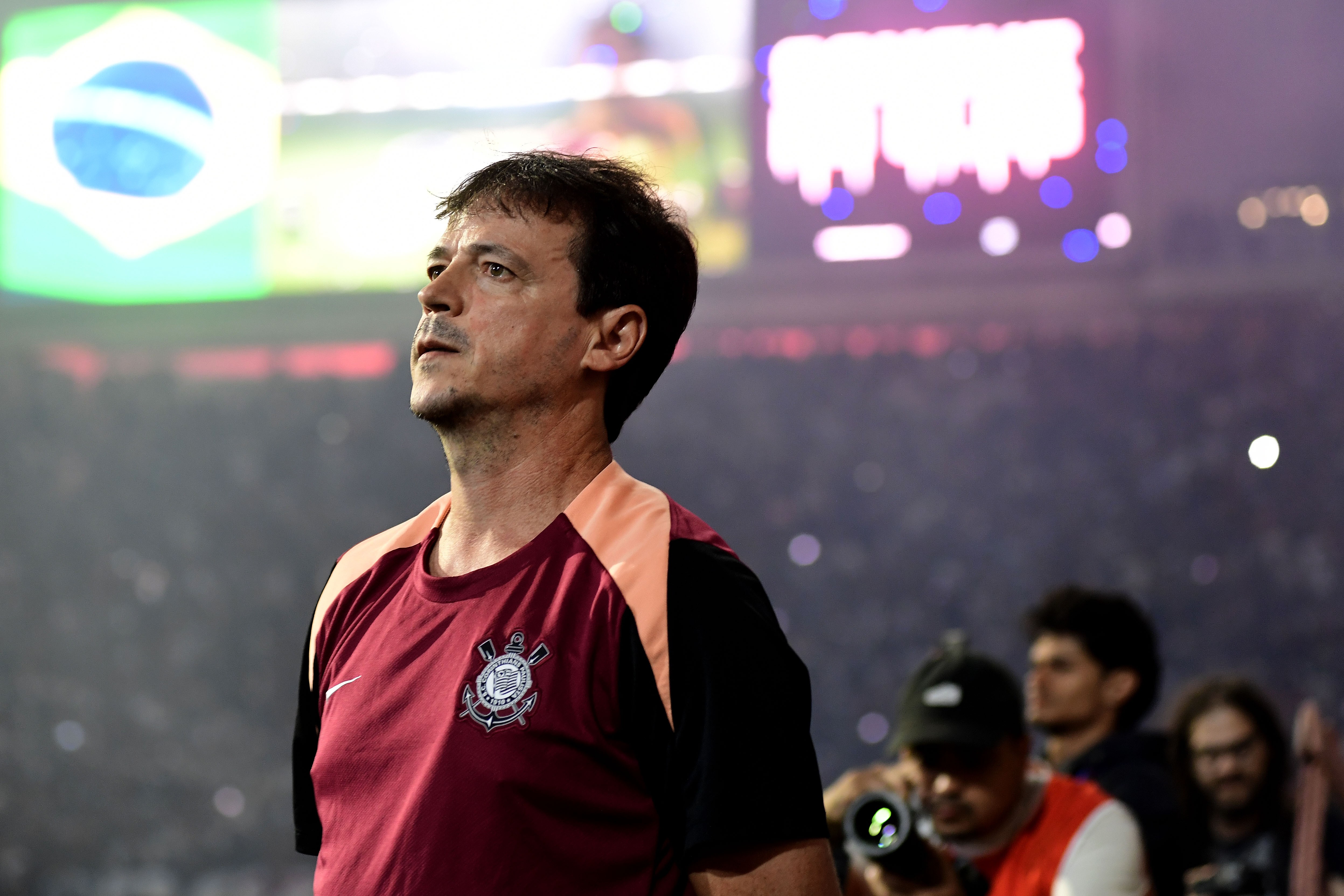
Fernando Diniz didn’t sugarcoat the moment, but he did something smarter: he framed the 0-0 Derby against Palmeiras as a tactical reset under pressure. Corinthians went into the match with the league breathing down their neck, sitting 16th with 10 points after 11 rounds, and still managed to leave the Neo Química Arena with the clean sheet that matters most: none of the chaos turned into conceding.
And yes, we’re talking about a game where the script got nasty. Corinthians had André sent off in the first half, then Matheuzinho was also shown red later. That’s not just “a tough day at the office.” That’s a test of structure, timing, and who actually understands the plan when the match gets ugly. According to Jogo Hoje, the bigger story is how Diniz kept the team coherent instead of letting the match dissolve into damage control.
Fernando Diniz’s reading: why this 0-0 mattered more than the scoreline
Let’s be honest. A 0-0 at home in a hostile league period can look like a “survival point.” But Diniz treated it like a statement. His core message was simple: Corinthians showed competitiveness you can measure. Not vibes. Not noise. Measurable consistency, especially in the defensive phase.
In Diniz’s view, the team’s functioning matched the atmosphere around it. When the game demanded a lower tempo and sharper spacing, Corinthians complied. When the opponent tried to drag them into a scramble, the side stayed organized enough to deny the final pass. That’s why he kept coming back to the idea that the group didn’t just endure the red cards, they stayed competitive.
From a tactical lens, the most telling part is the “no-goal” mindset paired with a controlled plan. The match was less about flashy possession and more about making Palmeiras play into a block low and then punishing any loose moments with disciplined pressing triggers.
What changed after the expulsions and how Corinthians reorganized
Two red cards in a Derby usually break teams. Here, Diniz did the opposite: he adjusted the geometry. After the second dismissal, he shifted the team into a more defensive posture built on compactness and clear roles.
The key tactical detail was the shift into two lines of four. That’s not a slogan; it’s a map. It tells you where the distances should live, how the rest-defense line should protect the half-spaces, and how the team should manage the late-game waves that always come after a long spell of pressure.
Here’s where the phrase reorganização pós-expulsão becomes real. With numbers stretched, Corinthians didn’t wander. They held the line, controlled the angles, and reduced the “second ball” chaos that typically follows a red card. That’s how you survive without turning the match into a series of emergency clearances.
And yes, the transitions mattered too. Diniz’s Corinthians worked the transição defensiva in a pragmatic way: when the ball was lost, the nearest players didn’t chase shadows. They reset the shape quickly, so Palmeiras couldn’t exploit the first two seconds after turnover. In these games, those seconds decide everything.
Garro, Yuri and the improvised roles in the Derby
Diniz also highlighted something that only makes sense if you’ve watched the team closely: Rodrigo Garro wasn’t just “stuck doing one job.” The coach argued that Garro delivered a different function tática than the one fans associate with him most often.
Normally, Garro’s value is tied to how he affects the build-up and how he attacks from the right channel. But in this match, the emphasis shifted. The idea was to keep the offensive contributions organized while still protecting the defensive spacing. That’s why Diniz talked about Garro not being limited to a single mode of play.
Then came Yuri Alberto, and this is where Diniz’s tactical satisfaction really shows. After the second sending off, Yuri was tasked with stepping into a role linked to Garro’s responsibilities. Diniz framed it as a deserved spotlight: Yuri’s movement, commitment, and ability to protect the team’s structure in the forward zone.
There’s also the Diniz signature in how the side tried to vary the rhythm. He referenced inversão de corredor and aproximação por dentro at key moments, including ideas like attacking the central corridor to force Palmeiras to shift laterally. That’s corridor play, not just “cross and hope.”
And for the record, Kayke’s management fits the same logic. Diniz kept him to maintain balance, then introduced Jesse (Lingard) to preserve the tactical message without letting energy dip in critical phases.
If you want the takeaway: the Derby wasn’t only about holding. It was about executing a plan with different bodies in different jobs. That’s what separates a team that “survives” from one that grows.
The force of the stands and the internal effect on the squad
Diniz clearly believes the crowd isn’t decorative. He praised the alignment between the squad’s behavior and the tone coming from Itaquera. And while we can debate the romantic language, the tactical truth is straightforward: teams play better when the emotional pressure doesn’t turn into panic.
In a match with two red cards, the worst thing you can do is lose your internal communication. Corinthians didn’t. The players appeared to share the same compass. That’s why Diniz could talk about “same tone” without his words sounding like empty theater.
This is where the phrase bloco baixo meets the human part of football. A low block requires trust between lines. It requires players to know when to step, when to hold, and when to cover. The fans’ noise can amplify intensity, but the real control comes from the squad’s discipline.
So yes, there was tension. But the tension didn’t leak into breakdowns. That’s a coaching win.
What the result means for Corinthians’ table and the next stretch
Corinthians remain close to the relegation zone, occupying 16th with 10 points. That part doesn’t change. But the point they earned against Palmeiras is more than a number. It buys time, confidence, and a concrete proof of concept for Diniz’s approach during instability.
Because the next game arrives fast. On Wednesday, Corinthians face Santa Fe at the Neo Química Arena in the Conmebol Libertadores. That turnaround is brutal, but it’s also perfect for a team that’s trying to rebuild its emotional and tactical baseline.
Diniz also referenced the team’s recent momentum in Argentina against Platense, connecting the dots between grit, structure, and the capacity to stay competitive even when the match turns sour. That continuity matters. A “one-off heroics” story doesn’t rebuild. A pattern does.
For the next match, the question is obvious: can Corinthians keep their reorganização pós-expulsão mindset active even when they’re not playing with the opponent’s or their own cards creating chaos? If they can, the table might stop feeling like a trap.
O Veredito Jogo Hoje
We’ll call it like we see it: this wasn’t a lucky 0-0, and it wasn’t just “defense first” theater. Diniz used the red cards as an X-ray of his squad’s structure, then rebuilt the spacing with lines of four, tightened the transition defense and kept the offensive plan connected through roles—Garro’s adaptation, Yuri’s stepping in, and the corridor ideas like inversão de corredor. In a league where Corinthians are constantly one bad spell away from a spiral, this draw looks like a real turning point, not a cosmetic bandage. Assinado: Jogo Hoje, com olho de quem gosta do detalhe tático.
Perguntas Frequentes
What did Diniz say about Corinthians’ performance in the Derby?
Diniz praised the team’s competitiveness under pressure, saying Corinthians and the fans played “on the same wavelength,” and that the group showed the capacity to be solid tactically and determined enough to avoid conceding.
Which Corinthians players were sent off against Palmeiras?
André received a red card in the first half, and Matheuzinho was sent off in the second half.
What is Corinthians’ next match after the 0-0 draw?
Corinthians play on Wednesday at the Neo Química Arena against Santa Fe in the Conmebol Libertadores.