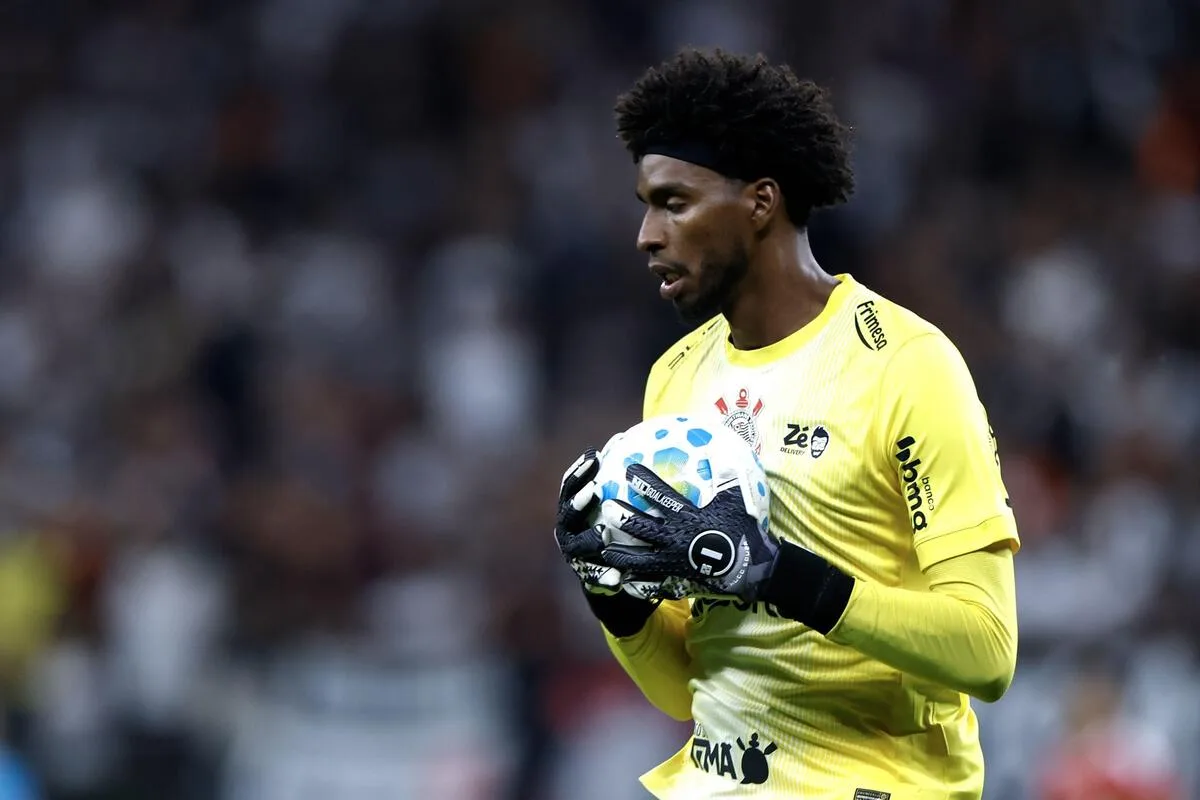
The Corinthians faithful got a twofold message in their Libertadores opener in 2026: the new era under Corinthians manager Fernando Diniz is not built on chaos, and it can start delivering even with limited time. According to the latest coverage and context from Jogo Hoje on the complete run of Corinthians in the Libertadores, the most telling detail came from goalkeeper Hugo Souza after the 2–0 away win over Platense on 9 April 2026.
Yes, it was “only” two days of training before the trip to Argentina. But in modern football, that’s exactly where coaching decisions reveal themselves. And Hugo’s words point to a smart, pragmatic tactical choice rather than a risky leap of faith.
The debut of Diniz and Hugo Souza’s message
Hugo Souza didn’t dress it up with generic praise. He framed the whole match as an adaptation process, built around clarity and discipline. In his view, Diniz arrived with ideas, but he didn’t try to install everything at once. That matters because players don’t just learn systems; they learn timings, cues, and what to do when the ball is hot and the opposition presses.
Corinthians walked into the game with a controlled mindset, and the goalkeeper’s calm tone matched the team’s collective organization. If you’re looking for the “why” behind the win, this is the starting point: the staff managed the learning curve, and the squad responded.
What the coach simplified on the pitch
Hugo’s main takeaway was that Diniz simplified the plan without stripping it of structure. In tactical terms, that usually means stabilising the compact defensive shape first, then connecting it to control of territory and a reliable build-up play rhythm.
From what Hugo described, the approach leaned on:
- A mid-block posture that keeps distances manageable and denies easy vertical lanes.
- Clear instructions for the back line so the team doesn’t get dragged forward under pressure.
- Defined moments for transition offensive play, rather than improvising every counter moment.
- Direct communication to the group, but with the promise that complexity would come later.
This is pragmatic tactics at work. Not “playing small,” but choosing the right problems to solve first. In a debut, you don’t want players thinking three steps ahead while they’re still figuring out where the second runner is.
And you can feel the difference between a plan that’s explained and a plan that’s implemented. Hugo basically said: Diniz talked, set the direction, and then let the team play what the match demanded.
Why winning away changes the Corinthians scenario
Let’s be honest: away wins in the Libertadores are oxygen. They aren’t just points; they’re psychological leverage. Hugo highlighted the fact that working while winning is always easier, and that’s the kind of thing you only appreciate when you’ve seen teams drown under pressure.
With the 2–0 scoreline, Corinthians gained breathing room to build the next layer of Diniz’s ideas. The team showed they could defend as a unit, protect the middle, and still threaten with purpose when the ball turned. That blend is what allows a squad to keep progressing instead of reverting to old habits.
More than anything, the match gave the players confidence that the collective adaptation is real, not theoretical. That’s how you keep the coaching cycle alive: adaptação coletiva isn’t a slogan, it’s repeated decision-making under stress.
And once you’re stable in your compact defensive shape, you can start fine-tuning: the press triggers, the sequencing of the saída de bola moments, the spacing between lines, and the way the team controls the zones around the ball to prevent second-wave attacks.
What the goalkeeper’s words reveal about the adaptation
Hugo Souza also gave away the internal temperature of the dressing room. His message wasn’t “we got lucky.” It was “we understood the process.” That’s a huge tell. When a squad buys into the gradual build, the coaching staff can actually work on details instead of constantly firefighting mistakes.
His quote about Diniz not implementing everything immediately is, in itself, a tactical strategy. It suggests the training plan was designed for immediate game management: first, make sure the team can execute the basics with consistency, then layer in the more complex patterns as the players sync their movements.
That’s why you see the ingredients of control territorial without overexposing the back line, and why the transition offensive moments feel purposeful rather than desperate. The squad learned the “when” before the “how complicated.”
So yes, this was a win. But it was also a lesson. And if Diniz keeps teaching in this rhythm, Corinthians can evolve across the season without losing their defensive spine.
O Veredito Jogo Hoje
Diniz didn’t win this debut by trying to flex a full identity in 180 minutes of practice. He won it by managing the squad like a grown-up football project: stabilise the compact defensive shape, set a reliable mid-block, organise build-up play, then let transition offensive show up when the opponent blinks. That’s coaching with a stopwatch, not a speech. Hugo Souza’s detail is the smoking gun, and the relief in that 2–0 is earned.
Perguntas Frequentes
What did Hugo Souza say about Fernando Diniz?
He said Diniz adjusted the team without forcing drastic changes immediately. With only two days of training, Hugo stressed that the coach provided information and direction, but the full implementation of ideas was not the goal for that match.
Why did Diniz simplify the game plan in the debut?
Because it was a short preparation window. Hugo’s account suggests Diniz prioritised collective organisation first, stabilising shape and decision-making so the squad could execute key principles like compactness and controlled progression before adding complexity later.
What does the Platense win represent for Corinthians?
It’s a confidence boost and a tactical springboard. An away 2–0 in the Libertadores reduces pressure, validates the adaptation approach, and gives Corinthians room to evolve across the season while keeping a solid defensive structure and clearer pathways for ball circulation and transitions.