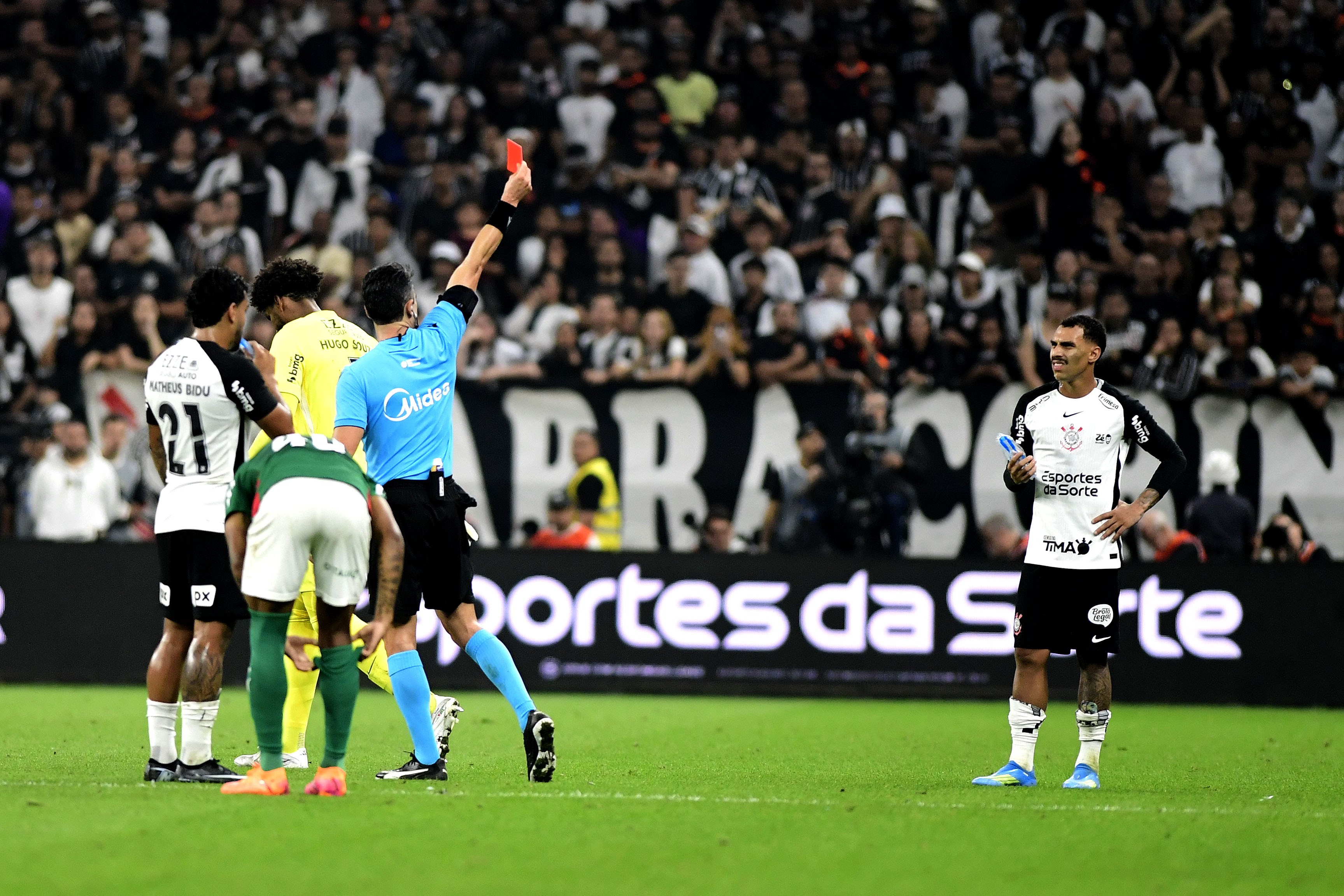
Two teams, one boiling Derby, and a referee crew that will be dissected all week. At Corinthians and Palmeiras’s home at the Neo Química Arena, the match finished 0-0 on the 11th round of the Brasileirão. And yes, the VAR storyline dominated: André and Matheuzinho were sent off after VAR review, while PC de Oliveira pointed to a separate officiating mistake on a penalty shout involving Sosa.
According to editorial reporting by the Jogo Hoje team, the big picture here isn’t just who got what call. It’s how the rulebook was applied, how the disciplinary outcome shifted because of revisão do VAR, and how quickly the game turned into a courtroom drama off the pitch.
What PC de Oliveira concluded about the red cards
PC de Oliveira, speaking as a former referee and match rules specialist, was pretty direct: the revisão do VAR for the first sending-off was the right call. In the opening half, André was involved in a foul situation with Andreas Pereira, and after getting up, he made a gesture that drew immediate protests. Palmeiras players pushed for a VAR look, and the review was granted.
From a disciplinary standpoint, PC de Oliveira framed it like this: the Laws of the Game include scenarios that are punishable by cartão vermelho direto when a player makes an offensive, insulting, or grossly insulting act. The key is that the referee doesn’t need to “wait for the moment” if the incident is clear on video. In his view, VAR support didn’t blur the decision; it sharpened it.
Then came the second red card, and this one isn’t about gestures or theatrics. It’s about physicality.
Why Sosa’s penalty became the main officiating error
At 17 minutes into the second half, the decisive controversy arrived. Sosa got to the ball first and Gabriel Paulista challenged him inside the box. Players expected a penalty. The referee let play continue, and Palmeiras were vocal about it—loud enough that it won’t be forgotten in a hurry.
PC de Oliveira’s reasoning was rule-based, not emotional. In these cases, the VAR process should assess jogada de contato and who makes the contact—especially when one attacker anticipates and wins the ball cleanly. PC de Oliveira argued the sequence was “very clear”: Sosa arrived first and got the touch, while Gabriel Paulista’s action included imprudência, with no real pre-caution. Intention doesn’t rescue a reckless challenge under the rule logic.
He also pointed to a recent precedent: a similar penalty incident during the week against Palmeiras was handled differently, which only fuels the debate. If the rule is applied consistently, why did this one slip through? That’s the question that hangs over VAR discussions every time a Derby turns.
The effect of VAR on Matheuzinho’s punishment
Now we get to the part that can change a club’s season on paper. In the second half, Matheuzinho tangled with Flaco López and ended up with a red card after the VAR-assisted escalation.
Initially, he was sent off for a segundo cartão amarelo. But after revisão do VAR, the decision upgraded to a cartão vermelho direto. PC de Oliveira stressed that the order of events matters because the disciplinary framework treats these categories differently.
His legal take was blunt: the conduct wasn’t just a late, clumsy challenge. PC de Oliveira described it as conduta violenta. And crucially, he said there was no longer a genuine ball dispute—meaning the referee should judge it under the “direct red” logic rather than the “second booking” logic.
That upgrade isn’t cosmetic. It changes how the case is weighed at the tribunal. If it’s treated as a straight red for violent conduct, the punishment profile is typically harsher than a pure second-yellow dismissal.
He also explained the practical math: if a player receives a third caution and then is expelled via a cartão vermelho direto, the suspension can stack—one game for the third yellow and another for the direct red. In this Derby context, PC de Oliveira suggested the VAR recommendation was correct, meaning Matheuzinho’s club now faces a bigger disciplinary headache.
- Two red cards were confirmed after VAR checks.
- One penalty incident was left unawarded despite a clear contact sequence.
- The VAR review altered the disciplinary category, not just the color of the card.
What the Derby leaves as a lesson about criteria and discipline
Let’s not dress it up: a 0-0 with two VAR expulsions is already a statement. But the real takeaway is how thin the line is between “game management” and “rule application.” PC de Oliveira’s comments highlight that VAR can absolutely get things right when it spots what the referee on-field should apply under the written criteria.
However, the penalty call involving Sosa shows the other side of the coin. If the assessment of who touches the ball first and whether the challenge shows imprudência is supposed to be objective, then consistency has to be the standard. Otherwise, rivalries don’t just stay on the pitch—they spill into training grounds, press conferences, and the kind of off-field accusations that drain focus from the league itself.
And you can already feel the fallout: disciplinary committees will look at the red-card categories, while coaches will cite the penalty decision as a benchmark for future VAR reviews. Rivalry is part of football. But rule clarity is what keeps it from turning into chaos.
O Veredito Jogo Hoje
From where we stand, PC de Oliveira nailed the core issue: the refereeing team got the red-card logic right thanks to revisão do VAR, especially in the upgrade to cartão vermelho direto after segundo cartão amarelo. But the Sosa penalty moment is the kind of miss that changes how fans judge the entire round—because the criteria are supposed to be measurable, not negotiable. If the rule says “who touches first” and the action reads as jogada de contato with imprudência, why didn’t it land in the box? That’s the controversy that truly “changes everything,” and it won’t be forgotten in the Brasileirão.
Perguntas Frequentes
Why did PC de Oliveira say the penalty for Palmeiras was wrong?
Because he argued that VAR should evaluate who touches the ball first and that the challenge showed imprudência. In his view, Sosa anticipated and touched the ball, while Gabriel Paulista’s contact fit the penalty criteria rather than a no-call scenario.
Were the red cards for André and Matheuzinho correct?
PC de Oliveira said the expulsions were handled properly after the revisão do VAR. André’s case aligned with the rule logic for cartão vermelho direto tied to an offensive, grossly insulting act, while Matheuzinho’s escalation matched the assessment of conduta violenta.
How many games of suspension can Matheuzinho receive?
PC de Oliveira explained that if a player reaches a third booking and then is expelled for a cartão vermelho direto, suspensions can stack. In that scenario, it can total two matches: one for the third yellow and another for the direct red.