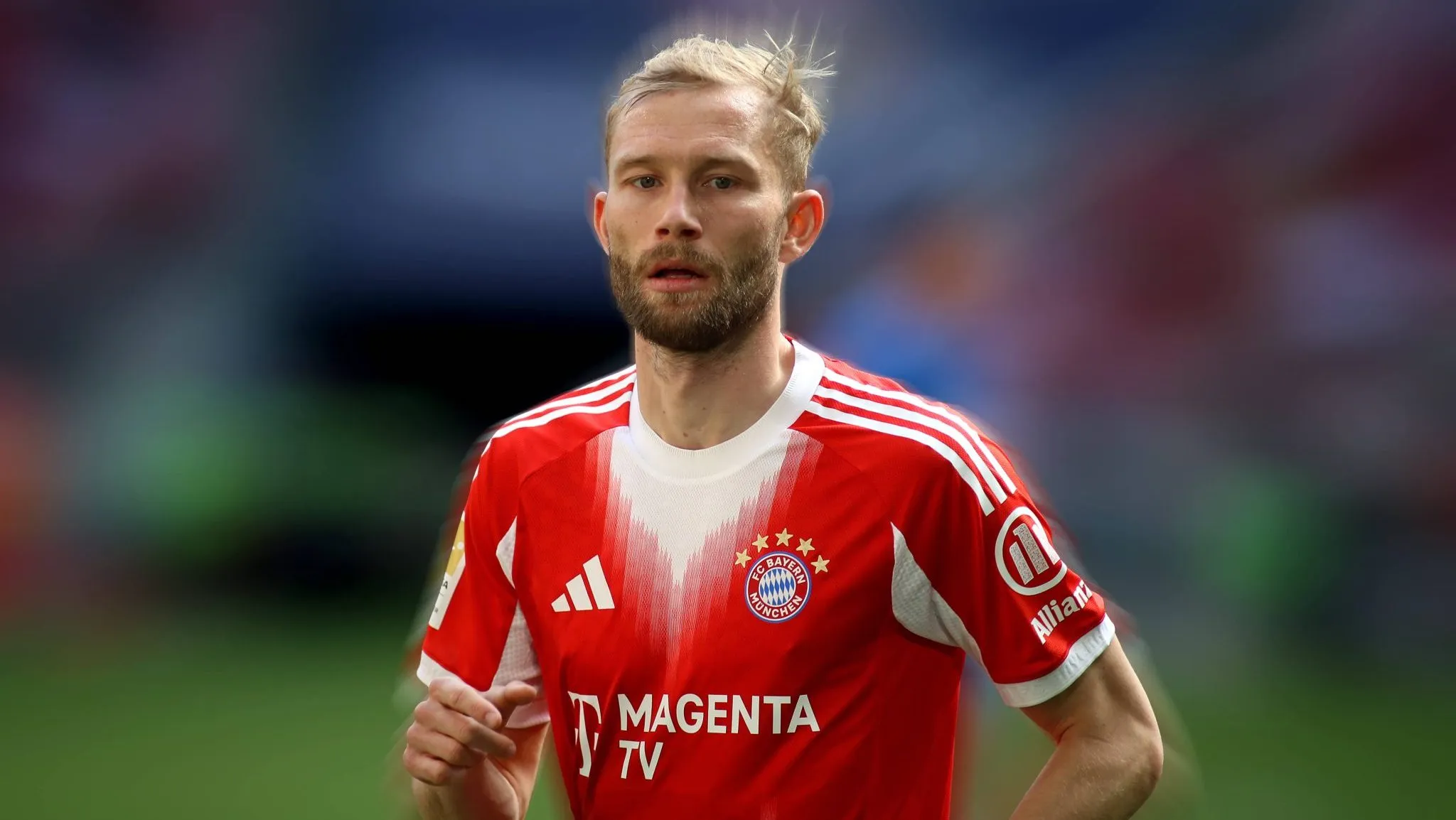
According to what we’ve been hearing, the Jogo Hoje crowd is watching a contract standoff that’s less about chemistry and more about spreadsheets: Konrad Laimer and Bayern are stuck in renewal talks because the player’s camp wants a raise that clashes with the club’s strict policy financial and wage ceiling. And in a Bayern squad that’s clearly winning on the pitch, the off-field debate is starting to feel like the real boss fight.
What stalled Laimer’s renewal
Laimer is tied to Bayern until June 2027, yet the renewal talks are stuck on a basic question: how much is “value” worth when the club’s hierarchy salarial is already tightly managed? Bayern are at the top of the Bundesliga and still alive in the Champions League, but that sporting momentum doesn’t mean they’re willing to blow up their folha salarial.
From a financial standpoint, this is classic Bayern: they want the player, they value the profile, but they won’t let one negotiation break the internal logic of their budget. You can call it rigid. You can also call it survival. Because the market doesn’t care if you’re the best team in Germany this season.
How much Laimer earns, and what he wants
Right now, Laimer is estimated to be on about €9 million per year. The representatives are pushing for roughly €15 million per year, with bonuses included. That gap matters because it’s not just a number; it’s a domino risk across the hierarchy salarial inside the dressing room.
To understand how Bayern think, you have to look at the reference points. Harry Kane is reported to earn €25 million per year (as per Bild). That’s the backdrop Hoeness used publicly to underline that Bayern’s salary structure is not built on “what the player feels is fair,” but on a realistic market and sporting-financial calibration.
And yes, the irony is delicious: Laimer is a workhorse, a player who brings intensity and helps with versatilidade tática, but the negotiation is being judged through the lens of valor de mercado and what Bayern consider sustainable spending.
Hoeness goes public: the message to the market
Uli Hoeness didn’t mince words. He said Laimer is someone the club values highly, praising his importance and his effort, but then drew a sharp line in the sand: he is not Maradona, and he is not Harry Kane. That comparison is the entire story in one sentence.
Hoeness’ point is brutally financial: Bayern aren’t arguing whether Laimer is useful; they’re arguing whether his asking price matches Bayern’s internal valuation. In other words, it’s not a personal debate, it’s a policy financial debate.
Hoeness also framed the salary discussion as not matching the club’s assessment of both sporting contribution and financial impact. That’s the hierarchy salarial logic in action: if Bayern can’t justify the raise with a clear sporting role, the club won’t set a precedent just because the Champions League is going well.
Why Bayern still want to keep him
Let’s not pretend Bayern are pushing Laimer out. They want him. Laimer’s profile fits a high-performance Bayern machine because he’s dependable, hard-working, and offers tactical flexibility. That versatilidade tática isn’t a marketing buzzword; it’s a practical tool in squads that rotate without losing intensity.
Also, Bayern’s roster planning is never one-dimensional. Even with coverage in the wide areas, contract decisions ripple into how the club builds depth, how it handles injuries, and how it balances the next wave of recruitment.
So yes, Bayern can be “hard” in negotiations while still being determined to retain the player. That’s the tightrope: keep the athlete, protect the folha salarial, and don’t let the club’s wage ceiling crack.
Hakimi, Givairo Read and the right-back plan
The renewal drama sits alongside a broader defensive conversation, and Bayern’s interest in the right-back market is the clearest sign that the club is thinking two steps ahead. Hoeness even hinted that Achraf Hakimi would be his preferred option for the role, because he would fit the team’s needs.
Rumours linking Bayern to Hakimi aren’t new. Earlier interest reportedly surfaced around the time Hakimi was returning from a loan spell, but the move didn’t happen and he ended up with PSG. Now, with Laimer’s future uncertain and Bayern considering how Stanisic could be used, the club’s scouting focus seems to be widening.
And if Hakimi is the “big swing,” the name gaining traction is the younger target: Givairo Read from Feyenoord. Bayern don’t just want a player; they want an asset that fits their long-term financial and tactical planning.
- Versatilidade tática: Laimer’s ability to adapt is valuable, but Bayern still need clean, role-specific solutions at full-back.
- Lateral direita priority: the right-back position is where Bayern’s future planning is visibly active.
- Value for money: Read represents a different financial profile than chasing a star, helping Bayern protect their policy financial.
What this negotiation reveals about Bayern’s wage policy
This is the part fans often miss: contract talks are not only about the player’s current contribution, they’re about the club’s future budget architecture. Bayern are defending their hierarchy salarial so the squad doesn’t turn into a patchwork of ever-rising wages.
When a club is competing for titles and already has major earners in the wage structure, a renewal can’t be treated like a standalone issue. If Bayern give Laimer a raise that breaks their internal logic, the knock-on effect will land elsewhere. That’s how folha salarial spirals, and that’s how teams stop being ruthless on the pitch.
So yes, Bayern are trying to keep Laimer. But they’re also making a broader statement: the club’s valor de mercado calculations are aligned with a sustainable policy financial, not with agent leverage. In 2026, the smartest clubs don’t just buy talent. They buy stability.
O Veredito Jogo Hoje
Hoeness’ “not Maradona, not Kane” line wasn’t just a jab—it was a warning shot wrapped in football etiquette. Bayern aren’t refusing Laimer because they don’t need him; they’re refusing a precedent because their hierarchy salarial is built to survive pressure, not to chase headlines. If Laimer’s camp wants €15 million-plus to match the club’s top tier, they’ll have to show the same level of market impact Bayern assign to that stratum. Otherwise, Bayern will keep planning for the next lateral direita chapter—whether Laimer stays or not.
Perguntas Frequentes
Why hasn’t Konrad Laimer renewed with Bayern yet?
Because the sticking point is financial: Bayern and Laimer’s representatives disagree on the wage level, and the club is protecting its policy financial and hierarchy salarial while staying sustainable under its folha salarial logic.
How much does Laimer earn today, and how much does he want?
Laimer is estimated to earn around €9 million per year and his representatives are pushing for about €15 million per year with bonuses included.
Can Bayern lose Laimer even if they want to keep him?
Yes. If no agreement is reached, Bayern risk losing him when his contract runs to June 2027, especially if the club won’t meet the demanded valor de mercado aligned with his camp’s salary expectations.