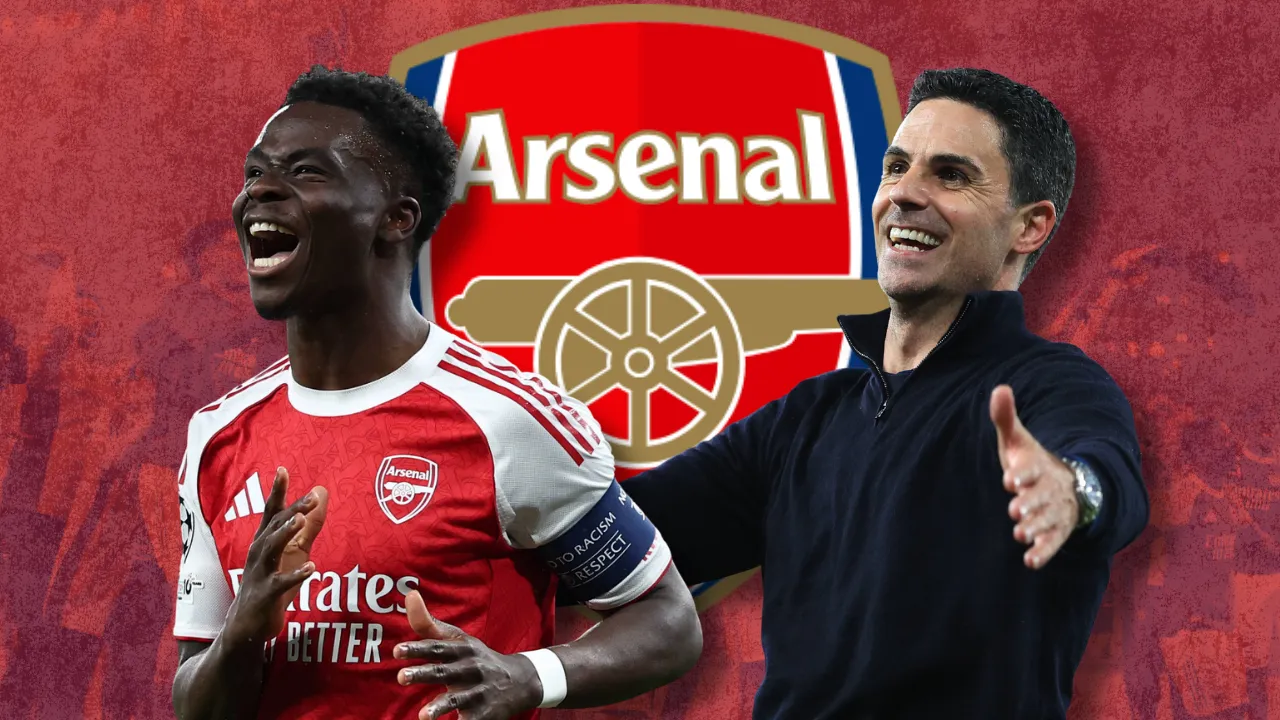
Jogo Hoje has been tracking the fine details of football rebuilds for a while, and this one is finally walking into the brightest room: Arsenal are in the Champions League final in 2025/26. The first in two decades. No miracle. No single summer. Just a rebuild built to survive pressure, with the real cost and payoff now visible on the scoreboard.
And that’s the point. Arsenal didn’t “arrive” as a contender; they earned it. The Champions League final is the clearest headline, but the story is the process: a reconstruction esportiva built with Edu Gaspar from July 2019 and Mikel Arteta arriving five months later, then reshaped through habits, behaviors, and tactical risk management until the team could finally play big nights without flinching.
The Champions League final as proof of a long build
When you reach a European final, people love to talk about destiny. We don’t. We look at patterns. We look at whether a team can repeat the same defensive transition and attacking intent under stress, whether the high block stays coherent when the game turns chaotic, and whether the side can generate pressão pós-perda instead of collapsing into panic.
Arsenal’s climb checks those boxes. The final isn’t just a reward for a hot run; it’s the visible output of years of competitive regularity. They’ve made the same statement in different competitions and different atmospheres: this is a club that learned how to compete with the elite, not just how to survive them.
On 31 May, the decision comes against Bayern Munich or PSG. The date matters too, because it crowns a cycle. Arsenal have never won a European title. Their last Premier League triumph was in 2004. So when the final day arrives, it won’t feel like a flash of luck; it will feel like the end of a chapter they’ve been writing since 2019.
The starting line: 2019, Edu Gaspar and Arteta
Let’s rewind properly. In July 2019, Edu Gaspar starts the rebuild framework. Five months later, Arteta takes over. This is crucial because it wasn’t just a managerial appointment; it was an organizational shift with a football brain behind it.
Early on, Arsenal paid the price. There were mistakes and uncomfortable results. The bigger trophies didn’t arrive immediately. What they did collect was smaller proof of direction: one FA Cup in 2020, plus two Community Shields in 2021 and 2024.
Still, the bigger question wasn’t “can they win a cup?” It was “can they become reliable against elite opposition?” That’s where Arsenal’s rebuild really started to show its spine.
When Arteta took over at the end of 2019, the club had already slipped out of the Champions League and was living under the long shadow of Arsène Wenger’s era. The challenge wasn’t just tactical; it was psychological. Could they bring the team back into big moments without reverting to the old fear?
Arteta’s first job was to re-train expectation. Not in press conferences. On the pitch. The way they positioned, the way they pressed, the way they handled transitions. The way they refused to lose their structure when the crowd got loud.
Breaking the Big Six hoodoos
Here’s the part that separates “good seasons” from “power.” Arsenal used to have a dark record versus the Big Six. Between January 2015 and November 2020, they played 29 away matches against those rivals and failed to win even once. That’s not a stat; that’s a psychological ceiling.
Under Arteta, that ceiling cracked. The first big signal was the breakthrough at Old Trafford, when Pierre-Emerick Aubameyang scored in a rare away win at Manchester United’s ground after a long wait. But that was only the opening scene.
At Stamford Bridge, Arsenal had an eight-year away win drought against Chelsea. Against Tottenham, it was close to nine years in Premier League away games. Against Manchester City, the club had gone eight seasons without a league win, home or away. Those were not “tough opponents.” Those were taboos.
And then the taboos started falling one by one.
Since 2024, the pattern in Liverpool and Manchester City games has shifted too. Draws at Anfield and the Etihad have become more common than victories for the home side, which tells you Arsenal are no longer treating those stadiums like museums. They’re treating them like battlegrounds.
Even the uncomfortable details fit the rebuild narrative. Between 2017 and 2023, Arsenal conceded three or more goals in nine Premier League matches versus Liverpool and City, including brutal scorelines like 5-0, 4-0, and 4-1. That was the old Arsenal: fragile in the defensive transition, slow to recover after losing the ball, and too often disconnected between pressing triggers and the back line.
From March 2023 to August 2025, though, the team’s behavior changed in a way that’s hard to fake. They played 22 matches against Big Six rivals without losing. The record reads 13 wins and nine draws. That’s not a lucky streak; it’s a system that holds.
To underline the magnitude, compare it to the best previous run: 17 matches unbeaten between December 2002 and September 2004. Arsenal have now repeated the kind of elite consistency that used to belong to their most dominant periods.
From supporting cast to annual title threat
Once the hoodoos broke, Arsenal didn’t just “improve.” They became a fixture. That’s the difference between a squad that peaks and a club that builds a platform.
Look at the league positions during the transition years. When Arteta arrived, Arsenal were finishing fifth in 2016/17 and 2018/19, and sixth in 2017/18. In the first two seasons under the new manager, they dipped further: eighth place, with the worst points total since 1995/96. Ouch. That’s the kind of context fans remember because it hurt.
But while the table looked rough, the squad was getting rebuilt in real time. Veterans moved out. Youth arrived. Gabriel Martinelli and William Saliba were brought in during 2019, and the spine that matters today started to take shape.
Then came the financial commitment that finally matched the ambition. In 2021/22, Arsenal spent 165.6 million euros on players including Ben White and Martin Ødegaard, with Odegaard already on loan a year earlier and others joining the next wave. In football terms, it’s the moment the rebuild stopped being theoretical and became structural.
The 2021/22 finish was still only fifth, which felt cruel because Tottenham were just two points ahead in the North London Derby timeline, including a 3-0 derby win. But that sting produced a response. Arsenal didn’t hide from the ceiling. They started chasing it.
What followed were two title fights that hadn’t been normal since 2005. There were two second-place finishes behind Manchester City, including seasons where Arsenal were leading for stretches and got labeled “bottlers.” Those labels hurt, but they also taught the team what pressure does to spacing, decision-making, and game management.
Then there was the next season: another second place, with the familiar feeling that they were close but not quite at the top’s volume. And then came the twist of the league’s ecosystem: a new Liverpool under Arne Slot emerged and City’s dominance didn’t look automatic.
Three runner-up finishes in a row, and still the club kept moving forward. That’s rare. Most teams stall after repeated near-misses. Arsenal didn’t. They refined.
Money, near-misses, and the maturity of the squad
Tactically, Arsenal’s most important “upgrade” wasn’t just personnel; it was collective behavior under pressure. The changes show up in how they defend and how they strike after regaining the ball.
In the current season, the leadership is tangible: Arsenal sit five points clear of Manchester City, with one game in hand. That’s pressure with a schedule attached, and it forces the team to keep their standards even when the easy narrative would be to coast.
They’ve already handled the kind of momentum swing that used to derail them. The side took a dip that brought back old ghosts, then recovered when criticism was at its loudest, including a pushback against the idea that their football was too physical and not pretty enough. Ironically, that “physical” element is exactly what supports the high block and makes the press sustainable.
Arsenal responded with big performances: wins over Newcastle, Fulham, and Atlético Madrid, plus a draw in the first leg of the European semi-final. These aren’t empty wins. They’re evidence that the team can execute in different phases, with different opponents, under different tactical landscapes.
And now the league slate looks manageable on paper: West Ham, Burnley, and Crystal Palace. But that’s where the real test lives. A rebuild becomes a dynasty only when it treats “winnable” games as mandatory, not optional. If Arsenal keep the margins tight and protect the defensive transition, that could end a 22-year Premier League drought.
Europe also matters. Arsenal had spent six years without Champions League football before returning in 2023/24. In that stretch, the club became familiar in the Europa League, even reaching the final in 2019 under Unai Emery. That experience gave them repetition at the right stage, but the step back up to the Champions League required a different intensity and a sharper tactical identity.
In 2023/24, Arsenal returned to Europe’s top tier for the first time since 2017, and they fell only in the quarter-finals to Bayern Munich. The next year, the quarter-finals delivered a statement: a 3-0 win over Real Madrid at the Emira tes. That’s the kind of night that doesn’t happen unless a team has learned how to defend without surrendering the match’s rhythm.
What the campaign says about Arsenal’s long-term power
Here’s our read: Arsenal’s Champions League run isn’t an accident of form; it’s the product of a rebuild esportiva that learned, corrected, and matured.
The numbers against the Big Six from March 2023 to August 2025 are the clearest proof of competitive regularity. The team doesn’t just “do well” against top sides once. It repeats the blueprint. It wins away. It draws when it needs to. It keeps the structure, then attacks with intent.
This is what makes them a candidate not just for one trophy, but for annual contention in England and Europe. The club’s evolution shows a clear shift from trauma to control. When you see a team stop being afraid of the biggest stadiums, you’re not watching luck. You’re watching coaching, recruitment, and tactical refinement getting synced.
For an Arsenal fan, the final in May is the celebration. For a tactical observer, it’s the confirmation. The high block is no longer a gamble; it’s a weapon. The press after losing the ball isn’t frantic; it’s organized. The defensive transition isn’t slow; it’s rehearsed. That’s why this feels different.
O Veredito Jogo Hoje
Arsenal’s power isn’t coming from a magical player or a single hot streak; it’s coming from a club that finally learned how to turn big-game pressure into predictable behavior. That’s why the Champions League final feels earned, not borrowed. Without shortcuts, they built a team that can repeat the same tactical principles against the best—then punished everyone else for doubting them.
Perguntas Frequentes
Why does the Champions League final represent a historical turn for Arsenal?
Because it’s their first final in two decades and a first European title opportunity in a club that hasn’t lifted a major continental trophy before. More importantly, it crowns a rebuild esportiva that transformed how Arsenal handle Big Six matches, turning fear into consistent execution across high-pressure environments.
What were the key milestones of Arteta’s project since 2019?
Edu Gaspar’s start in July 2019, Arteta’s appointment five months later, the early trophy markers (FA Cup in 2020 and Community Shields in 2021 and 2024), the breaking of Big Six taboos from the 2015–2020 away-win drought, the 2021/22 investment of 165.6 million euros, and the later consolidation of elite consistency, including 22 unbeaten matches versus Big Six rivals from March 2023 to August 2025.
Can Arsenal be treated as a fully consolidated power in England and Europe?
Yes. The evidence is both statistical and behavioral: competitive regularity against the Big Six, Champions League return after six years away, and the ability to perform in decisive rounds. With leadership in the league and a Champions final on the horizon on 31 May, Arsenal look set up for recurring contention rather than one-off peaks.