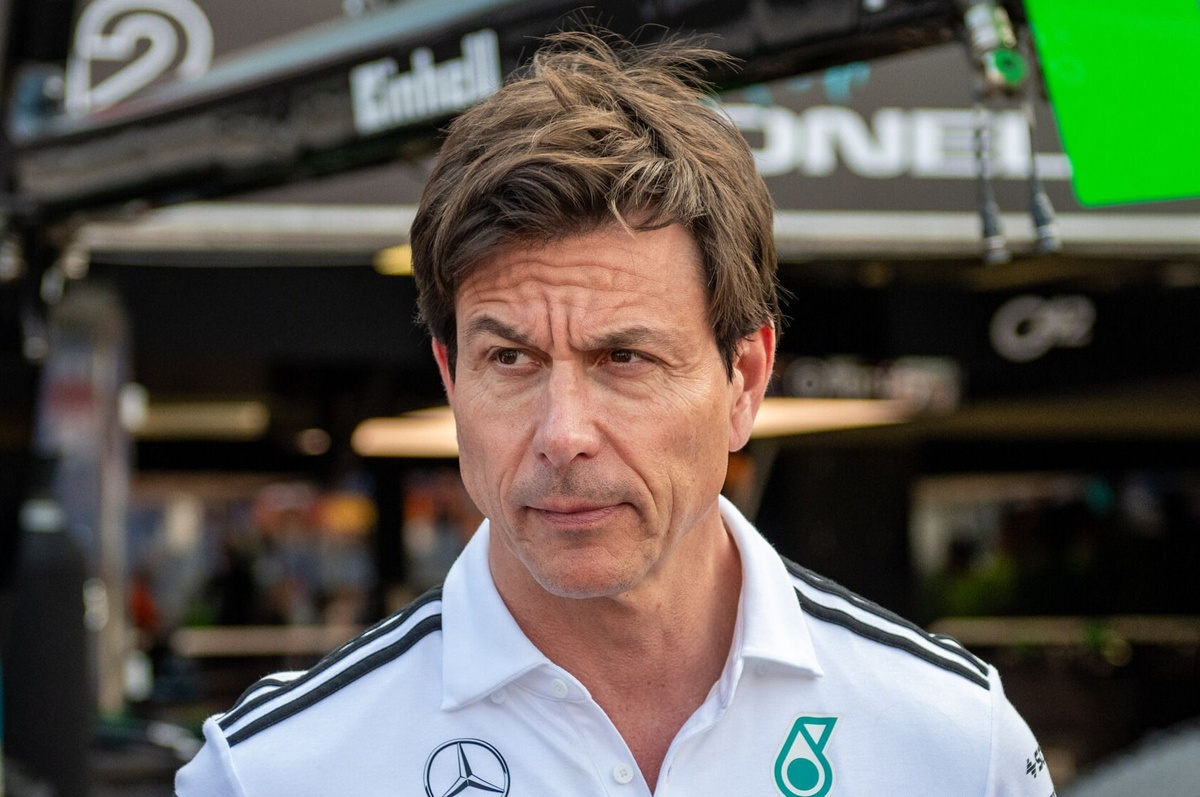
In the high-stakes world of Jogo Hoje Formula 1 coverage, we’ve often argued that the real danger inside a dominant team isn’t talent, it’s the rivalry internal that starts to eat the process alive. And Toto Wolff’s latest look back from 2016 is a cold reminder of how quickly a title fight can turn into something corporate, political, and frankly risky.
Wolff’s memory of the 2016 internal crisis
Back in 2016, when Lewis Hamilton and Nico Rosberg were basically battling like “near-enemies” for the championship, Wolff didn’t just manage a race calendar—he managed personalities under pressure. The context matters: 2016 was the peak of their modern-era rivalry, and the incidents weren’t just headlines. They were a direct stress test of crisis management inside an ambiente de box built to execute, not to fracture.
Wolff’s message was blunt: drivers carry the interest of the brand on their shoulders, even when the helmet goes on and the adrenaline kicks in. Competition is fine—necessary, even. But there’s a line. Once it’s crossed, the team dynamic changes shape, and that’s where the organization pays the price.
What happened between Hamilton and Rosberg in that season
Hamilton and Rosberg had been competitors since the karting days, then teammates at Mercedes from 2013 onward. By 2016, their rivalry wasn’t merely intense; it produced avoidable collision moments that signaled something deeper than racing nerves. Wolff frames it as more than hard racing—he says the personal animosity took over, turning what should have been a healthy internal competition into a problem for the collective.
And let’s call it what it is: when two drivers keep bumping into each other in the same cycle of decisions, the sport becomes less about pace and more about leverage. Who blinks first? Who gets sympathy? Who forces orders de equipe without saying the words? That’s how rivalry becomes a threat to the whole operation.
The extreme decision: how Mercedes reacted to the two
Here’s where Wolff’s story turns from tactical to political. In an interview with The Athletic, Wolff admitted he considered an extreme move—he said he “fired” the idea, and at one point even discussed dismissing both Hamilton and Rosberg after the 2016 collisions.
Wolff’s logic was ruthless and, in my view, strategically sound: if the message doesn’t land, the behavior doesn’t change. He describes speaking to Mercedes-Benz executive Dieter Zetsche, making the case that the key wasn’t punishing one side—it was ensuring neither driver became “dispensable” in their mindset. If they didn’t understand that the interest of the brand and the team’s survival ranked above ego, then what was the point of the structure at all?
Then came the escalation. Wolff says Mercedes sent an email telling them they were temporarily not part of the team. In the next phase, the conversation went straight to consequence: Wolff told them that if it happened again, one of them would have to leave. The point wasn’t “prove you’re innocent.” The point was: accept limits, respect the system, and stop treating the car as a personal battlefield.
And there’s another layer—Wolff even admits the uncomfortable truth: he doesn’t claim “100% fault” is always cleanly assignable. That’s exactly why he leaned on behavior and risk rather than courtroom logic. In team sport, you don’t need perfect blame, you need repeatable standards.
The weight of the Mercedes brand and the impact across the squad
Wolff’s most telling line isn’t about points or podiums. It’s about people. He cites the scale of the operation—2,500 people whose livelihoods and factory work are affected when the drivers turn the team into a collision machine.
That’s the heart of the organizational argument. Every time a rivalries spiral forces damage, resets, and chaos in the pit lane environment, the whole Mercedes ecosystem pays. Not just mechanics and strategy—also the sponsors, the brand image, and the internal morale of staff who don’t get to “race through” consequences.
Wolff’s takeaway is almost a governance principle: when rivalry becomes personal, it stops being “just racing.” It becomes a threat to the disputa pelo título, because the team’s ability to maximize points collapses under avoidable incidents and political pressure.
Why the Hamilton x Rosberg story matters again with Mercedes’ current pair
Fast forward to today, and the narrative is eerie. Mercedes has already seen Kimi Antonelli and George Russell standing high on the podium in 2026, and if that continues, internal competition will sharpen—because talent will keep pushing the envelope. The difference now is that the team has lived the lesson.
Still, the risk stays the same: when two strong drivers fight for performance supremacy, the internal rivalry can become a management problem if the boundary is unclear. Wolff’s 2016 case shows that the danger isn’t the rivalry itself; it’s how it’s handled when it spills into collisions, blame games, and a shrinking margin for error in the ambiente de box.
So yes, the history returns to matter. Not as nostalgia, not as gossip, but as a blueprint: Mercedes can’t let a championship chase become a referendum on ego. Otherwise, the team’s collective interest gets buried under the noise of who “should” be prioritized.
O Veredito Jogo Hoje
Wolff didn’t just manage a moment in 2016—he drew a line in the sand for how a top team survives under stress. The smartest teams don’t pretend rivalry is harmless; they turn it into a controlled weapon with clear boundaries, because one extra avoidable collision can cost more than a weekend. It can cost the trust that makes orders de equipe work, the discipline that keeps the pit lane flowing, and the brand credibility that sponsors actually buy. If Mercedes wants internal pressure without internal damage, it will keep treating rivalry like a strategic variable—not a personal story.
Perguntas Frequentes
O que Toto Wolff fez com Hamilton e Rosberg em 2016?
Wolff says he escalated the situation after repeated collisions, including considering dismissing both drivers and ordering a formal message to them that they were not part of the team at that moment, with a warning that if it happened again, one would have to leave.
Por que a rivalidade entre os dois pilotos virou problema para a Mercedes?
Because what began as competitive pressure turned into personal animosity, producing avoidable collision incidents. That harmed the team’s ability to execute, strained decision-making, and impacted the wider organization beyond the track.
Como essa história ajuda a entender a gestão atual da equipe?
It shows Mercedes’ governance logic: rivalry is allowed, but only within boundaries that protect the collective goal. With any new duo pushing hard, the team’s success depends on crisis management, consistent standards, and making sure the drivers understand how their actions affect the entire operation.