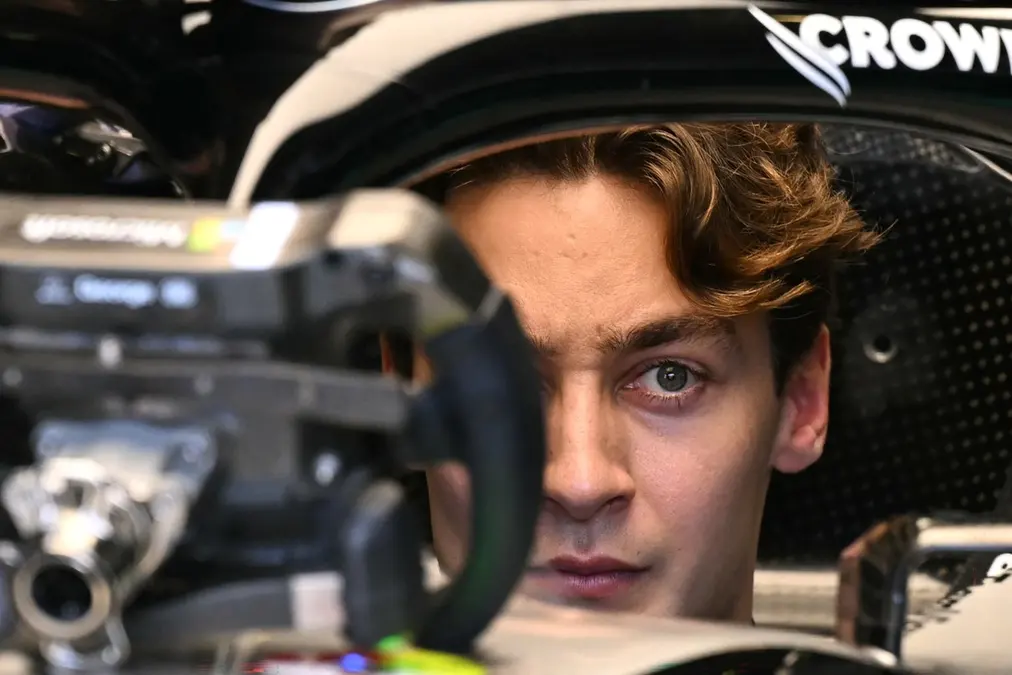
According to Jogo Hoje, Mercedes are trying to keep the internal thermostat under control, and Toto Wolff’s latest message to George Russell is basically the team telling its own fanbase: this is fixable, this is context, and the season is a marathon, not a sprint. The irony? The “context” is that Miami simply didn’t line up with what Russell likes.
After Andrea Kimi Antonelli won a third race in four outings in Miami, the pressure inside the Mercedes garage went up a notch. Russell had the sprint pace to at least challenge, but the main race swung the other way, leaving him fifth, only to end up fourth after Charles Leclerc’s punishment of track. On pure race rhythm, Antonelli looked sharper, and Wolff knows it. Yet he chose calm over crisis.
What Wolff meant by calling Russell a “matador”
Wolff didn’t sugarcoat the competitive gap, but he also didn’t buy into the idea that Russell is suddenly off the rails. His framing is tactical: Russell is a closer, a hunter, the driver who turns the last part of a weekend into points when the car and the track let him. That’s why he said Russell would only win races if he’s in that “killer instinct” mode, ready to pounce.
And then Wolff delivered the real coaching tell. He pointed to the data and his conclusion wasn’t about confidence or effort. It was about comfort, plain and simple. Russell “never got comfortable” on that track. He “never really liked slick surfaces,” and the team just ticked the box with what it was seeing, then moved on before the narrative could metastasize.
Why Miami didn’t play to Russell
Miami’s layout is a particular kind of puzzle. The grip profile can be odd from session to session, and the sensation for the driver is often dictated by low grip patches and a slick surface feel when the rubber isn’t cooperating. Wolff’s line about surfaces isn’t marketing fluff; it’s the kind of assessment teams use when they’re mapping driver preference against track characteristics.
So when you hear “never comfortable,” you should immediately translate it into what it means on track: steering response, traction behavior, and how the car settles under braking and corner exit. In that environment, tire management and race pace stop being just numbers and become a driver-car relationship problem. The wrong feel early can force the driver to change plan, and once the plan changes, the lap times start telling a different story.
There’s also the knock-on effect of incident-driven rhythm. Russell’s fifth place on track became fourth via Leclerc’s punição de pista, but that doesn’t erase the underlying point: the pace was there, but the consistency of attack wasn’t matching Antonelli’s. It’s exactly the kind of weekend where a team leans on comparativo de telemetria to isolate what’s repeatable versus what’s just track noise.
Antonelli ups the internal pressure at Mercedes
Let’s not pretend this is only about Miami’s surface. Antonelli is in a hot streak, and streaks are dangerous because they compress timelines. Winning a third race in four outings doesn’t just score points; it changes expectations. The gap doesn’t need to be massive lap-by-lap for the psychological pressure to rise. All it takes is clearer adherence to the racing line and a better handle on how the car behaves when the grip falls away.
By the numbers, Antonelli’s momentum is undeniable. He’s on 100 points in the Drivers’ Championship, while Russell has 80. In the Constructors’ standings, Mercedes sit top with 180 points, ahead of Ferrari’s 110 and McLaren’s 94. That’s a solid base, but internal competition is a different beast: it can either sharpen performance or start eating focus.
Wolff’s job is to keep it sharp without turning it toxic. His answer was to reframe Miami as a bad fit, not a bad driver. Smart? Absolutely. Because if you let fans and media turn one weekend into a “trend,” you force the team into reactive decisions for the next race.
The numbers that shape the Mercedes picture
Here’s the tactical reality Mercedes are managing. Antonelli’s third win in four races pushes him to a 20-point lead over Russell in the Drivers’ fight. In a long season, 20 points is both a warning and an opportunity, depending on how you interpret the causes.
- Antonelli has 100 points in the Drivers’ Championship.
- Russell sits on 80 points after Miami.
- Mercedes lead the Constructors’ Championship with 180 points.
- Ferrari have 110 points, while McLaren are on 94.
- Russell’s result on track was fifth, upgraded to fourth after Charles Leclerc’s track punishment.
- Antonelli’s sprint edge didn’t automatically translate into the main race for everyone else, but it did for Mercedes’ young star on race rhythm.
Now zoom out. The Formula 1 calendar swings back to action from 22–24 May for the GP of Canada, the fifth round of the 2026 season. That timing matters: Wolff is essentially telling everyone that the Miami data will be filed, not fused into panic.
He also went straight to the season math. “We’ve got 18 races left,” he said, and that’s the line you use when you want to stop the internal narrative from spiraling. Because over 18 races, a track-specific mismatch can become a footnote instead of a storyline.
What Mercedes expects for the GP of Canada
Canada usually rewards drivers who can keep the car settled across changing grip phases and who can nurse tires without losing the bite. If Miami exposed a weakness tied to low grip and slick surface feel, Canada offers a chance to rebalance the conversation around what Russell does best when the track allows him to find that comfort zone.
Wolff’s approach is telling: don’t force Russell to “fix the driver” after one weekend. Fix the interface between car setup and track demands. Expect Mercedes to lean heavily on telemetry and driver feedback to tune for braking stability, traction consistency, and the way the car loads through corners—because that’s where management of tires and true race pace get decided.
And yes, Antonelli will still be there, still hungry, still compounding confidence. But if Mercedes can reset the narrative to “track-fit mismatch,” Russell’s bounce-back becomes not just possible, but logical. Isn’t that what top teams do—turn noise into signal?
O Veredito Jogo Hoje
Mercedes didn’t just “explain” Miami; they controlled the storyline. Wolff backing Russell while admitting the track simply didn’t suit his preference is the kind of grown-up team management that prevents a garage from turning into a soap opera. With 18 races left, the smart play is to treat the Miami mismatch—low grip, slick surface, and all that comes with it—as an engineering problem, not an identity crisis. If Canada rewards comfort and consistency, Russell can quietly take the narrative back by doing what he’s best at: turning data into points. — Jogo Hoje Analyst
Perguntas Frequentes
Why did Toto Wolff call George Russell a “matador”?
Wolff used the “matador” label to describe Russell’s competitive mindset: a driver who becomes a real race closer when the conditions allow him to pounce. His point wasn’t that Russell lacks speed, but that Miami didn’t give him the comfort to unleash that killer instinct.
What was the problem with Russell in the GP of Miami?
Wolff attributed it to track characteristics, especially low grip and a slick surface feel that Russell reportedly never truly liked. That discomfort affected rhythm, consistency, and the overall ability to manage tire management and race pace effectively.
How does the internal dispute in Mercedes look after the result?
Antonelli’s form raises the pressure: he moved to 100 points versus Russell’s 80, while Mercedes lead the Constructors’ Championship with 180. But Wolff’s message aims to prevent a crisis by framing Miami as a track-fit issue, with the focus quickly shifting to Canada and a data-driven comparativo de telemetria response.