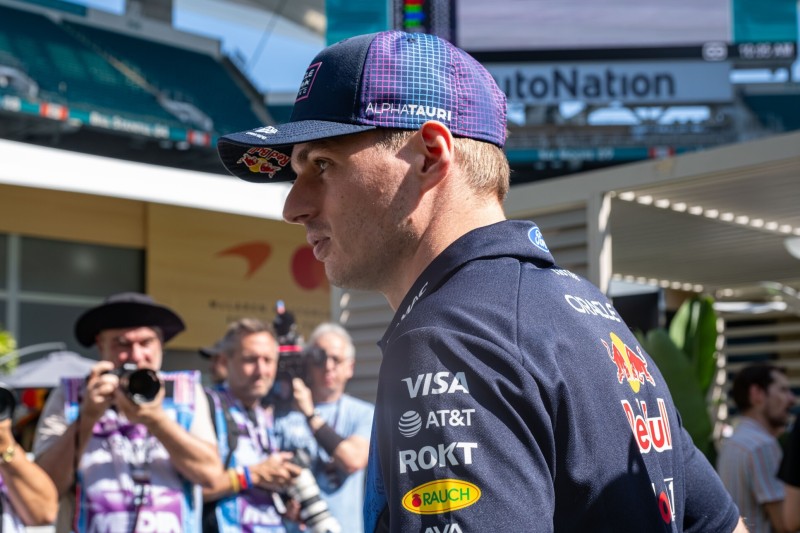
According to our reporting on the F1 scene at Jogo Hoje, Miami wasn’t just another race weekend—it was a live stress test for the 2026 technical regulations. And Max Verstappen, never shy about turning the thermostat up, came back with the same complaint: the rule changes still punish the driver, and they still don’t solve the real problem in a satisfying way. Controversial? Absolutely. But also revealing.
What Verstappen said and why Miami reignited the row
Verstappen’s message was consistent with his earlier stance. He doesn’t buy the idea that the 2026 regulamento técnico is finally steering F1 toward the right show. His blunt comparison—“Formula E with steroids”—isn’t just trash talk; it’s a critique of priorities. If the car’s character feels too dependent on energy recovery and gestão de energia rather than pure racecraft, what exactly are we rewarding on Sunday?
Miami, specifically, gave him ammo. The FIA used the weekend to observe refinements around the 2026 hybrid direction, where the hybrid system is designed with an approximate 50/50 split between electric power and combustion power. That structure is supposed to keep things dynamic, but critics argue it can also create unwanted side effects—especially when the electric boost shapes how the car behaves exiting corners and setting up the next straight.
Verstappen’s core gripe lands on a familiar nerve: the faster you push through corners, the more the car “pays” in the following straight. That’s not a subtle trade-off for a race engineer to manage—it’s a feedback loop that changes driver decisions moment-to-moment. And if you’re constantly optimizing the management of energy instead of attacking lap-by-lap, the driving becomes less free, more metronomic. Who benefits from that?
What changed in 2026 rules in the FIA test
The FIA’s Miami updates focused on how the car deploys its hybrid system and how predictable that deployment feels. Two specific levers stood out in the technical regulations conversation:
Energy recovery reduction in qualifying: from 8 MJ down to 7 MJ.
Superclipping power increase: up to 350 kW, aiming to make speed delivery more consistent.
On paper, that’s a classic FIA compromise: reduce the “over-empowering” effect of recuperação de energia in one session to calm the extremes, then raise the superclipping ceiling to keep the boost behavior readable. The goal is to improve classification and reduce the weird, jumpy characteristics that can turn overtakes into something closer to a programmed event than a duel.
But Miami also underlined the bigger picture: the 2026 package anticipates cars that are smaller and lighter, plus a hybrid power unit that can lead to abrupt performance swings if the energy strategy doesn’t line up with driver intent. And that’s where the criticism about ultrapassagens artificiais keeps resurfacing. If the electric push makes gaps appear on cue, is that racing—or just timing?
Where qualifying improved — and why the race is still stuck
Several drivers acknowledged that the changes nudged the performance curve in a better direction. Charles Leclerc summed it up with the kind of measured honesty that usually comes from someone who’s spent enough time in the data trenches: “It got a bit better.” He added that while the battles themselves didn’t radically transform, “in qualifying, some things changed,” calling it “a step in the right direction.”
Lando Norris wasn’t convinced it went far enough. His point is brutally practical: if you can’t attack every corner at full tilt without being punished by the energy management rules, then the car’s limit isn’t the chassis anymore—it’s the battery logic. He argued that the revised approach remains “not at the level where F1 should be,” because forcing full-throttle everywhere—like in previous seasons—still gets you penalized. That’s a racecraft problem disguised as a technical solution.
Oscar Piastri echoed the “better, but not solved” theme. The reduced qualifying energy recovery helped “a bit,” he said, but it “didn’t solve the problem completely.” In other words, the FIA adjusted the dial rather than changing the game.
And then there’s the numbers that Bortoleto brought into focus: the lap times were about 1.5 seconds slower than last year, according to his assessment. Slower laps can be good if predictability and overtakes improve—but the race still looked constrained, because the real question isn’t only who is quick in a single lap. The question is how often you can build pressure, manage deployment, and still have the momentum to convert it into a pass.
Piastri also noted that his first “real experience” with overtaking and defending in this new era felt “pretty wild.” That’s telling: even when the overtakes happen, drivers are still wrestling with how closure rates and speed differences translate into safe, repeatable moves. And that’s where the FIA’s concerns about dangerous approach speeds come back into play.
Reactions from Leclerc, Norris, Piastri, Pérez and Bortoleto
Let’s separate the emotions from the mechanics. Sergio Pérez described the changes as a “step in the right direction,” and suggested it could lead to “much less complaining.” That’s the voice of a driver who wants fewer frustrations, even if the fundamental balance isn’t perfect yet.
Piastri’s view is more structural. He praised the FIA–F1 cooperation, but stressed that the available technology caps how far the tweaks can go in the short term. He also pointed to safety and the training effect of doing this wrong: the FIA wants to improve the dynamics after a serious incident involving Bearman in Japan. That’s a reminder that these rules aren’t just about spectacle; they’re about controlling speed differentials as drivers approach each other.
Norris, meanwhile, kept returning to the same tactical contradiction: the system should enable attacking racing, not force drivers to second-guess corner-by-corner throttle because the hybrid power and its deployment budget will punish them later.
Bortoleto offered the clearest “what it feels like” data point, saying the changes looked “a bit better” in qualifying even if the overall times dropped by around 1.5 seconds. And crucially, he framed it as an evolving process rather than a finished product.
Verstappen, of course, didn’t soften. He said what he previously argued “still holds”: the regulation still “penalizes” you. His sharpest line is the one that defines the tactical issue—more corner speed can mean less straight-line performance afterward. That trade-off shouldn’t be the engine of the weekend’s drama, but here we are.
What still worries the FIA: closing speeds and safety
Even with the qualifying energy recovery tweak from 8 MJ to 7 MJ and the superclipping target at 350 kW, the FIA’s biggest worry remains the same: the approach phase. When speeds and energy states vary too much, the closing window can become unpredictable. And unpredictability is where risk grows.
Piastri’s comments underline why the FIA is moving carefully. With current technology, there are limits to how quickly certain dynamics can be reshaped. The federation can change deployment rules, adjust parameters, and refine regulamento técnico boundaries—but it can’t magically erase physics or remove the constraints of a hybrid architecture overnight.
That’s why the FIA is already looking toward the horizon of 2027, where discussions around engines may reduce reliance on electric power. If the future reduces the need for aggressive electric deployment, it could also reduce the conditions that critics describe as ultrapassagens artificiais. But until then, every Miami-style test is a gamble: improve predictability, or simply reshuffle where the frustration shows up.
What comes next: more adjustments and the 2027 engine horizon
Miami didn’t “solve” anything; it refined the approach. The revised rules need to be observed more closely before the FIA commits to the next round of changes. That process matters because teams will read the regulations like chess moves, and drivers will adapt their tactics accordingly. If the rules keep shifting, racecraft becomes a moving target—harder for fans to understand, harder for drivers to master.
And while 2026 is still under refinement, the FIA is simultaneously working on the engine direction for 2027. The big hope among skeptics is that the next generation will bring a lower dependency on electric power, which could rebalance the tactical equation between potência híbrida and combustion. Less hybrid dominance might mean fewer “forced” moments where energy state dictates the racing line rather than the driver’s intent.
O Veredito Jogo Hoje
Miami proved the truth Verstappen keeps dragging into daylight: the FIA can tweak energy management numbers and still end up with a system that changes how racing feels instead of improving how racing works. Qualifying got a small polish, sure, but the race tension remains because the core trade-off is still there—push hard in corners, pay for it on the straight, and pretend that’s “the show.” Se a F1 quer ser campeã de espetáculo, precisa entregar ultrapassagens por talento, não por orçamento elétrico. E, até que isso aconteça, a crítica dele não é drama: é diagnóstico tático.
Perguntas Frequentes
What changed in the F1 2026 rules in Miami?
In Miami, the FIA tested adjustments aimed at refining the hybrid behavior: qualifying energy recovery was reduced from 8 MJ to 7 MJ, and superclipping power was increased to 350 kW to make speed delivery more predictable.
Why does Verstappen criticize the new 2026 regulations so much?
Because he argues the rules still penalize drivers tactically: when you go faster through corners, the straight-line performance can drop due to the way gestão de energia and deployment interact. He also believes the emphasis on hybrid delivery risks creating ultrapassagens artificiais rather than pure racecraft.
Did the FIA’s changes solve the problem of overtaking?
No. Drivers like Piastri and Norris acknowledged qualifying improvements, but they still described the overall situation as not fully resolved. The race dynamics, especially approach-speed variability and the tactical constraints of hybrid power, remain a key concern.