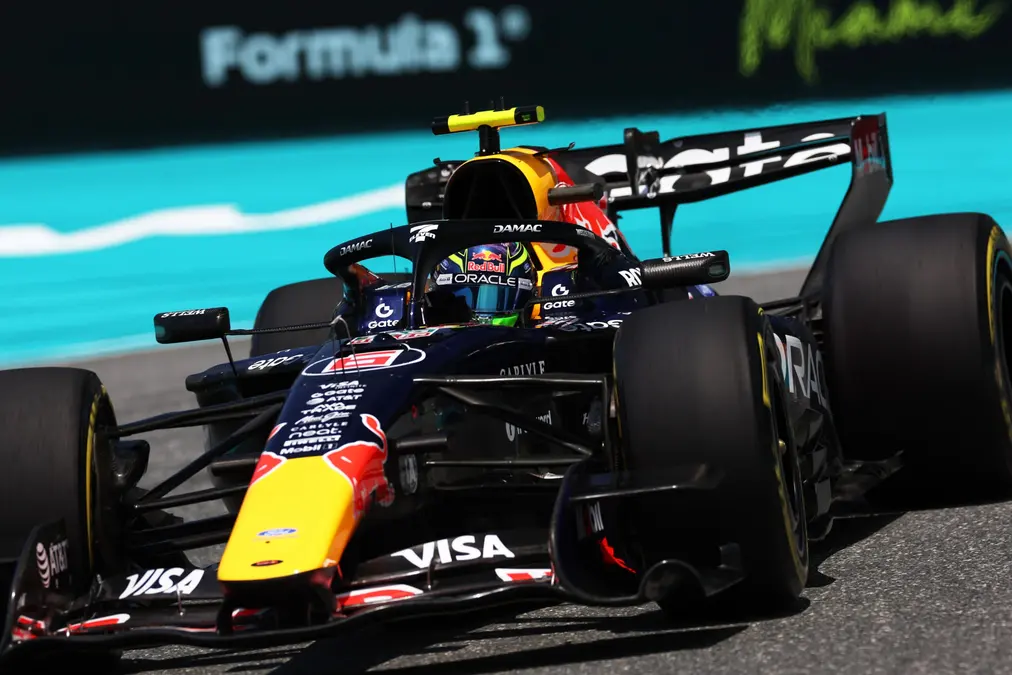
After a rough Miami weekend, Red Bull’s leadership is trying to cool the temperature without pretending the damage wasn’t real. According to Mekies, the crash suffered by Isack Hadjar on Sunday (3) wasn’t the start of a bigger problem, but rather the final chapter of a chain reaction that began with a floor irregularity, detoured through park fermé consequences, and ended with a largada do pit-lane that forced the young Frenchman into damage-control racing.
In what feels like a classic crisis-management move, Mekies also acknowledged Red Bull’s own role in the outcome. As we reported on Jogo Hoje, the team’s message is clear: the car didn’t look sharp enough in Miami, but the signs of recuperação de ritmo were there, and the next race is where they want that story rewritten.
The Miami crisis: what happened to Hadjar
Let’s lay it out in order, because in F1 the sequence is everything. Hadjar started the last Sunday of the GP de Miami, último domingo (3) with momentum that never fully became execution. He went through a blank sprint outing, then got excluído da classificação due to a irregularidade no assoalho of the RB22. That penalty didn’t just erase a qualifying result; it put him in a position where strategy and track position would do the heavy lifting from the start.
Because of the classification situation, he had to take the largada do pit-lane in the race. From there, the script shifted to pure race craft. Hadjar showed fight early, finding pace and trying to recover positions through the first stint rhythm. He even managed to reach 15º lugar antes da batida, which matters tactically: it tells you he wasn’t just surviving, he was building a recuperação de ritmo in real time.
Then the weekend snapped. In the first part of the lap, he touched the guard-rail at the chicane do miolo. With the suspensão dianteira damaged, the car lost stability and he was sent into the wall at turn 15. It’s the kind of hit that doesn’t only end your race, it forces a reset on confidence, feedback and setup direction for the next run.
The Red Bull error that pushed him into the pit-lane
This is where Mekies stops sounding like a referee and starts talking like a manager. He doesn’t just talk about Hadjar’s mistake; he points at the team’s responsibility in the fallout. The key admission is blunt: Red Bull didn’t handle the weekend cleanly, and the car wasn’t at the best level in Miami. That’s not PR fluff. If the baseline pace is off, then every other problem becomes magnified.
More specifically, Mekies referenced the process around park fermé and how the team’s failure to identify the irregularidade no assoalho in time left Hadjar in a tougher starting position. When you end up sending a driver to the pit-lane, you’re not only changing track position. You’re also compressing decision-making windows: the driver has to push earlier, take more calculated risks, and manage tire and brake behavior under pressure.
And yes, Hadjar still has his own responsibilities. But when the team says “we didn’t help,” the tactical translation is: the weekend structure wasn’t set up to protect him, at least not in the way a top team should. Put simply, they forced him to recover too much, too quickly, with too little margin for error.
The crash in recovery and Mekies’ reading of events
Hadjar didn’t hide his frustration after the incident. The driver’s own assessment was emotional, but it also reads like a tactical autopsy: he felt he was on the verge of turning things around, then the suspensão dianteira failure triggered the kind of snap that punishes bravery.
Mekies, however, frames it as a performance curve rather than a red flag. His logic is tactical: the car affected rhythm, Hadjar couldn’t find the ideal pace window, yet he still showed potential during the recovery phase before the mistake at the chicane do miolo.
That’s the critical nuance for the inner politics of a team. Red Bull is trying to prevent a “driver confidence spiral” narrative. If the message becomes “Hadjar is the problem,” the rebuilding work becomes psychological. If the message becomes “we lost time due to technical and procedural issues, and the recovery pace was there,” then the team can keep the development pathway intact.
So when Mekies insists there are “all the signals” that they’ll return to the right level of speed in Montreal, he’s really selling a plan: fix the performance baseline, learn from the Miami chain of events, and give Hadjar a weekend where the setup and procedures don’t turn every lap into a gamble.
Why Red Bull says there’s no reason to panic
Here’s the argument Red Bull wants the paddock to buy. First, Miami wasn’t a clean weekend. That matters because inconsistent baseline performance can distort the whole feedback loop between driver and engineers. Second, the driver showed recuperação de ritmo in the race, which suggests the potential wasn’t imaginary. Third, the crash came after a specific contact sequence—guard-rail at the chicane do miolo—and the damage profile points to a mechanical-handling failure under compromised conditions, not a mysterious loss of driving skill.
And fourth, there’s a developmental angle. Hadjar is still in the process of learning how to manage pressure when the weekend goes sideways. If the team can reduce the number of “forced” scenarios—like the largada do pit-lane after classification issues—then his learning curve becomes steadier. That’s what they’re protecting.
For Montreal, the timing is also perfect. The GP do Canadá runs from 22 a 24 de maio, the quinta etapa da temporada 2026, so Red Bull doesn’t have to wait long to test whether Miami was an outlier or a symptom of a deeper performance gap.
What to expect from Red Bull at the Canadian GP
If you want a tactical read on Montreal, you look for two things: whether Red Bull regains confidence in the setup direction and whether they tighten the operational process that led to the irregularidade no assoalho being punished so harshly.
Hadjar’s best moments in Miami weren’t the crash—they were the recovery phase where he found enough pace to reach 15º lugar. Red Bull will want to recreate that without forcing him into a pit-lane-origin race. In practical terms, that means cleaner weekend execution, clearer performance targets, and less chaos in the lead-up to park fermé.
Politically, Mekies’ stance also sets expectations internally. He’s telling the group: we own our part, but we’re not going to panic, and we’re not going to throw away development momentum. If Montreal brings a more stable rhythm and fewer “must-recover” scenarios, the team’s narrative will start to look credible.
O Veredito Jogo Hoje
Red Bull’s line with Mekies is the right kind of calm, because it doesn’t deny the hit—it denies the panic. Miami wasn’t just a driver bad day; it was a chain of technical and procedural friction that pushed Hadjar into a high-risk recovery. If they genuinely fix the baseline and protect execution before park fermé, Montreal won’t just be a race, it’ll be the proof that this is learning with intent, not damage control for optics. Assinado, JogoHoje.
Perguntas Frequentes
Why did Isack Hadjar start from the pit-lane in Miami?
Because he was excluded from qualifying due to a irregularidade no assoalho, and the resulting process led to him taking the largada do pit-lane for the main race.
What did Laurent Mekies mean by “we didn’t help”?
He was pointing to Red Bull’s share of responsibility in the chain of events in Miami, including the team’s weekend management around park fermé and how the situation forced Hadjar into a difficult starting scenario.
When does F1 return, and what’s the next Red Bull race?
The next round is the GP do Canadá, scheduled for 22 to 24 May, the quinta etapa of the 2026 season.