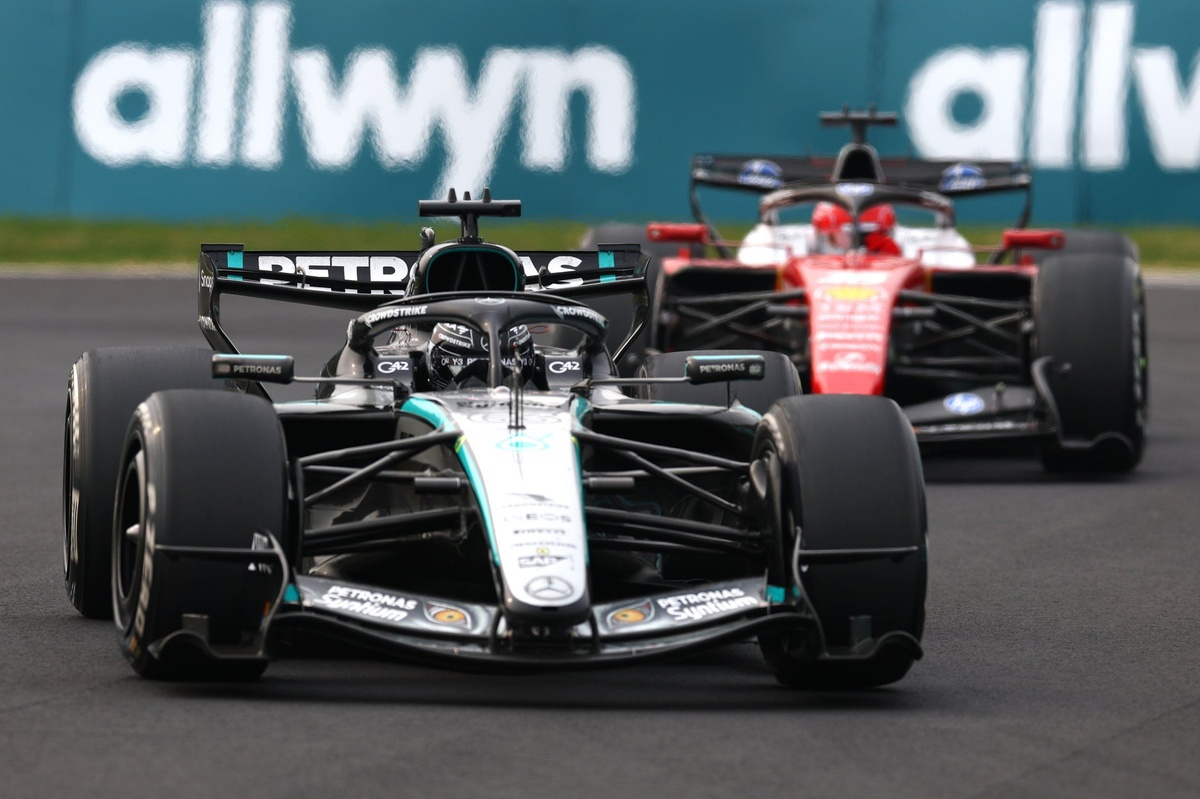
After the first three rounds of the 2026 season, Mercedes have not just been winning. They’ve been winning in a way that makes the scoreboard feel almost misleading. According to the data we’ve been tracking at Jogo Hoje, the gap between Mercedes and the rest is sharper in the metrics that actually predict Sundays, not just in the headlines.
Yes, the races have looked tense at times, and yes, Ferrari have found moments to rattle the front. But when you strip away the noise from timing screens and the chaos of individual race weekends, a nerdy but brutal truth emerges: Mercedes’ real cushion is bigger than what close finishes imply.
What the track shows—and what the numbers hide
Mercedes took all three Grand Prix in 2026, including the sprint in China. That matters, because sprints are a quality test of tyre preparation, execution under pressure, and qualifying rhythm. But the deeper story is in the repeatability: when opponents get close, it’s often because of one-off race incidents rather than sustained pace gains.
In plain terms, the chasing pack can occasionally squeeze the gap through strategy, track position, and execution. Still, they don’t consistently have the performance tools to challenge George Russell and Kimi Antonelli when it counts. Bad starts, messy opening laps, and the odd swing in track position can make it look like the gap is shrinking. The stats say otherwise.
After three race weekends, Ferrari are the closest pursuer. Yet the average differences paint a picture that feels almost unfair: there’s an average 0.56s advantage in classification and an average 0.53s per lap in race pace. That is not “close enough to hope.” That’s “close enough to feel the pressure, far enough to be unable to land the punch.”
And if you’re wondering whether this is just a hot start or a true performance separation, the historical comparisons answer before you even finish the thought.
The Mercedes edge in qualifying rhythm and race pace
Let’s talk about the two numbers that usually decide titles: the difference in performance when the cars are light on fuel and the difference when the tyres are asked to do real work over a stint. In clean air, Mercedes’ advantage becomes loud. Ferrari, McLaren, and Red Bull may look competitive in fragments, but their pressure is rarely consistent because they’re not matching the same baseline speed.
The most telling part is how “small” this looks in the narrative while being massive in the engineering reality. Ferrari’s average gap to Mercedes sits at 0.56s in the advantage in classification and 0.53s per lap in race pace. That combination is the kind of spread that forces the whole weekend to be built like a rescue mission.
- Qualifying rhythm: Mercedes are extracting more time on one-lap performance, which shows up as the advantage in classification.
- Race pace: the difference average lap (the difference média por volta for those who prefer the original phrasing) indicates the pace survives through traffic, tyre wear, and changing conditions.
- Stint performance: the gap isn’t only about one perfect lap; it shows up where it matters most, in desempenho em stint and the ability to run under load without falling off a cliff.
Why Ferrari, McLaren, and Red Bull look closer than they are
The reason the Mercedes story doesn’t dominate every broadcast is simple: racing has variables. Even if the underlying pace gap is large, a weekend can still produce drama because of track position swings and the randomness of race execution.
Ferrari can press early, and that creates the illusion of parity. But press is not the same as progress. If Mercedes are better in clean air and more stable in race pace, then the rivals can only borrow time, not build it. That’s why the closest rivals often end up stuck playing defence for longer than the broadcast graphic suggests.
There’s also the start-and-stop nature of modern F1: a poor launch can erase a qualifying advantage in the first ten seconds, and a single overtake attempt can turn into a chain reaction. Those moments are real, but they don’t change the core numbers.
In the background, you can also see the “track illusion” effect: teams might match Mercedes during certain phases if their car window and tyre behaviour align for a short stretch. Yet the difference média por volta and the ritmo de classificação trends imply Mercedes are winning the session before the session even begins.
Comparison with F1’s biggest hegemonies
This is where the nerd in me can’t help smiling, because the Mercedes 2026 profile fits the shape of past dynasties—especially the eras when one team seemed to have rewritten the rulebook in practice.
In 2025, the McLaren advantage over Red Bull averaged only 0.19s in the relevant head-to-head pace comparisons. In 2023, even when Max Verstappen was stacking wins, the Red Bull advantage over Ferrari in qualifying rhythm was also around 0.19s. Those are strong margins, but they’re not the kind that makes the midfield feel like a different sport.
Then you jump to the comparable “big swing” seasons. In 2020, Mercedes beat Red Bull by an average of 0.55s in classification-type comparisons. In 2016, Mercedes led Red Bull by an average of 0.74s in qualifying. And in the early part of the hybrid era, 2014 is the benchmark: Mercedes carried about 0.83s over Red Bull in average terms.
What’s wild is that Mercedes 2026 sits closer to that “historic” category than the casual fan would believe from the close-race footage. Even the all-time outlier comparisons don’t fully cover what these gaps imply for an entire season’s development cycle.
Look further back and you get perspective. In 2001, the Ferrari biggest historical advantage over McLaren was about 0.37s. In 2010, Red Bull’s best margin over Ferrari was around 0.4s in classification. And in 2018, Ferrari narrowed the gap to Mercedes to roughly 0.08s, which shows how real convergence can happen—just not quickly, not without a genuine performance unlock.
What changes with the 2026 regulations—and the chance of convergence
Here’s the part where we don’t just stare at the current gap like it’s a prophecy. The 2026 rules are designed to change the operating model of the cars, and that matters for the speed of convergência regulatória—or, in English terms, regulatory convergence.
The key idea is that the regulation package, including the ADUO-related framework referenced in coverage, can accelerate convergence in certain areas, particularly on the power-unit side. If the base performance ceiling moves closer across teams, then a gap that looks huge on day one can become less intimidating by mid-season.
Still, there’s a catch. Convergence doesn’t happen in a vacuum. It requires teams to build the right aero philosophy, manage tyre behaviour, and maintain consistent stint performance when fuel loads and operating temperatures shift. A rule change can open the door, but it doesn’t hand you the room key.
The historical hybrid-era lesson is instructive. After the hybrid era began, it took four years before any team could seriously challenge Mercedes. Only in 2018 did Ferrari reduce the average gap to around 0.08s. That’s why this season feels like it has the early DNA of an era—not just a string of results.
Mercedes 2026 is not identical to 2014, but the direction of travel is similar. The advantage is smaller than the peak hybrid-era value, yet the current trend still suggests the title could be decided earlier than anyone wants to admit.
O Veredito Jogo Hoje
Mercedes aren’t merely ahead on race day; they’re ahead in the parts of the performance equation that decide championships: ritmo de classificação, ar limpo, and the difference média por volta that survives the real grind of tyre wear and traffic. Ferrari can create pressure, sure, but pressure is not a strategy and proximity is not a pace plan. If the rivals can’t close the gap in clean-air execution and stint stability, 2026 won’t be a battle for the lead—it’ll be a season-long lesson in why the best teams don’t just win races, they compress everyone else’s options. Assinado, JogoHoje.
Perguntas Frequentes
Qual é a real vantagem da Mercedes na F1 2026?
Em média, a Mercedes leva cerca de 0.56s sobre a Ferrari na vantagem em classificação e cerca de 0.53s por volta no ritmo de corrida. O recorte sugere um diferencial maior em performance real do que a narrativa de corridas apertadas deixa transparecer.
Por que Ferrari e Red Bull parecem mais competitivas do que os números indicam?
Porque a proximidade visual costuma nascer de variáveis de corrida: largadas, gestão de pista, momentos de pressão e mudanças pontuais de posição. Quando você compara o desempenho em ar limpo e a consistência de desempenho em stint, a diferença média por volta volta a expor a separação real.
O regulamento de 2026 pode reduzir a diferença para a Mercedes?
Existe caminho para a convergência regulatória, especialmente em áreas ligadas ao power unit e ao comportamento de operação do carro. Mas, historicamente, convergência rápida exige execução técnica perfeita e ganhos sustentados em ritmo e stint. Sem isso, a diferença tende a reaparecer sempre que a corrida entrar no modo “limpo”.