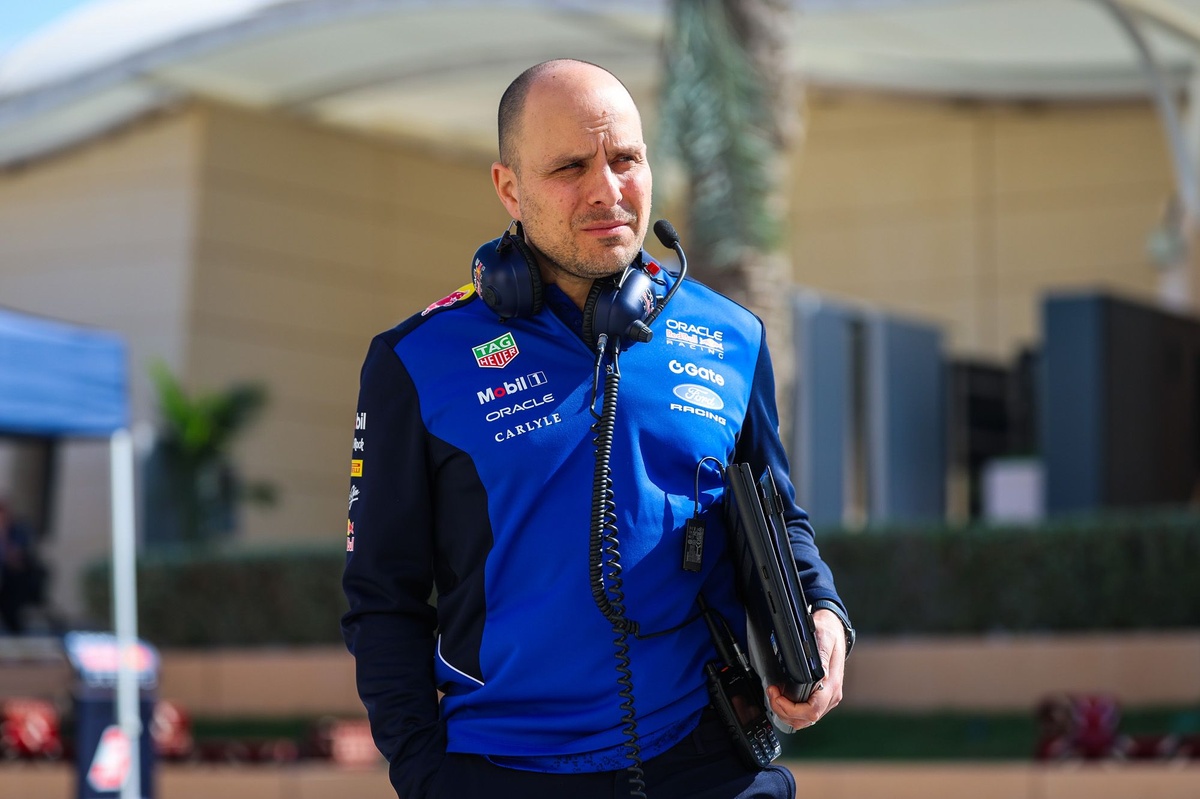
According to apurings by Jogo Hoje, the Formula 1 chessboard just changed its weight. Red Bull has confirmed the exit of Gianpiero Lambiase from Milton Keynes at the end of 2027, and McLaren has officially snapped him up for a new mission in the next cycle. Urgent? Absolutely. Strategic? Even more. Because this isn’t a headline meant to warm hearts, it’s a piece of structure that can swing the trackside command and the way decisions get made under pressure.
The timing matters: the contract runs out with Red Bull after 2027, while McLaren expects to receive him “no later than” 2028. That gap doesn’t kill the impact; it sharpens the planning. In F1, hierarchy and operational management don’t wait for the next race—so why would the teams wait for the next year?
The double announcement: Red Bull confirms the exit and McLaren makes it official
Red Bull confirmed that Lambiase will leave its F1 structure at the end of 2027, honoring what was already agreed. He joined in 2015, and his contract is valid until the end of that 2027 window. No drama, no vague wording: just a clean cut that tells you the internal reorganization has been planned, not improvised.
Then McLaren steps in with the second half of the move. Gianpiero is coming in as Chief Racing Officer, reporting directly to Andrea Stella, who stays as team principal. The rationale is tactical: create a layer that leads the overall trackside operation, while easing the load of Stella so the leadership bandwidth can be used more efficiently.
That division of responsibilities is the real tell. Teams don’t create new command roles unless they’re trying to make the decision loop faster, tighter, and more consistent—especially in a change of cycle where rules and performance windows can flip the pecking order.
Who Gianpiero Lambiase is—and why he matters so much in F1
Let’s name what he actually is in this ecosystem: an engineer of race execution who understands the relationship between data, tyre behavior, pit timing, and the human side of decision-making. Lambiase arrived at Red Bull in 2015 as the race engineer for Daniil Kvyat. In 2016, when Verstappen was promoted to the main team, the partnership shifted—Lambiase became Verstappen’s race engineer, and the duo stayed together for years.
That’s not just a CV line. In F1, the engineer of race execution is often the translator between what the car is doing and what the driver needs to hear right now. Over time, Lambiase became central to how Red Bull ran its structure technical at the track: the rhythm of upgrades, the feedback loop, and the way strategy gets protected when the pressure spikes.
So when you see his departure, don’t only think about “success” in the past. Think about the hierarchy of team and what experience like this does to the command chain when it lands in a new garage.
What changes at McLaren with the Chief Racing Officer role
McLaren’s move is smart because it’s operational, not cosmetic. By hiring Lambiase as Chief Racing Officer, they’re effectively adding a dedicated leadership node for race operations. He will report directly to Andrea Stella, which keeps the strategic brain close to the decision-making spine, while giving the trackside team a clearer chain of command.
Here’s the tactical angle: when you reduce the load on the team principal and formalize race leadership, you improve consistency in:
- Trackside command during safety cars and chaotic race states
- Management of operational management across pitwall, strategy, and engineering inputs
- Change of cycle readiness, where new processes need to be embedded early
- Alignment between the driver feedback and the simulator/analysis pipeline, strengthening the structure technical loop
That’s a lot of responsibility for one title, but that’s also why it’s valuable. McLaren isn’t just buying a name; it’s buying a way to run races.
Why this news shakes up Verstappen’s future—and Red Bull’s control
We need to be honest: this doesn’t automatically mean Verstappen is “done” at Red Bull. But it does change the environment around him. Lambiase isn’t a random staffer; he was Verstappen’s race engineer from 2016 onward, which means he lived through the same decision moments that shaped their dominance.
If Red Bull is reorganizing its internal command structure, then the driver’s support ecosystem will shift. The question becomes: will Verstappen still get the same communication cadence, the same race-weekend logic, the same confidence under uncertainty?
Meanwhile, McLaren’s timing also matters for the market narrative. When a team locks in a high-value chief racing officer type appointment with effect from 2028, it signals intent—not just hope. It implies McLaren wants to close the gap in the next performance window, and it’s willing to redesign team hierarchy to do it.
So yes, this is a “bastidores” story, but it’s not idle gossip. It’s about who controls the steering wheel when the tyres fall off and the timing screens start lying.
Timeline: from Kvyat to Verstappen, the path of Lambiase
2015: Lambiase joins Red Bull as Daniil Kvyat’s race engineer, learning the rhythm of Milton Keynes at the top level.
2016: Verstappen is promoted to the main team, and Lambiase becomes Verstappen’s race engineer, forming one of the most influential engineer-driver partnerships in the modern era.
2015 to 2027: Years of continuity, where his role stays tied to Verstappen’s on-track execution and Red Bull’s decision-making culture.
End of 2027: Red Bull confirms his departure from the team structure.
2028 (no later than): McLaren expects to receive him to take up the Chief Racing Officer position.
That timeline tells you the value: it’s not a short-term gamble. It’s a long arc of experience that now gets transplanted into a different management of operational management system.
What to expect from 2028 onwards
If McLaren executes this correctly, the payoff won’t just be “better strategy.” It should show up as faster, cleaner trackside command decisions: pit timing that’s less reactive, race-management that’s more proactive, and a tighter link between driver feedback and the structure technical behind the scenes.
Also, the internal redistribution at McLaren—Lambiase easing the burden of Stella—suggests a more scalable hierarchy. That matters because the next rules cycle tends to punish teams that rely too heavily on one person’s bandwidth. When the pressure is constant, you need redundancy in leadership, not heroics.
Will this immediately flip the balance against Red Bull? Not overnight. But it can change how McLaren competes for wins and, just as importantly, how it protects points when races go sideways.
O Veredito Jogo Hoje
We’re watching McLaren upgrade its command system, not just its staff. Hiring Lambiase as Chief Racing Officer is a statement that race day at Woking will run with clearer hierarchy of team and sharper trackside command, while Red Bull’s own reorganization could leave a subtle gap in the Verstappen ecosystem. This is the kind of change of cycle move that doesn’t win you a single weekend—it wins you the next three years. And if you think that’s “just politics,” you haven’t been paying attention to how strategy actually gets made under the lights. — Jogo Hoje, Analista Tático
Perguntas Frequentes
Who is Gianpiero Lambiase in Formula 1?
Gianpiero Lambiase is a race engineer who joined Red Bull in 2015. He worked with Daniil Kvyat before becoming Max Verstappen’s race engineer in 2016, playing a major role in the team’s trackside execution for years.
What will be Gianpiero Lambiase’s role at McLaren?
He will become Chief Racing Officer, leading overall trackside operations and reporting directly to Andrea Stella, as part of a restructure aimed at improving operational management and the hierarchy of team.
Can Lambiase’s departure influence Max Verstappen’s future at Red Bull?
It can influence the environment around Verstappen. Since Lambiase handled his race engineering from 2016 onward, Red Bull’s internal changes could shift the communication cadence and decision-making routine. That doesn’t guarantee an exit, but it absolutely reshapes the context in which any future is negotiated.