Honda’s trackside engineering chief, Shintaro Orihara, didn’t dress it up as a miracle. He framed Miami as a measurable step: the unit of power in Aston Martin’s AMR26 is now running with vibrations that are low enough to let the drivers actually give clean feedback. And when a team can finally separate “the car won’t finish” from “the car is awkward,” that’s when the real work starts.
According to Orihara, confiabilidade held up well enough that both race distance and sprint distance were completed “without any major reliability issues,” and the drivers came back with positive remarks after the GP de Miami last Sunday (3). That’s the kind of signal that matters when a Honda-Aston partnership is still in the fine-tuning phase. As Jogo Hoje have it, the storyline in this early 2026 stretch is less about headlines and more about whether the ajustes de dados are finally translating into on-track stability, Jogo Hoje.
What Honda managed in Miami
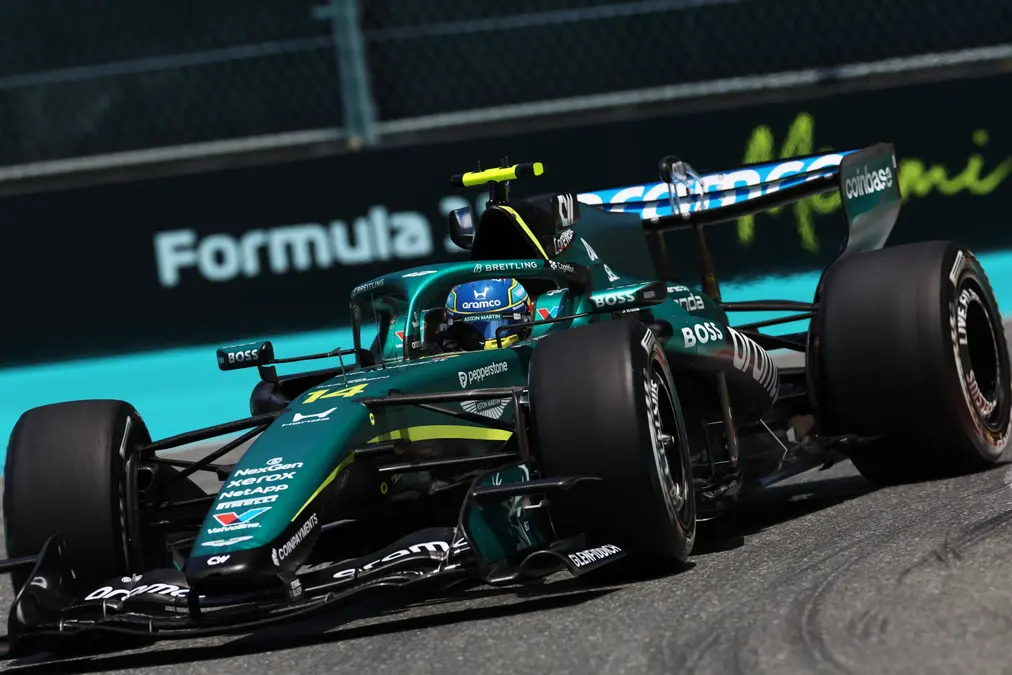
Let’s be precise about the performance picture. Fernando Alonso, driving the #14, wasn’t trapped by the kind of confiabilidade collapse that earlier threatened the AMR26. He crossed the line P15. Lance Stroll finished P17, and while that’s not exactly party material, it came with a concrete morale boost: he saw the chequered flag for the first time in the 2026 season.
That first flag is not a souvenir. It’s quilometragem de corrida in the rawest sense: the team can log consistent runs, harvest stable telemetry, and start correlating how changes in the unidade de potência behavior affect dirigibilidade lap after lap.
- Race completion achieved for the AMR26 with no big reliability drama.
- Sprint distance also completed, again without major reliability issues.
- Driver feedback on the vibration situation described as positive.
Why completing the race changed the diagnosis
Here’s the tactical truth: when you’re forced to retire, your “diagnosis” is mostly guesswork and damage control. Once you complete full quilometragem de corrida, the engineering department can stop treating every symptom like a fire alarm and start treating it like a problem with a cause.
In Miami, Honda’s correction to the unidade de potência reduced vibrations to a level that didn’t trigger the bigger reliability concerns. That matters because vibration often disguises the real culprit. It can mask drivability faults, skew sensor readings, and make the driver feel like the car is “vague” even when the underlying issue is energy delivery or control strategy.
So yes, the vibe improvement is real. But the deeper value is that the team now has a cleaner dataset for ajustes de dados, and that’s the foundation for the next phase of gestão de energia and dirigibilidade.
Alonso already shifts the priority: the gearbox is the headline
What makes Miami more interesting is the way Aston Martin’s drivers are steering the narrative away from the engine drama. Alonso’s message was blunt: the priority now should be the gearbox, because it “got in the way” during the weekend.
That’s a classic sequence in elite engineering. First you stabilise the power unit so you can finish. Then you stop fighting fires and start hunting the next bottleneck. If the gearbox is now the limiting factor, that implies the Honda work on vibrations didn’t just help comfort or noise levels, it improved the car’s operating envelope enough for another subsystem to come into focus.
And let’s not forget the operational detail behind the scenes. Honda kept one car at Sakura after the Japan round, using that extra runway for vibration reduction and to strengthen dirigibilidade work. That kind of consistency is exactly how you prevent one-off fixes from evaporating when you go back to a different circuit.
The next technical step for the Honda-Aston Martin partnership
Orihara’s own words point to the next engineering battleground: optimize gestão de energia and dirigibilidade using the data. In other words, the team believes the platform is now stable enough that the next gains won’t come from “survival mode,” but from a more refined calibration of how the power unit delivers torque and how it behaves under different driver demands.
This is where the partnership will either look like a well-run programme or like a patchwork. Because vibrations can be reduced, but if energy control and drivability aren’t tuned together, the driver will still be fighting the car instead of building rhythm.
Orihara even stressed there’s still plenty of room to improve the unidade de potência. Translation? The vibration fix is a step toward a broader performance package, not the whole solution.
- Focus on ajustes de dados from completed race and sprint runs.
- Improve gestão de energia through calibration refinement.
- Raise dirigibilidade so drivers can exploit traction and braking zones.
What to expect before the GP of Canada
The schedule gives them a real test window. The next race is the GP do Canadá, from 22 to 24 May, the fifth round of the 2026 season. Canadian circuits tend to punish drivability inconsistencies and expose energy-management weaknesses, especially when traction and throttle mapping need to be spot-on across variable grip.
If the vibration reduction in Miami was the first domino, Canada is where Aston Martin and Honda will see whether the next dominoes fall too: can they turn stability into lap-time, can they make the car feel predictable for the driver, and can they keep collecting quilometragem de corrida that strengthens the dataset instead of contaminating it with non-representative failures?
O Veredito Jogo Hoje
Miami was a proper engineering win for Honda—less because the finish positions looked good, and more because the AMR26 finally delivered usable quilometragem de corrida under a reduced vibrations regime. That’s the difference between “talking about progress” and actually building one. Now, if the team nails gestão de energia and dirigibilidade before Canada, this partnership stops being an experiment and starts looking like a programme with direction. If they miss, the gearbox chatter from Alonso will be the least of their problems.
Perguntas Frequentes
What did Honda solve in Aston Martin’s engine in Miami?
Honda says it reduced vibrations in the unidade de potência of the AMR26, based on trackside corrections tested through the Miami weekend.
Why was race mileage so important for the team?
Because completing both race distance and sprint distance provides reliable data for ajustes de dados. It turns the engineering process from speculation into correlation, helping refine gestão de energia and dirigibilidade.
What next technical issue does Aston Martin want to address?
Fernando Alonso indicated the gearbox should be the next priority, because it hindered the team during the Miami weekend, even after the improved engine confiabilidade and reduced vibrations.