After the Miami GP, the debate isn’t really about one corner. It’s about pattern recognition, and Jogo Hoje has been mapping the full Formula 1 picture with the same lens: who defends, who attacks, and who turns a defense of position into a personal storyline.
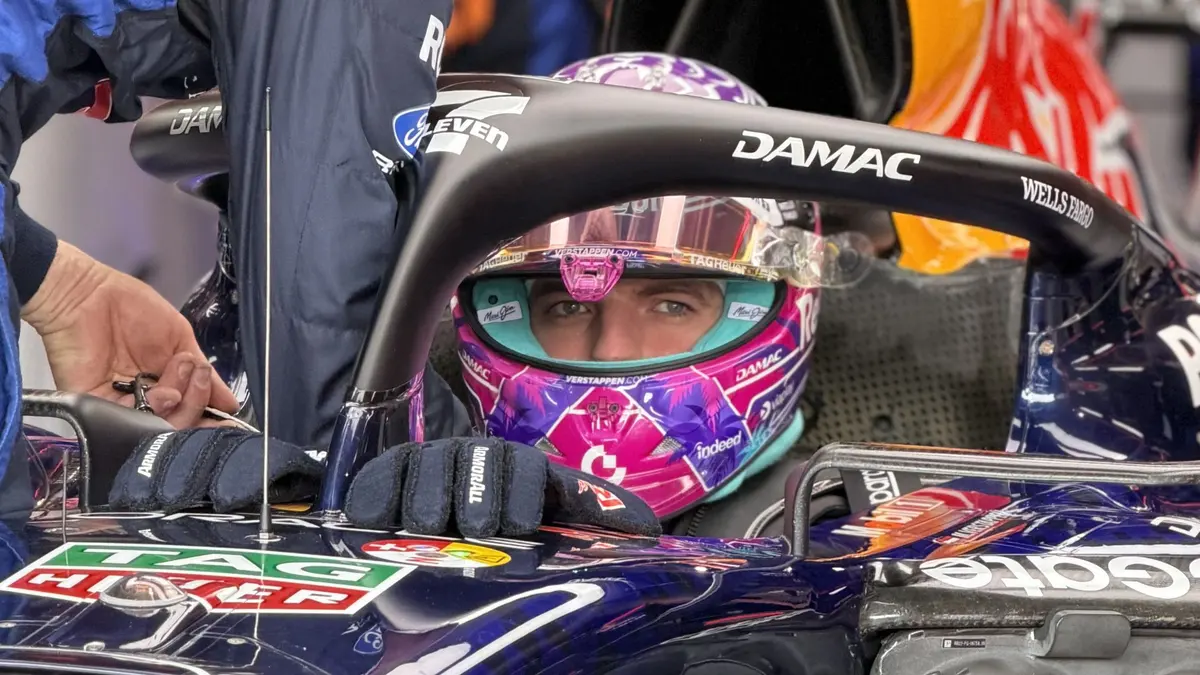
Damon Hill, the 1996 world champion, took that angle straight to the front. And if you’re wondering whether his timing was calculated, we’re pretty sure it was. Because when a driver as fast and as combative as Verstappen starts throwing a fit over a move by Alexander Albon, you have to ask: is it really new behavior, or just a familiar script playing out with a different target?
Hill’s criticism and why Verstappen snapped back
Hill’s point was blunt, but the tedium in it is what makes it interesting. Verstappen complained via the team radio after a contact-adjacent moment, arguing that Albon “spremed” him, as if the racing gods had issued a rulebook specifically for his convenience. Hill, however, framed it as hypocrisy: Verstappen has been running that kind of manobra agressiva against others for years.
From a tactical standpoint, this is where wheel-to-wheel racing becomes psychological. One driver sees a squeeze in the zone of frenagem. The other sees a closing action that protects the line. The difference is tone, not physics. And Hill basically said: don’t act surprised when the game is played the same way both directions.
The Miami incident: Verstappen vs Albon, right where it hurts
Let’s get the sequence right. Miami had its share of chaos, but the key duel was cleanly defined by geography on the track. Verstappen tried to get past Albon after the long straight that feeds into the third sector. On paper, that’s the kind of setup where you look for a late decision and commit to the gap before it disappears.
But racing isn’t played on paper. As Verstappen closed, Albon managed the closing distance and effectively sealed the door. Verstappen had to back out as they approached the pit-lane entry area, where the line, the speed window, and the ability to carry momentum all compress at once.
And then came the radio outburst. Verstappen’s words were pure frustration, the kind that usually shows up when a driver feels the defesa de posição was too physical, too close, too “unfair” for his taste. The language was fiery: he claimed Albon squeezed him at the cone and questioned the legitimacy of the move.
Meanwhile, the bigger context matters. Verstappen had already been forced to fight his way back after an early issue at the start. When your rhythm is disrupted, every subsequent disputa roda a roda feels like a referendum on your pace rather than just a moment of racing. That’s when radios go from reporting to venting.
Why Hill’s 1996 authority carries weight
Hill isn’t a pundit for vibes. He’s a former champion with a direct line to what racing looked like when aggression was both currency and risk. When he says Verstappen can’t complain because he does the same thing to others, that lands differently than a random commentator waving a hot take flag.
His quote, on BBC Radio 5 Live, boiled down to a simple tactical observation: Albon recovered position and forced the issue, and Verstappen shouldn’t be shocked that the same hard-nosed tactics come back at him. In Hill’s logic, it’s not about whether the move was “pretty.” It’s about whether it was consistent with the way Verstappen imposes pressure.
And that’s the uncomfortable part for Verstappen fans. If you accept Hill’s premise, the outrage isn’t about rules. It’s about selective outrage. The moment the shoe is on the other foot, suddenly the standards change.
What this says about Verstappen’s style of attack
Verstappen’s reputation is built on commitment. He doesn’t just push; he pressures. In the moments that decide races, he’s willing to gamble on the braking window, on the overlap timing, and on whether the opponent will fold under speed. That’s why his best passes look like precision, and his worst moments look like friction that spills into drama.
In Miami, the duel had all the ingredients a strategist hates and a fan loves. A high-speed approach, a tight window to make it stick, and a closing action that forces the other car to yield. That’s textbook wheel-to-wheel racing: you’re judged on your entry, your line, your overlap, and your ability to respect the defesa de posição without turning it into a contact festival.
But Verstappen’s reaction suggests something else: when the move doesn’t go his way, the narrative shifts from racing to blame. And Hill is basically reminding us that Verstappen has made those same “hard calls” against others, too.
So the question isn’t whether Albon defended. The question is why Verstappen expects different treatment at the exact same moment: the corner entry, the overlap, the largada aftermath energy, and the late braking choices that decide everything.
Next chapter: the F1 return at the Canadian GP
Now the sport moves on. The Formula 1 season swings back on 22 to 24 May with the GP of Canada. That’s not just a date on the calendar, it’s a reset button for drivers who feed on momentum.
Canada usually rewards drivers who manage aggression with discipline. It’s the kind of track where you can’t always bully your way out of trouble. If Verstappen wants to keep the upper hand, the best answer won’t be louder radio. It’ll be cleaner overlap, sharper commitment, and smarter spacing in the braking zone.
O Veredito Jogo Hoje
Hill nailed the hypocrisy with the calm of a craftsman: Verstappen can’t scream about a squeeze if his own wheel-to-wheel disputes often live in the same gray zone, just with him on the winning side of the telemetry. Tactically, it’s not “who complained louder” that matters, it’s who managed the line and the overlap. E quando a narrativa vira rádio irritado, a gente vê o mesmo padrão de sempre: ataque agressivo, reação emocional, e tentativa de reposicionar a culpa no adversário. — Jogo Hoje
Perguntas Frequentes
What did Damon Hill say about Verstappen’s complaint?
Hill said Verstappen shouldn’t complain about Albon recovering and squeezing him, arguing that Verstappen does the same kind of aggressive move against other drivers, meaning he can’t act like it’s unique or unacceptable when it happens to him.
What happened in the Verstappen vs Albon battle at Miami?
Verstappen tried to pass Albon after the long straight into the third sector, but Albon closed the gap and effectively protected the line as they approached the pit-lane entry area. Verstappen then complained via the team radio, claiming Albon squeezed him near the cone.
When does F1 return after the Miami GP?
Formula 1 returns on 22 to 24 May for the Canadian GP.