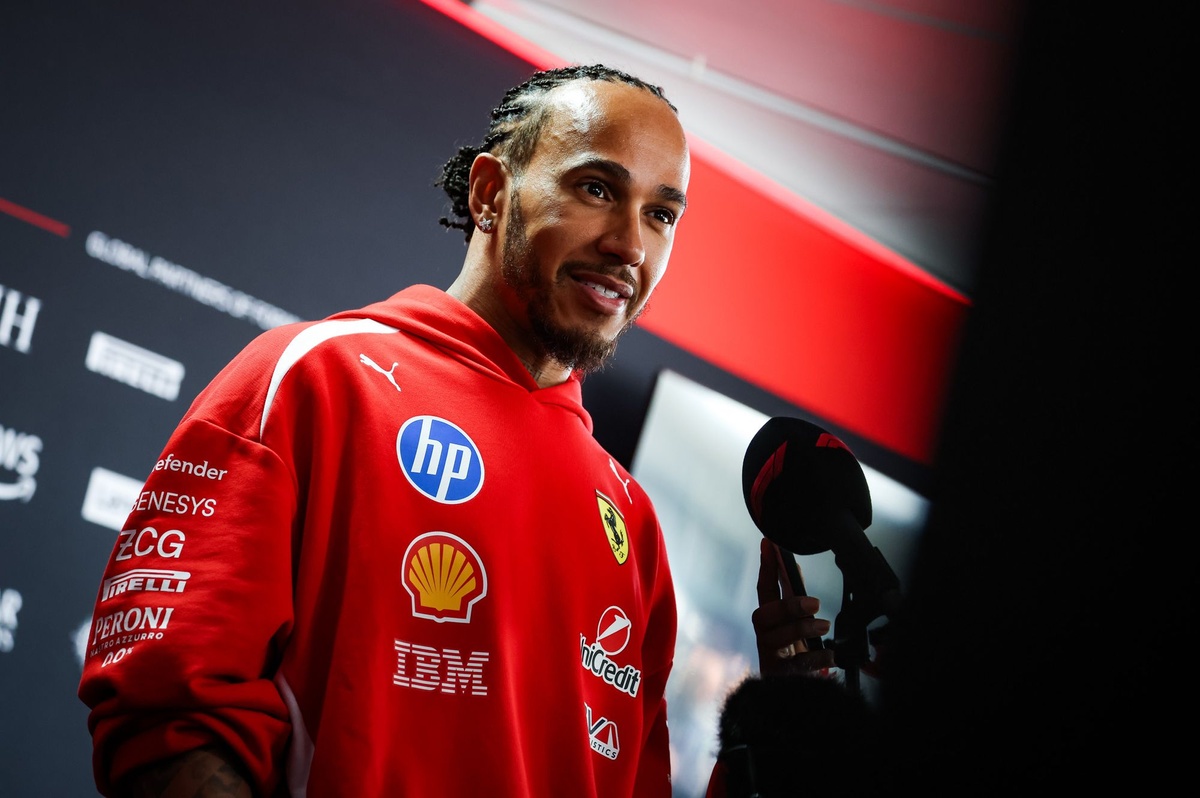
According to apurou the Jogo Hoje, the most dangerous part of the driver market isn’t the noise—it’s the timing. And right now, Max Verstappen and Lewis Hamilton are sitting at the center of the board, with the potential to open, directly or indirectly, vacancies that ripple through the entire grid. Not for 2026 only—think further down the line.
The market trigger: why Hamilton and Verstappen became the chess pieces
When two headline drivers start tugging at the same thread, teams don’t just react—they re-plan. Verstappen’s frustration around the regulamento técnico de 2026 and Hamilton’s uncertainty about his future at Ferrari create a rare overlap: one side is about units of power and racing feel; the other is about whether the seat next to Charles Leclerc is truly secure beyond the contract window.
That’s where the efeito dominó starts. A cláusula contratual doesn’t just decide a driver’s name on a contract sheet—it decides who gets promoted from an academia de pilotos, who gets paid to wait, and who is forced into the market earlier than planned.
Verstappen: the 2026 complaint and the real risk of an early exit
Verstappen’s stance hasn’t been subtle. He has publicly floated the idea of stepping away from F1, pointing to the desire to try other categories and the simple fact that he doesn’t picture himself racing into his 40s. But the loudest lever is the new era of unidades de potência. Since the start of the new regulamento técnico de 2026, he’s been vocal about not liking how the racing is being shaped for 2026—so vocal that it borders on a warning to the sport’s stakeholders.
His contract with Red Bull runs until the end of 2028. That matters, because a “maybe” becomes a “problem” only when the team believes the driver might not honor it in full. And then there’s the other detail: the reported exit of his race engineer Gianpiero Lambiase toward McLaren adds a human layer to what is otherwise a technical and contractual chess match.
If Verstappen forces an exit ahead of schedule—say at the end of 2026 or 2027—the first domino is obvious: a vacancy for the leading cadeira titular at Red Bull. The question is how quickly they can fill it without breaking the car development cycle.
Hamilton: Ferrari’s development curve, and what if there’s no renewal
Hamilton’s situation is different in tone, but not in consequence. His contract with Ferrari is set through the end of 2026. After a tough debut season, he’s shown clearer signs of evolution—enough to make you think the relationship still has upside. Yet performance alone doesn’t pay the bills. Teams still need certainty, especially when the regulamento técnico de 2026 changes how the cars are built and how teams measure progress.
Verstappen has talked about leaving; Hamilton hasn’t done that publicly. In fact, he’s leaned into commitment signals. But the tangle is the same: if Ferrari chooses not to renew, then the second seat alongside Leclerc becomes a domino of its own.
And yes, promotion is the most natural path. If you’re Fred Vasseur, you’re thinking: do we trust the pipeline, do we keep the rhythm of the academy-to-race transition, and do we bring in a driver who can adapt quickly to the car’s new behavior under the 2026 power units?
Who fills the seats: Red Bull, Ferrari, and the cascade into McLaren and Haas
Let’s map the likely chain. Start with Red Bull’s potential vacancy.
- Red Bull’s replacement options would likely come from the Racing Bulls ecosystem, with names such as Liam Lawson or Arvid Lindblad in the frame. But would Laurent Mekies bet on a pairing that’s extremely young? That’s not just about talent—it’s about development leadership. Can they provide direction, feedback quality and consistency to keep the project moving without the seat becoming a revolving door?
- McLaren’s pressure point sits in the market’s second-order effects. If Red Bull goes hunting for a top-level driver and the market tightens, the teams with the most expensive contracts start to look like they have leverage. That’s where Oscar Piastri enters the conversation: he has a multiyear link with McLaren extending beyond 2028. In theory, Red Bull could pay a contractual penalty to take him away—if the cost makes sense against the risk of not securing a Verstappen-caliber benchmark.
- McLaren’s own vacancy logic matters if Piastri leaves. There’s no obvious “plug-and-play” option, which could force McLaren to engage the wider market earlier than planned, dragging other contracts into the negotiation spotlight.
- Haas as a Ferrari-adjacent domino: if Ferrari moves for a younger option, the “natural” internal logic points to Oliver Bearman. He’s seen as a successor in the lineage, and Haas becomes the team with the next seat to defend. In a grid where every team’s balance depends on timing, one promotion can become a scramble.
- Academy spillover: if Haas loses a driver and Ferrari’s pipeline shifts again, a seat at Haas could open for Rafa Câmara, a name tied to the Ferrari Academy Driver conversation. It’s the kind of move that looks tidy on paper but depends on how quickly the new unidades de potência era exposes strengths and weaknesses in the chassis feedback loop.
Now add the background noise: several drivers currently cited have contracts that run only through the end of the present season. Names like Nico Hulkenberg, Gabriel Bortoleto, Alex Albon, Carlos Sainz, Esteban Ocon, Oliver Bearman, Franco Colapinto, Fernando Alonso and Andrea Kimi Antonelli are all, in different ways, “time-limited” assets. That increases the urgency for teams to decide early—because the longer you wait, the fewer options remain that aren’t forced by a sudden vacancy.
The queue of names: Lawson, Lindblad, Hadjar, Bearman and Rafa Câmara
When you talk about a domino effect, you’re really talking about a queue of seats and who can actually survive the transition period—especially under the regulamento técnico de 2026. The names that keep surfacing aren’t random; they’re connected to development timelines, sponsorship alignment, and the academy-to-car translation that teams can’t afford to gamble on.
- Liam Lawson: a promotion candidate if Red Bull wants a fast ramp into a seat without losing too much technical continuity.
- Arvid Lindblad: the “project” angle—can be developed, but the question is whether the team risks handing over leadership to a very young driver cohort.
- Isack Hadjar: often discussed as the middle ground between youth and readiness, though the same development leadership question applies.
- Oliver Bearman: the Ferrari logic is straightforward if the Hamilton situation turns. He’s viewed as a natural successor profile, especially for a team that likes a clear performance arc.
- Rafa Câmara: if Ferrari’s internal reshuffle creates a Haas opening, his academy connection becomes the cleanest link to keep the chain moving.
What F1 2026 changes in the value of these “candidates”
Here’s the tactical truth: under the regulamento técnico de 2026, the value of a driver isn’t just “race pace.” It’s how quickly they can interpret changes in the car’s behavior, how well they can work with engineers on the new unidades de potência characteristics, and how reliably they can translate feedback into performance during the build-and-evolve cycle.
That’s why Hamilton’s uncertainty feels heavier than a simple contract debate. If Ferrari can’t lock in a plan that matches the car’s development direction, they’ll treat the grid like a resource allocation problem. And if Verstappen’s dissatisfaction makes Red Bull consider contingency, then the first seat becomes a strategic asset, not a reward.
So yes, it’s speculative. But it’s not random. A cláusula contratual, an academy timeline, and a regulation shift can all align at once. That’s how you get a chain reaction that teams spend months trying to prevent.
O Veredito Jogo Hoje
We’re not watching a “fun rumor cycle”; we’re watching teams run a contingency war-game. If Verstappen truly treats 2026 as a line in the sand and Hamilton’s Ferrari future stays murky, then Red Bull and Ferrari won’t wait for fate—they’ll start building the next version of their driver strategy right now. And once that happens, the rest of the grid doesn’t just adjust; it gets boxed in by timing, academy readiness and the cost of breaking contracts. That’s the difference between chatter and a real market freeze—and that’s exactly what we think is coming.
Perguntas Frequentes
Why can Hamilton and Verstappen move the driver market?
Because their situations touch high-leverage contracts and high-impact seats. Verstappen’s Red Bull link runs until 2028, but his public stance around the regulamento técnico de 2026 raises the risk of an earlier disruption. Hamilton’s Ferrari contract runs through 2026, and without renewal the second Ferrari seat becomes available, forcing teams to promote from their academia de pilotos or enter the market earlier than planned. Both paths create a chain of decisions across the grid.
Who are the most discussed names to replace them if there’s an exit?
For a possible Red Bull opening, names linked to the Red Bull development system such as Liam Lawson and Arvid Lindblad come up, with Isack Hadjar also part of the conversation. For Ferrari, Oliver Bearman is often framed as a natural successor profile. If the reshuffle cascades, academy-linked drivers like Rafa Câmara can become relevant for the downstream seats.
How can the 2026 technical regulation influence these decisions?
The regulamento técnico de 2026 reshapes how cars behave, especially around the new unidades de potência. That changes what teams value in a driver: speed is only one layer; the bigger question is who can adapt feedback and development direction quickly under the new rules. In a season where the performance curve is harder to predict, teams prefer contractual certainty and drivers who can accelerate the learning process—so a threatened seat becomes a strategic priority.