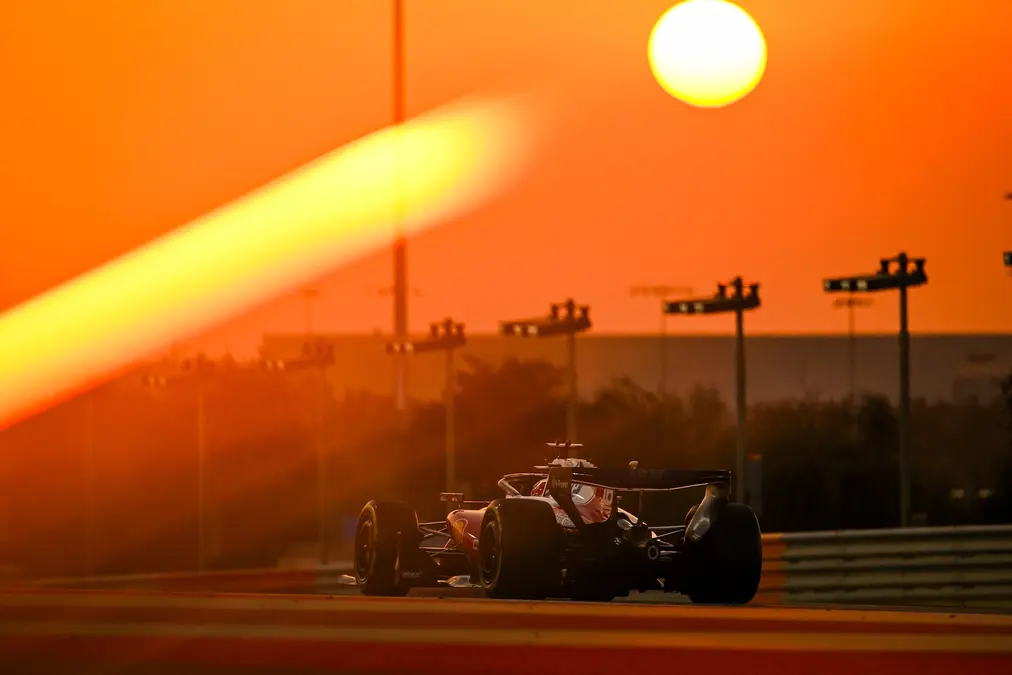
According to JogoHoje’s institutional follow-up, the FIA is actively stress-testing the 2026 F1 calendar as the Middle East situation becomes harder to forecast, and that’s where the clock starts biting. If Bahrain and Saudi Arabia can’t be kept in place, Mohammed Ben Sulayem’s team is ready to reshuffle dates, with Turkey emerging as a contingency plan that only works if the circuit homologation and operational safety boxes get ticked in time.
And make no mistake: this isn’t a “nice to have” schedule tweak. It’s a tactical re-plan under real-world constraints—security and protection come first, even if it forces the sport to sprint through a narrow logistics window.
What the FIA wants to alter in the 2026 calendar
The FIA’s starting point is simple: keep the F1 calendar as intact as possible, but don’t pretend logistics, timing, and track readiness are rubber bands. Any move has to clear multiple gates: adjustment of dates, promoter readiness, homologation paperwork, and the practical ability for teams to relocate without overloading the FIA’s own operational machine.
Ben Sulayem’s approach is basically risk management with a racing brain. The FIA is consulting promoters and looking for the cleanest path that avoids turning the final stretch of 2026 into a logistical circus.
The two scenarios in study: October slot or the late-season push
Two main pathways are being weighed, and the difference between them is the competitive ripple effect across the last third of the year.
Scenario 1: October window between Azerbaijan and Singapore
The first option is to fit one of the threatened races into the weekend from 2 to 4 October 2026, precisely the gap between the GP of Azerbaijan and GP of Singapore. It’s a neat piece of calendar geometry: you’re not scraping the final months as hard, and you keep the season’s rhythm closer to what teams planned.
Scenario 2: Four-race late-season sequence starting after Las Vegas
If the situation forces a bigger correction, the FIA is also considering a late-season run—a sequence of four races beginning with GP of Las Vegas on 21 November. From there, the dominoes start falling.
In that picture, the calendar could compress around Middle East venues. The GP of Qatar, originally set for 6 December, would be at risk of being moved, and the final of Abu Dhabi might be pushed back as well.
The reported idea is to stage the Qatar and Abu Dhabi races in either Sakhir or Jeddah (Jedda), and then shift the season finale to 13 December—the weekend after the originally scheduled Yas Marina date.
Why Turkey appeared as the contingency plan
Turkey’s role only makes sense if you view it through the lens of track readiness. The return of the GP of Turkey was confirmed recently, but the FIA isn’t treating that as a free pass. It depends on whether all technical prerequisites and homologation of circuit requirements can be completed on time.
Ben Sulayem’s logic is pragmatic: if the Middle East environment keeps destabilizing the schedule, Turkey becomes the safety valve. He framed it as a decision shaped by logistics—where the FIA wants to go, and whether the move can be done without overloading its staff.
From a competition standpoint, this also matters. Teams plan their development cycles around the cadence of races. A sudden replacement venue changes practice rhythms, tyre preparation expectations, and even how drivers calibrate confidence on a new layout. You don’t need a conspiracy to see it—just look at how quickly performance can swing when the data baseline changes.
What Mohammed Ben Sulayem said about safety and homologation
Ben Sulayem’s message is blunt, and it’s the part that makes the urgency real. On Qatar, he suggested a potential one-week shift and then laid out the alternative: if the process can’t be kept stable, the FIA could consider Turkey provided it finishes the required homologation and meets the remaining conditions.
He also highlighted that the FIA is actively consulting promoters and trying to find the best scenario from a logistical perspective. The subtext is clear: the FIA won’t make a move that creates a new operational problem while trying to solve the original one.
Most importantly, he connected the issue to security and protection rather than pure sporting convenience. If the situation stretches into October and beyond, the FIA is prepared to step away from racing rather than gamble with operational safety.
The possible impact for Qatar, Abu Dhabi, and the season finale
Here’s where the tactical chessboard gets spicy. If the FIA pushes Qatar and Abu Dhabi around, it’s not just shifting dates—it’s altering the sequencing of track characteristics, travel timing, and how late-season points are contested.
Under the reported plan, the GP of Qatar that was set for 6 December could be relocated to Sakhir or Jeddah between the Qatar and Abu Dhabi window. Then the season-ending GP of Abu Dhabi could be moved to 13 December. That would keep the championship ending in early-mid December instead of sticking to the original Yas Marina timetable.
But the real risk isn’t only sporting. It’s whether the FIA can get the adjustment of dates and homologation of circuit done without compromising the safety posture. In a sport where margins are microscopic, even a small operational hitch can snowball—especially when multiple venues and multiple stakeholders are involved.
What still needs to happen for the change to work
For any calendar shift to become more than a draft, the FIA has to land three things in the real world:
- Promoter coordination that holds under pressure, not just on paper.
- Circuit homologation and technical readiness that satisfy the FIA’s rules and the track’s operational capability.
- Security-driven operational planning that ensures operational safety isn’t compromised while teams travel and prepare.
Turkey is the clearest lever, but it’s also the most conditional. The return exists, but the FIA still needs the technical and procedural clearance to make it reliable enough to be a true fallback—not a last-minute gamble.
And if the Middle East situation keeps worsening into the October-November window, the FIA’s priority calculus changes. At that point, the calendar stops being a scheduling puzzle and becomes a safety protocol decision.
O Veredito Jogo Hoje
We’re looking at a classic case of motorsport meeting reality: the FIA is treating the 2026 F1 calendar like a living system, not a fixed spreadsheet. Turkey only works if homologation and operational safety land on time, and that’s exactly why this feels urgent. The biggest tell is that Ben Sulayem isn’t selling a “sport first” narrative—he’s drawing a hard line that the season can wait, but safety can’t. In this kind of scenario, the smartest teams aren’t the ones chasing headlines; they’re the ones preparing for uncertainty and treating every adjustment of dates as a potential performance variable.
Perguntas Frequentes
Why does the FIA want to transfer Bahrain and Saudi Arabia to the end of 2026?
Because the FIA is trying to preserve the races while accounting for how the Middle East situation could affect security, operational safety, and the feasibility of running events. If the requirements can’t be met in time, the late-season window becomes the most workable alternative.
Can Turkey really enter the F1 calendar?
It can, but it’s conditional. The return of the GP of Turkey was confirmed recently, yet the FIA still expects the track to complete circuit homologation and meet all technical and operational requirements within the available logistics window.
What happens to Qatar and Abu Dhabi if the crisis continues?
Qatar and Abu Dhabi could be moved or reorganized to fit a safer and more feasible sequence—potentially involving venues in Sakhir or Jeddah and shifting the season finale to 13 December. The governing principle is whether the FIA can guarantee safety and operational readiness without overextending teams and staff.