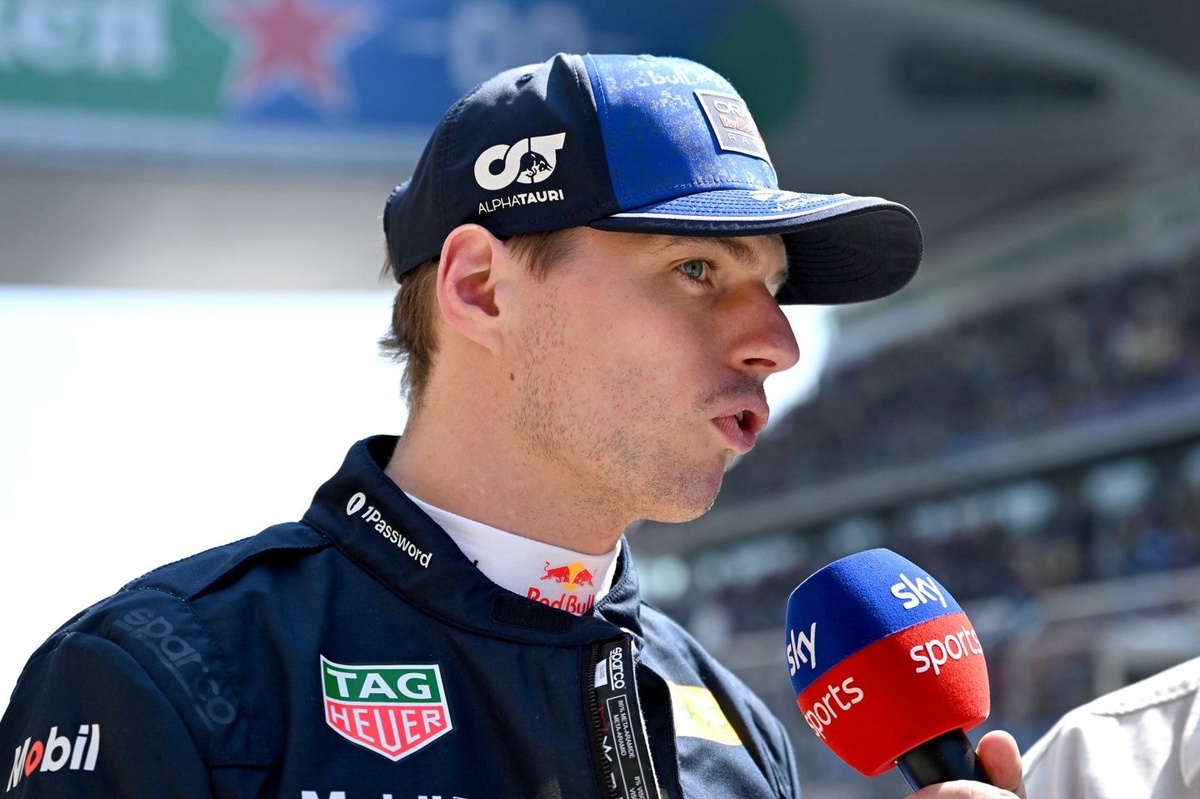
In a heated press conference at the GP of Japan, Max Verstappen drew a line in the sand. According to reporting we’ve tracked closely on the Jogo Hoje site’s F1 off-track coverage, the FIA’s reaction was not just mood music: the entity reportedly took the case to Red Bull after the Suzuka incident, turning a moment of in-room friction into a potential precedent for future gatherings.
Verstappen, the tetracampeão, refused to begin speaking while journalist Giles Richards (The Guardian) remained in the room. And once you’re asking for a colleague to leave, you’re no longer talking about tone. You’re talking about conduct limits, protocol, and who gets to set the rules inside the paddock’s most visible courtroom.
What happened in Suzuka
At the GP of Japan media session, Verstappen effectively put the room on hold. He wouldn’t start answering until Richards left, a move that instantly landed as more than a personal request. It was read as an operational instruction—something that, in a sport governed by process, triggers institutional attention.
Afterward, reports suggested the FIA made its position clear to Red Bull, with the matter said to have been raised following discussion within the Conselho Consultivo de Mídia of F1. In legal terms, you could call it escalation through the proper channel. In sporting terms, it’s a signal that the FIA is watching not only what gets said, but how the FIA protocol is respected.
Verstappen’s explanation, delivered later through Dutch media comments, didn’t soften the stance. He argued he had answered the same question many times, but felt the journalist’s approach carried disrespect—especially when, in Verstappen’s view, the camera focus in Abu Dhabi didn’t capture context behind the scenes.
Where the tension between Verstappen and Giles Richards began
This isn’t a one-off clash of personalities. The root sits in a prior dispute that dates back to the GP of Abu Dhabi 2025. Richards, at the time, had commented that Verstappen lost the championship due to a controversial incident involving George Russell at the GP of Spain. Verstappen, for his part, rejected the framing and made it plain he disagreed with the insinuation.
From there, the relationship didn’t reset. It simmered. So when Verstappen and Richards were seen again around the GP of Japan build-up, the old tension was always going to find oxygen.
Reports from the paddock suggested Verstappen, pointing at Richards, delivered the blunt line that he wouldn’t start until the journalist left. Whether you call it tactical theatre or a hard boundary, the effect was the same: the room’s power dynamic shifted, and the FIA had to decide how much tolerance to operationalize.
Why the FIA stepped into the case
Let’s speak like lawyers for a moment. The FIA’s job is not to pick sides on a driver’s opinion. The FIA’s job is to manage the framework: access, order, and the protocol that makes collective media obligations function.
When a driver refuses to speak under conditions tied to a specific journalist remaining in the room, you can read it in two ways. One, as a legitimate demand over perceived disrespect. Two, as a potential disruption of the established media access rules that underpin press freedom in F1. Either way, it becomes an atrito institucional—and institutional friction is where governing bodies tend to move quickly.
And because the issue was reportedly brought up in the Conselho Consultivo de Mídia, the FIA likely felt compelled to formalize its stance with Red Bull. Not to silence anyone, but to prevent the process from becoming negotiable person to person.
That’s the crux: the FIA doesn’t just regulate cars. It regulates rooms.
What Verstappen said to defend himself
Verstappen’s defence was consistent: he insisted the question wasn’t the real issue—the intent was. He said he’d answered the same topic around twenty times for different people, but claimed the exchange in Abu Dhabi involved what he saw as disrespectful presentation.
He also argued that, in his view, the camera was focused only on him in Abu Dhabi, meaning viewers didn’t see what was happening behind him. Then he sharpened the point: he described the approach as disrespectful, and said that if people don’t respect him, he doesn’t need to extend respect on demand. In a sport built on public scrutiny, that’s a high-voltage statement.
He framed it as simple: he normally shows respect, answers questions, and even when queries are “without sense,” he responds because that’s part of the job. But in this case, he believed the question was asked with bad intent—so he treated the interaction as a boundary rather than a debate.
Impact político e de bastidores no paddock
Here’s where it gets interesting, and where the politics stop being background noise. A formal complaint or a message through the FIA pipeline to Red Bull means the paddock now has to read the incident as a potential long-term issue, not just a single uncomfortable minute in Suzuka.
For Verstappen, the risk is obvious: the FIA can start watching interactions more closely, tightening the practical interpretation of the FIA protocol around media access and conduct. For the press, the risk is subtler but real: if the boundaries are interpreted too broadly, it can create a chilling effect that no one wants to admit is happening.
For Red Bull, the calculus is equally sharp. The team has to manage a world champion’s intensity while ensuring the institution doesn’t see a recurring pattern of disruption. That’s not just about PR; it’s about precedent. And in F1, precedent is currency.
So we’re looking at a possible cycle of escalation: driver pushes back, FIA formalizes, media bodies discuss, and everyone adjusts their behaviour under the same harsh lights. That’s desgaste político—and if it continues, it can reshape how future press conferences are conducted in practice, not just in theory.
O Veredito Jogo Hoje
We’ll call it straight: Verstappen’s refusal to speak until Richards left may be framed as personal dignity, but in the FIA’s world it lands as a procedural challenge. The FIA reaction—filtered through the Conselho Consultivo de Mídia and pushed to Red Bull—signals the governing body is done treating media-room disruptions as “driver mood.” Seeding an atrito institucional isn’t clever if it becomes a pattern; it’s a governance problem, and governance problems get handled. Assinado, Advogado Esportivo do JogoHoje.
Perguntas Frequentes
Why did Verstappen ask the journalist to leave the room?
He said the question and context in Abu Dhabi felt disrespectful and driven by bad intent, not by genuine inquiry. In Suzuka, he set a boundary by refusing to start speaking until the journalist left.
Did the FIA really complain to Red Bull?
Reports indicate the FIA communicated its displeasure to Red Bull after the Suzuka incident, with the matter reportedly discussed through the Conselho Consultivo de Mídia and then escalated via the proper institutional route.
Can this lead to punishment, or is it mainly political damage?
At this stage, it looks more like institutional pressure and a warning over FIA protocol and conduct standards than an automatic penalty. But if similar behaviour repeats, the line between political friction and formal sanctions can blur quickly.