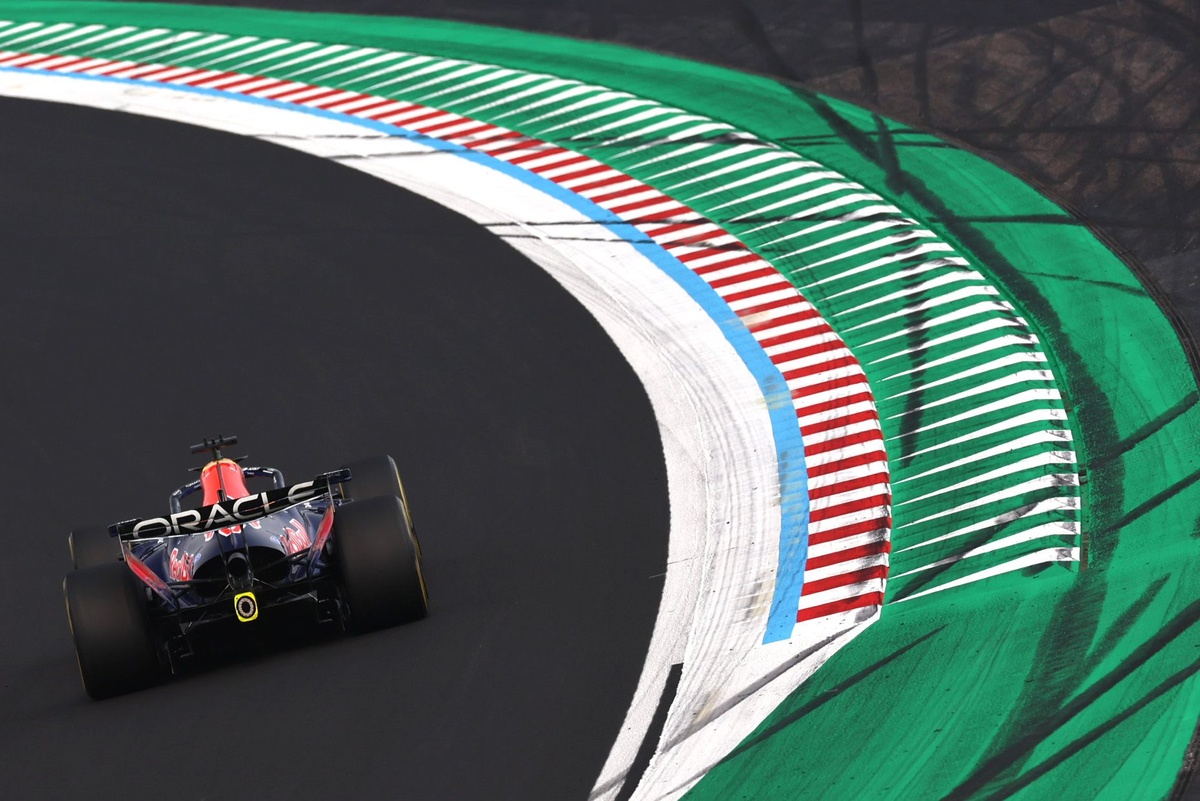
According to Jogo Hoje’s Formula 1 coverage of the paddock and behind-the-scenes buzz, Martin Brundle has dropped a line that lands right on the fault line of Red Bull’s future. The ex-driver’s take is blunt: if Max Verstappen were to step away from the team at the end of a future contract cycle, Red Bull should back candidates from its own academia de pilotos. Controversial? Absolutely. But tactically, it’s also the kind of answer you only hear when someone understands how structure beats wishful thinking.
What Brundle said and why it matters
Brundle framed the conversation around a simple reality: Verstappen, described as a tetracampeão in the debate, isn’t just a driver who wins races—he’s a system that makes the car, the data flow, and the feedback loop click. So if the most reliable ingredient of Red Bull’s competitive chemistry disappears, the sucessão de titular can’t be improvised. It has to be planned like a pit wall strategy: measured, fast, and ruthless.
That’s where his suggestion bites. Instead of treating the mercado de pilotos as the only route to stability, Brundle argues Red Bull should search for successors internally—through formação de jovens talentos that the team already understands. It’s not romance. It’s risk management.
And the timing of the speculation matters too. We’re in a phase where even the most confident teams are forced to think about a changing ciclo/contrato landscape, because the sport doesn’t wait. If Verstappen’s future shifts, Red Bull’s planejamento esportivo has to shift with it—yesterday.
Why Red Bull may look inside its own driver academy
Let’s be honest: hiring from the outside is like swapping tyres mid-race and praying the temperature works in your favour. Sometimes it does. Often it doesn’t. The problem isn’t talent; it’s integration. A new driver arrives with habits, communication styles, and learning curves that take time to align with the team’s development philosophy.
Red Bull’s edge has always been built on a tight estrutura da equipe: the way the car is developed, the way the engineers translate data into direction, and the way young talent is coached to fit the machine. If Verstappen leaves, that internal alignment becomes the battleground. That’s why Brundle’s logic points straight to the academia de pilotos. The team doesn’t just know what the prospects can do on-track; it knows how they think off it.
Even the mention of possible market-linked names—like references drifting around drivers associated with the Williams and Alpine ecosystems—highlights the contrast. Those routes may offer raw pace. But can they deliver the same cultural fit? Can they replicate the feedback intensity that keeps Red Bull’s design direction sharp?
Internal promotion answers those questions with one advantage: continuity. In the bastidores da F1, continuity is currency.
Who gains momentum in the internal fight
Here’s where the chessboard gets interesting. If Red Bull truly follows Brundle’s blueprint, the strongest pressure won’t come from the external driver market alone—it’ll come from within the organisation. The pecking order in the junior ranks suddenly becomes a real performance ladder, not a long-term project.
So who benefits? Anyone who has already been exposed to Red Bull’s engineering language, simulator processes, and the exacting demands that come with chasing tenths in qualifying. Not just “fast”. Fast in the right way.
And that matters for the sucessão de titular debate because the first replacement job isn’t to win immediately—it’s to keep the team’s development program alive while it hunts for speed. That’s a different skill set, and it’s often where academy graduates have the upper hand. They’ve been trained for the environment, not merely the car.
What this choice would reveal about Red Bull’s future
If Red Bull leans into its own formação de jovens talentos instead of going all-in on the mercado de pilotos, it signals something bigger than driver selection. It reveals a team that prioritises structure over panic. A team that believes stability can be engineered.
Because if Verstappen exits, the team’s competitive identity is at stake. The car can be updated, the aero can be revised, the power unit can evolve—but the feedback and direction system must keep functioning. That’s the heart of the planejamento esportivo. It’s not about replacing a superstar with another superstar. It’s about preserving the machine’s logic.
And politically, it also tightens control. When promotions come from within the academia de pilotos, Red Bull reduces the variables that come with contracts, public narratives, and adaptation timelines. In a sport where momentum is everything, fewer variables is a strategic advantage.
O Veredito Jogo Hoje
Brundle isn’t just throwing a hot take—he’s pointing at the only sensible path if Red Bull loses its most complete driver. The estrutura da equipe is the product, the academy is the supply chain, and the sucessão de titular has to be engineered like a championship plan, not stitched together like a last-minute transfer. If Red Bull truly buys into its own academia de pilotos, it won’t be because it’s sentimental—it’ll be because it understands how to keep the team’s competitive pulse beating when the lights go out for Verstappen.
Perguntas Frequentes
Why does Brundle think Red Bull should pick from its own junior academy?
Because internal promotion reduces integration risk. The team already knows how those drivers communicate, learn, and respond to Red Bull’s development rhythm—so the sucessão de titular can protect the estrutura da equipe instead of resetting it.
Which academy drivers could be considered by Red Bull?
The real candidates would be the prospects who have shown the right match to Red Bull’s coaching style and technical feedback demands—drivers already embedded in the academia de pilotos pipeline, aligned with Red Bull’s formação de jovens talentos.
Would Verstappen’s exit change Red Bull’s strategy in Formula 1?
Yes. It would force a recalibration of the planejamento esportivo around continuity: how the car is developed, how priorities are set, and how quickly the team can restore peak performance through its driver market alternatives or academy promotion.