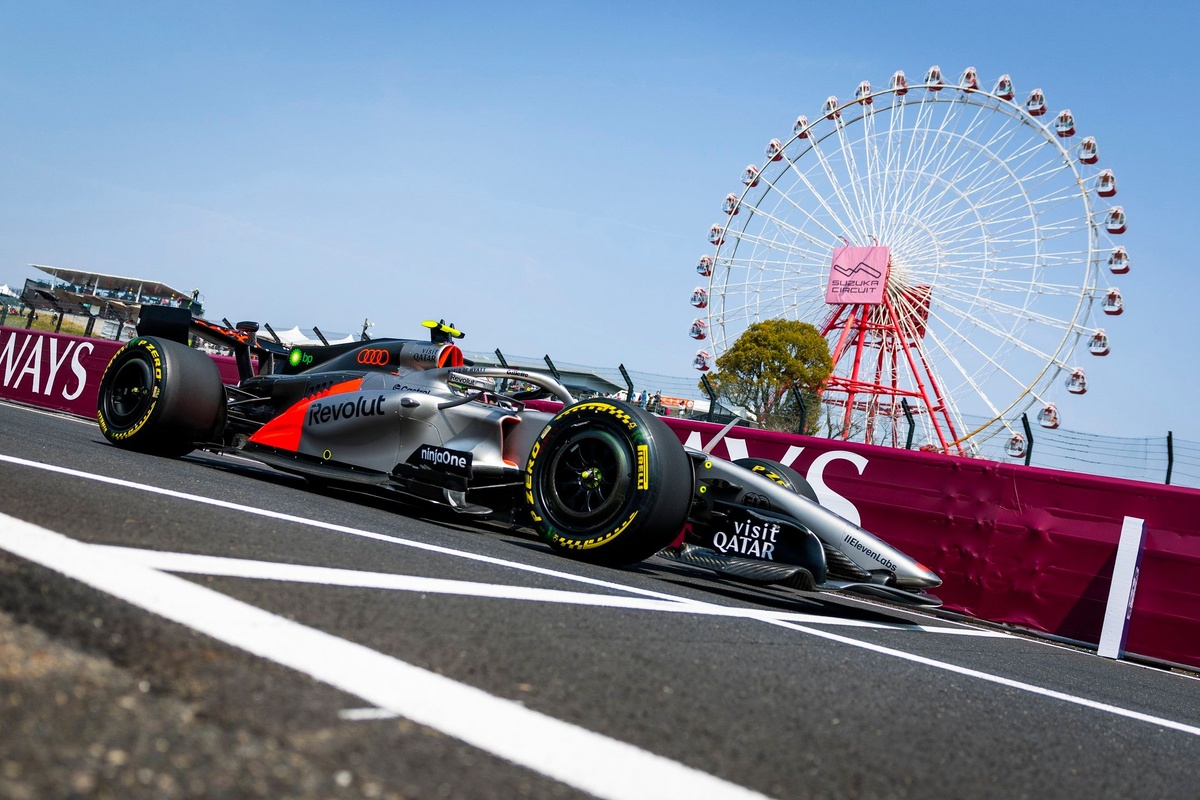
According to Jogo Hoje’s daily watch, Audi’s Monza plan is a classic case of “do the work, keep the cards close.” The team is set to put Gabriel Bortoleto on the car in the afternoon, with Nico Hülkenberg handling the morning session, all within a regulation-sanctioned day of filmagens that’s built for data collection and sharp, procedural homework.
What Audi did in Monza
Monza is one of those tracks that tells you the truth fast. It’s fast, unforgiving, and technically demanding, which is exactly why this dia de filmagens matters for Audi’s development of the R26. The regulations allow each driver to cover up to limite de 200 km per day, using Pirelli demonstration tyres, so the team can bank meaningful runs without turning it into a full-blown test weekend.
And the priority is clear when you look at the session structure: short, repeatable stints designed to isolate variables, not just chase mileage. Hülkenberg’s morning focus was procedural, with treino de largada work that reads like engineering homework with a stopwatch.
Why Bortoleto gets in the car later
There’s a tactical logic to slotting Bortoleto for the afternoon. In a day like this, the sequencing is rarely random. You want fresh eyes later, you want consistency in the run plan, and you want the ability to compare how setup choices behave across changing track conditions.
So yes, Bortoleto is expected to take over later on Thursday, but the real story is what Audi can “measure” across both drivers within the limite de 200 km. That’s where coleta de dados becomes more than a buzzword; it becomes the backbone for decisions that have to land before the next big target.
What Hülkenberg tested in the morning
Hülkenberg went out first and, crucially, stayed in the work window the team needed. He completed 34 laps, and the stint design is telling: stints de cinco voltas, tight packages that help the engineers compare launch and behaviour without letting too many confounders pile up.
He carried out three launch practice runs, hitting the key restart points that teams obsess over when they’re trying to nail execution under pressure:
- Launch work from the pit lane exit
- A run after the Primeira Variante
- A run at the Variante Ascari
This isn’t glamour testing. It’s the kind of detail that separates “we tried” from “we improved.” If you want to understand how a car behaves when the driver has to repeat the same actions with minimal margin, that’s exactly the lane these stints live in.
The technical weight of Monza for the R26
Monza’s layout forces the car to do contradictory things at once: you need traction on the exits, stability through braking zones, and enough composure to keep the tyres in the window. For a development programme, that makes the circuit a stress test for both mechanical balance and the way the car delivers power.
That’s why Audi’s choice of Monza isn’t just convenient. It’s strategic. The team is using a rare opening under the dia de filmagens rules to stack evidence for the next phase of refinement, especially as the Miami schedule looms. The GP de Miami acontece dentro de duas semanas, and every day you can treat like a controlled experiment is oxygen for the R26.
The problem Audi wants to attack: the power unit
Let’s call it what it is: Audi’s biggest headache right now is the unidade de potência. Mattia Binotto has already said as much, and when a team openly points to the power unit, you can bet the engineering priorities get ruthless.
So what’s the play? Audi plans to work on the power unit during the April force majeure pause, while keeping an eye on the ADUO (Additional Development and Upgrade Opportunities). In other words, this session isn’t just “preparing for Miami.” It’s feeding the bigger engineering pipeline, with Monza serving as the data-rich environment to validate how changes and procedures behave in real conditions.
What these tests say before the GP of Miami
Miami is close enough that you can feel the clock ticking. Two weeks sounds like plenty until you’re the one trying to convert test signals into setup confidence and execution reliability. That’s why this dia de filmagens feels like more than routine running: it’s a carefully limited attempt to tighten the process, especially around treino de largada where a small mistake can snowball before the first lap is even halfway.
And here’s the key: Audi’s use of regulatory space, the limite de 200 km, and short stints all point to a team that knows it can’t afford noise. You take your runs, you harvest coleta de dados, and you try to reduce uncertainty heading into Miami.
O Veredito Jogo Hoje
Monza’s session is tidy on paper, but the message underneath is loud: Audi isn’t chasing spectacle, it’s chasing certainty. With the unidade de potência still the core issue and the team eyeing ADUO (Additional Development and Upgrade Opportunities), this looks like a “buy time with precision” move—launch procedures, controlled stints, and maximum coleta de dados under the limite de 200 km. If Miami is the next turning point, then this filming day is the quiet preface, not the headline. We’re watching the engineering chessboard, and Audi is making sure the opening gambit stays untelegraphed.
Perguntas Frequentes
Why did Audi take Bortoleto and Hülkenberg to Monza?
To use a regulation-sanctioned dia de filmagens to run treino de largada, execute structured stints, and complete coleta de dados ahead of the GP de Miami, while also supporting development work for the R26.
How many kilometers can each driver run in an F1 filming day?
Teams can cover up to a limite de 200 km per driver during the dia de filmagens, using Pirelli demonstration tyres.
What is Audi trying to evaluate before the GP of Miami?
The programme blends procedural preparation, especially treino de largada around key points like Primeira Variante and Variante Ascari, with broader validation linked to the ongoing focus on the unidade de potência and potential opportunities through ADUO (Additional Development and Upgrade Opportunities).