There are dreams in motorsport, and then there are dreams that barely get the chance to breathe. Marco Apicella’s lone Formula 1 appearance didn’t play out as a slow-burn apprenticeship; it ended after roughly 800 metres—an opening act that turned into an abrupt curtain call before the first real moment of truth. And if you’re the kind of historian who still gets chills from dusty race photos and gearbox noises, you already know why this story sticks: it’s almost-ascension, with a tragic punchline.
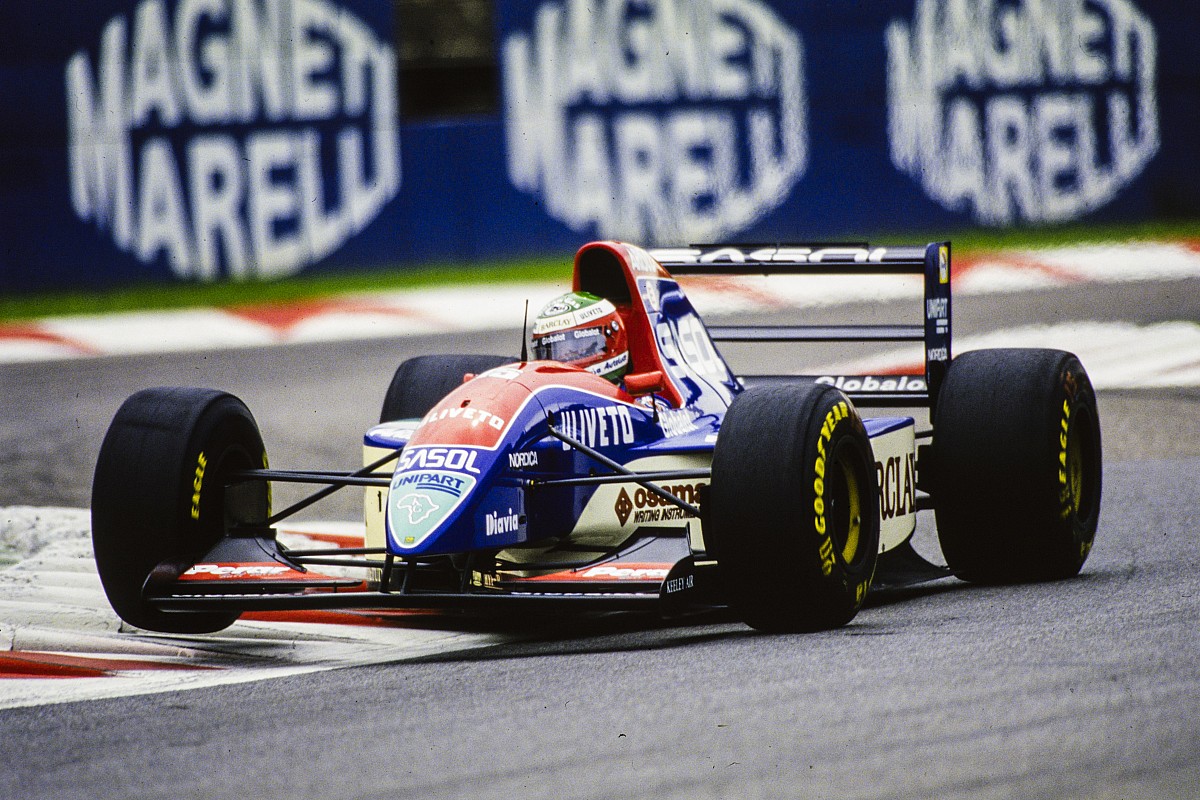
Apicella was drafted at the last minute for the GP of Italy 1993 at Monza, lining up alongside Rubens Barrichello for Jordan after Thierry Boutsen’s exit. Eddie Jordan wanted experience to steady the ship while Barrichello found rhythm, but the reality was harsher: neither Capelli nor Boutsen were matching the pace, so the second seat became a testing ground—usually for drivers who could bring some backing. In Apicella’s case, the opportunity looked like fate, and yet fate moved like a stop-watch. As our Jogo Hoje editorial desk tracked it, the detail that mattered most was simply timing: the call came, the grid slot opened, and the start was his doorway—then everything shut fast.
That’s the paradox we can’t ignore. The maximum stage of pilotagem de monolugares gave him a glimpse, not a season. It’s the kind of footnote that makes fans argue in the paddock long after the lights go out.
Who was Marco Apicella and why he landed in Jordan
To understand why Apicella ended up in a Jordan 193 at Monza, you have to follow the breadcrumbs back through years of single-seater work—because this wasn’t a lottery ticket. It was the outcome of a long apprenticeship where results mattered, but connections and credibility mattered just as much.
In 1993, Jordan had Barrichello for the future and a problem in the present. Boutsen had come in and couldn’t deliver what was expected, and with Ivan Capelli already out of the equation, the team needed a new option for the Italian round. Jordan, as always, was pragmatic: when the main plan falters, you pivot. And sometimes that pivot points toward an Italian with proven familiarity with the circuit and the machine culture of the era.
That Italian was Apicella, and the car was the Jordan 193—a chassis that, on paper, looked like it should offer a platform. But Formula 1 in the early 1990s didn’t forgive hesitation, and reliability plus setup questions were a lethal combo. Barrichello might have been there, right in the middle of the grid, yet points were elusive for the package overall. Apicella’s chance arrived in a moment when the team itself was searching for answers.
His Formula 3000 foundation and the F1 testing years
Before Monza 1993, Apicella built his name in the feeder ranks, most notably the Fórmula 3000 from 1987 to 1993. That’s not a footnote—that’s the spine of the whole narrative. In those years, the championship was a forge: you learned racecraft under pressure, you learned how to survive traffic, and you learned how to translate speed into consistency.
Let’s put some numbers on the board, because history deserves specifics. Apicella delivered a fifth place at Spa-Francorchamps in 1987. The next season he went even sharper, taking second at Monza in 1988. In 1989, he finished fourth in the championship, then dropped to sixth in 1990. When he joined Paul Stewart Racing, he bounced back to fifth in the standings, still collecting podiums but chasing that breakthrough win.
And then came the Japan detour—because when European doors stay shut, racing fans should remember: motorsport has always had a way of rerouting ambition. In 1992, Apicella ended 10th in the Japanese F3000 with Dome, the best of the handful of drivers from the constructor’s stable.
But the most intriguing layer is the testing history. Apicella was invited to test F1 machinery by Minardi between 1987 and 1990, acting in a role that was half official, half apprenticeship—exactly the sort of behind-the-scenes grind that never makes highlight reels. After Minardi, he tested with Lambo F1 in 1991, including sessions at Magny-Cours and Estoril. The car wasn’t perfect, but it was new, and in that era “new” often meant “untamed.”
Here’s the key quote from Apicella himself, because it explains the emotional engine of this story: he described testing as a chance given by people who tried to help young Italian talent. That’s how careers get started—sometimes not by contracts, but by someone in the right chair deciding you deserve a look.
The Japan shot and the win that reignited the dream
Japan didn’t just keep Apicella busy—it sharpened him. Even with the Fórmula 3000 scene evolving, the travel, the adaptation, and the competition from names like Mauro Martini created a new kind of pressure cooker.
Apicella remained with Dome into 1993, and that’s where the spark returned. He won at Sugo, claiming his first victory in that championship run. You could almost feel the story tilt back toward Europe, toward the idea that the “maximum stage” wasn’t gone forever.
Still, in motorsport, momentum isn’t a guarantee—it’s a negotiation. And Apicella’s negotiation had a long memory. He had been in contact with Eddie Jordan for years, close to landing a seat before. When Boutsen exited the picture, the open slot in the grid became the opening he’d been circling.
That’s the romantic part. The historian in me loves it. The realist in me hates it. Because the moment he finally gets the call, it becomes a story of timing rather than territory.
Monza 1993: the debut that ended in just a few metres
Monza 1993 is where all roads collapse into one straight line. Apicella had a few days in Ímola to test the chassi Dallara under the Jordan 193 umbrella—solid, but not magical. Meanwhile, the team’s bigger picture was still fragile: Barrichello was consistently in contention on the grid, yet points were hard to extract because of reliability and setup problems.
And then the race day came, with the kind of silence before a largada that always feels louder than the engines. Apicella’s presence in Formula 1 lasted about as long as it takes to cross the early part of the lap. Roughly 800 metres later, the story was over—before the first corner could even properly tell its truth.
It’s hard not to be cynical about it. You spend years mastering pilotagem de monolugares, you grind through the Fórmula 3000 years, you chase results across Spa, Monza, Pau, and Japan, and then the ultimate stage reduces you to a statistic measured in metres rather than laps. That’s not just tragic; it’s a reminder that Formula 1, for all its glamour, can be brutally impersonal.
And yet, that’s also why the story survives. It’s not only about what happened; it’s about what almost happened.
Why this brief passage entered Formula 1 history
In a sport that catalogs everything—pole positions, lap times, championship pedigrees—Apicella’s Monza 1993 appearance stands out for one reason: it’s unusually short. We’re not talking about a mid-race retirement that still leaves a “what if” behind. We’re talking about entering, then exiting before the race could even settle into its rhythm.
History loves irony, and this is pure irony. Apicella’s path—from EuroVenturini and the Dallara chassis in the late 1980s through his runs in First Racing and Paul Stewart Racing, and then the Dome chapter in Japan—had the shape of a long climb. Even his 1987 fifth at Spa-Francorchamps and his second at Monza in 1988 suggested he had the tools. The grid reward finally arrived, and then it was snatched away almost instantly.
So when fans and historians revisit Monza 1993, they aren’t only remembering a driver. They’re remembering a moment when the sport’s gatekeeping felt mechanical. One phone call, one seat, one start, and then the machine moved on without him. That’s why the episode has staying power, even decades later.
O Veredito Jogo Hoje
Apicella’s Monza 1993 isn’t a “what went wrong” case file—it’s a brutal reminder that Formula 1 sometimes awards opportunities on paper, then punishes them in practice. Jordan took a gamble, the gamble met an unforgiving debut, and the result was a story measured in metres instead of legacy. For us, as historians with a soft spot for the almost-great, that’s the real tragedy: the sport didn’t just deny him points, it denied him time to become a name.
Assinado por JogoHoje — redação e memória do automobilismo.
Perguntas Frequentes
Who was Marco Apicella in Formula 1?
Marco Apicella was an Italian single-seater driver whose only Formula 1 appearance came as a late call-up for Jordan at the GP of Italy 1993 in Monza, replacing circumstances created by other driver changes.
Why did Apicella’s debut last only about 800 metres?
According to the race account tied to Monza 1993, Apicella’s F1 stint ended abruptly almost immediately after the start, after roughly 800 metres, meaning he never had the chance to meaningfully progress through the race.
What team did he drive for, and which GP was it?
He drove for Jordan (the Jordan 193) at the GP of Italy 1993 at Monza, sharing the event with Rubens Barrichello.