On the first weekend under the new rules, Formula 1 didn’t just feel different. It felt alive. Strategy wars, mistakes with consequences, and a kind of race-day tension we haven’t consistently seen this season. No wonder Miami is already being framed as the benchmark event of F1 2026.
According to our editorial team at Jogo Hoje, the best part wasn’t only the result. It was the signal: if the rest of the calendar keeps delivering races like Miami, no one’s going to be bored by January’s “process” talk. The grid looks more balanced, more tactical, and far less predictable than the old pecking order.
What Miami revealed about the new F1
Miami acted like a real stress test for the new framework. The biggest takeaway? The race pace is being sculpted by tyre degradation and not by a single “dominant” car setting the tempo for everyone else. That forces drivers to read the race rhythm in real time, manage their laps through traffic in-race, and choose when to gamble inside the pit stop window.
And then there’s the other half of the story: mechanical reliability. When teams slip on execution or get caught with fragile setups, strategy becomes fragile too. You can’t just “out-drive” a problem anymore; you have to out-plan it. Audi and Aston Martin learned that the hard way, while McLaren showed they can turn aggression into clean execution.
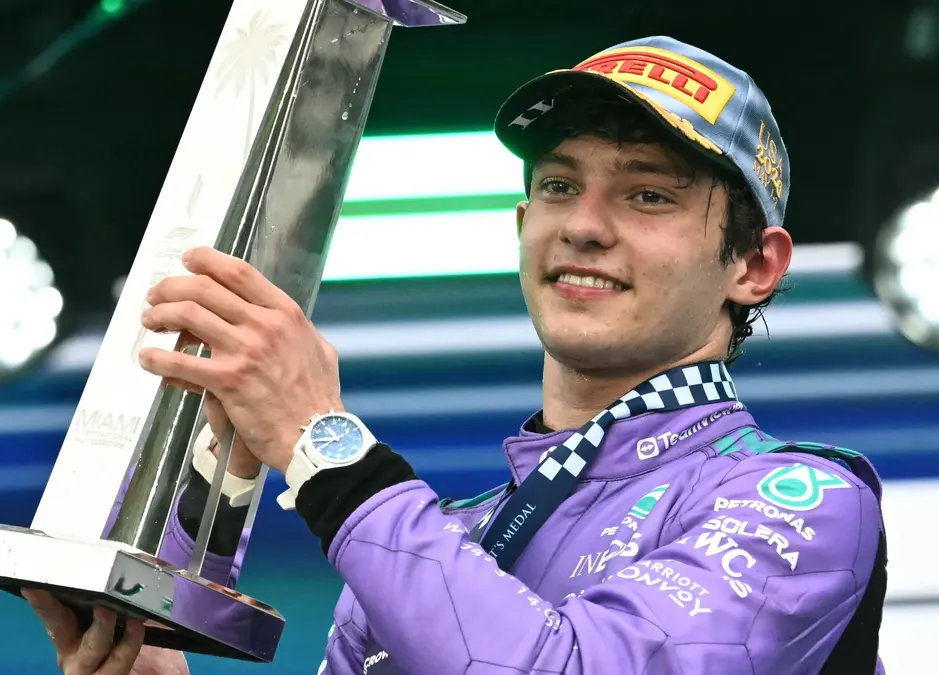
Meanwhile, Antonelli’s weekend carried a double message. Yes, he won again, and yes, the Mercedes looks less like a runaway train than it did in earlier races. But the more worrying question for rivals is how long he can keep converting pressure into pace without paying the usual price at the start.
The biggest scores: Antonelli, Norris and Piastri
Let’s be blunt: scoring is never perfect, but the pattern matters. Antonelli’s 8.5 wasn’t just a number. It was proof of conversion. Three poles in a row turned into three consecutive wins, and that’s the kind of consistency that wins championships even when the car isn’t the class of the field.
Lando Norris took the 8.5 as well, and the logic is tactical. He dominated the sprint, forced the issue, and in the Sunday fight he didn’t just “hang around.” He attacked with purpose, closing up when the window opened and pushing hard enough to make Antonelli feel the heat. For a world champion, that’s not a good weekend. That’s a statement.
Oscar Piastri grabbed 7.0 and the context is important: Miami’s race was messy in the final act, and the podium was partly shaped by trouble management. But Piastri earned the position, and the way McLaren’s threat kept stacking up across sessions suggests the “orange wave” isn’t a one-off.
Who lost ground: Russell, Hamilton and Leclerc
George Russell’s 4.5 is the kind of score you can feel in your gut if you’ve watched enough races. He’s a driver who usually handles the midfield chessboard with precision, but Miami turned into a traffic puzzle he couldn’t solve. When you lose rhythm against Ferrari and McLaren, you lose your under cut timing too, because the car’s pace doesn’t line up with the strategy plan.
And that’s the uncomfortable contrast: the pre-season and early races suggested Russell could control this sort of scenario. Miami said the opposite. If the Mercedes package can’t stay connected to the leaders through the full degradation curve, what happens next when the track punishes you for every hesitation?
Lewis Hamilton also scored 4.5, and the headline is simple: he wasn’t there. He looked like the weakest link of the front group across the last two events, and Miami continued that trend. A driver of his calibre can’t afford to be a passenger when the race rhythm is so sensitive to tyre fall-off and restart moments.
Charles Leclerc’s 5.0 came with an asterisk of sorts. He had a monster start, then the car and the race flow slipped out of his control in the second half. The error late in the race was the kind that ruins your strategic options instantly, because it forces damage control instead of letting you hunt cleanly through tráfego em pista and execute the plan.
Surprises from the midfield: Colapinto, Sainz, Albon and Bortoleto
Franco Colapinto’s 8.0 is the definition of “maximizing the opportunity.” The stint management and the willingness to commit in the right moments made his race feel sharper than the grid noise around him. When a driver can win seconds without winning headlines, that’s when you start believing in the long-term ceiling.
Carlos Sainz and Alexander Albon both scored 7.0, and for Williams this is massive. Miami showed the team finally has a platform that looks like it belongs in the fight. Sainz can wring more performance out of the car than most, while Albon answered with real race intelligence, keeping the team’s momentum alive through the tyre curve and the traffic knots.
Gabriel Bortoleto’s 7.0 is a reminder that reliability isn’t only about finishing. It’s about getting the laps you need to build advantage. Audi’s problems are becoming a pattern, and Bortoleto still managed to gain positions and convert his chances into a better-than-expected outcome.
Audi, Aston Martin and Cadillac: where the race exposed the issues
Audi’s story in Miami wasn’t subtle. It was structural. The confiabilidade mecânica concerns are showing up as lost rhythm, fewer useful laps, and setups that can’t survive the full race without compromises. That’s why both Bortoleto and Nico Hülkenberg struggled: when the car is fragile, every plan becomes a negotiation with physics.
Aston Martin, meanwhile, suffered the classic “can’t build consistently” problem. Fernando Alonso’s 6.0 reflected survival and damage limitation, not dominance. Lance Stroll’s 5.5 underlined the same issue: the car isn’t progressing the way it needs to, and it’s getting harder to blame only the driver.
Cadillac’s improvement showed up in Sergio Pérez’s 6.0. He managed to stay engaged, duel in-race, and validate that the team is closing gaps. That matters because it means the new rules aren’t punishing rookies and outsiders automatically; they reward teams that can find stable strategy steps.
Complete ranking of the GP of Miami notes
- 1º) Andrea Kimi Antonelli — 8.5
- 2º) Lando Norris — 8.5
- 3º) Oscar Piastri — 7.0
- 4º) George Russell — 4.5
- 5º) Max Verstappen — 6.0
- 6º) Lewis Hamilton — 4.5
- 7º) Franco Colapinto — 8.0
- 8º) Charles Leclerc — 5.0
- 9º) Carlos Sainz — 7.0
- 10º) Alexander Albon — 7.0
- 11º) Oliver Bearman — 6.0
- 12º) Gabriel Bortoleto — 7.0
- 13º) Esteban Ocon — 5.5
- 14º) Arvid Lindblad — 4.5
- 15º) Fernando Alonso — 6.0
- 16º) Sergio Pérez — 6.0
- 17º) Lance Stroll — 5.5
- 18º) Valtteri Bottas — 4.5
- 19º) Nico Hülkenberg — 5.5
- 20º) Liam Lawson — 4.5
Also, the championship context matters. Antonelli reached 100 points after the Miami GP, and the gap looks even sharper when you remember the calendar is already moving to the next real test: F1 returns from May 22 to May 24 for the Canadian GP.
O Veredito Jogo Hoje
Miami didn’t just crown Antonelli again; it exposed the real pecking order under the new rules. McLaren looked dangerous in both sprint and race because their pace translated into clean decisions inside the pit stop window, while Mercedes, Ferrari, Audi and Aston Martin kept tripping over the same things: tyre management that isn’t stable, execution under traffic in-race that falls apart, and mechanical reliability that turns strategy into guesswork. If you want the championship picture, here it is: Antonelli is scaling, Norris is calibrating aggression, and the rest are still asking their cars to do miracles. That’s why this season already feels like it’s changing shape.
— Assinado, Analista Tático do JogoHoje
Perguntas Frequentes
Why was the Miami GP considered the best race of F1 2026?
Because it combined strong race pace, visible tyre-degradation pressure, real strategic timing battles within the pit stop window, constant in-race traffic management, and the kind of reliability swings that forced teams to adapt on the fly.
Who were the biggest highlights and disappointments in Miami?
Highlights were Andrea Kimi Antonelli’s conversion of pole into wins, Lando Norris’s aggressive sprint-to-race threat, and Oscar Piastri’s podium execution. Disappointments centered on George Russell and Lewis Hamilton losing control of race rhythm, plus Charles Leclerc’s late error and the struggles around Audi’s confiabilidade mecânica and Aston Martin’s lack of consistency.
How does Miami’s result affect the championship?
Antonelli’s win pushed him to 100 points after Miami and reinforced his momentum. At the same time, Norris and Piastri closing the gap intensifies the fight at the front, while reliability issues at Audi and Aston Martin and performance inconsistencies at Mercedes and Ferrari reshape the battle for the next set of podium targets heading into the Canadian GP from May 22 to May 24.