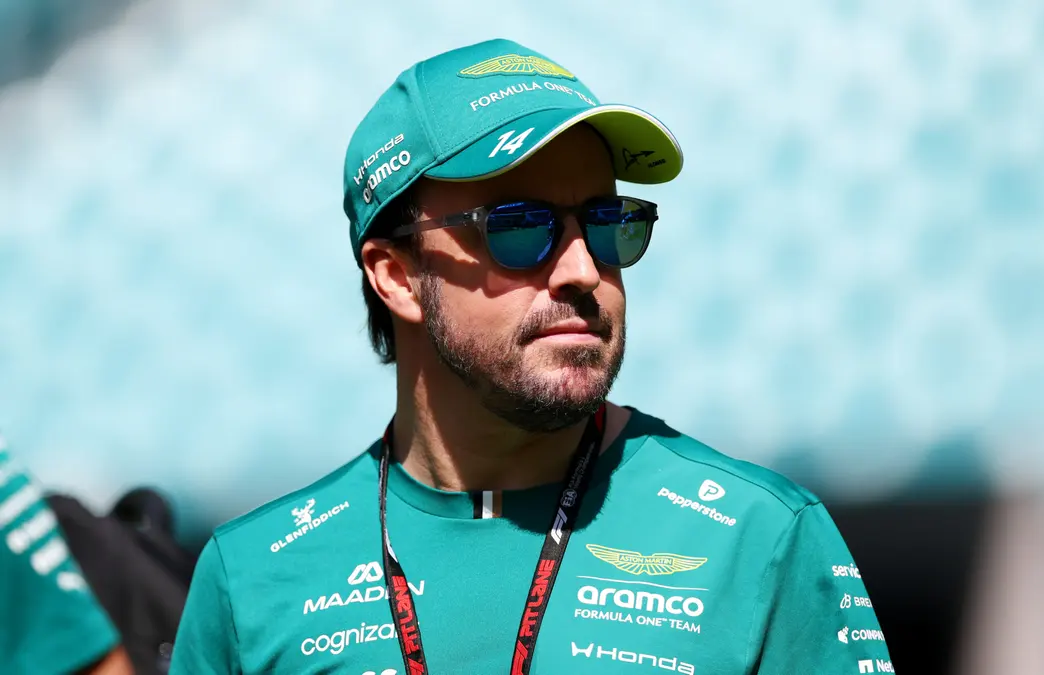
Fernando Alonso defended Aston Martin’s call to arrive in Miami without a meaningful package, and honestly, it landed like an accountant’s verdict from the pit wall. This is the kind of decision that only makes sense when you treat the season like a spreadsheet as much as a sprint. According to Alonso’s logic, the team should only spend its teto orçamentário on a leap large enough to move the needle, not on ganho incremental that buys little more than frustration. As part of our Formula 1 editorial coverage, we’re watching how the Jogo Hoje approach to value-for-money on-track mirrors the money constraints off it.
And the context matters. With 5 weeks between the Japan and Miami GPs, every team had a reason to show their hand. Aston Martin chose not to, and Alonso made it clear the priority wasn’t a shiny new part list—it was the car’s foundation.
What Alonso revealed about Aston Martin’s strategy
Alonso’s message was blunt, and it sounded less like “we’re waiting” and more like “we’re allocating capital.” He said the team understands the competitive reality: when you’re consistently down in the order, small improvements don’t change your competitive position. Aston Martin, per Alonso, sits around 19th or 20th, with the car ahead roughly 1s0 away. If that gap doesn’t close, what’s the point of chasing crumbs?
He also pointed at the mechanics of the teto orçamentário: even if a team manages 0s2 per race, the effect can be too small to justify the resource burn. In financial terms, it’s the classic “cost per unit of performance” problem. In sporting terms, it’s why the grid doesn’t just reward speed—it rewards the speed you can sustain at the right time.
Why Aston Martin decided not to bring upgrades to Miami
For Alonso, Miami wasn’t a moment to gamble. The team concluded that a package de atualizações delivering only marginal returns would be inefficient—especially when it risks consuming budget for gains that simply don’t translate into positions.
He framed it as a decision to avoid wasting the system. When you’re that deep in the field, you don’t have the luxury of “try this, maybe it helps.” You need to be confident the desenvolvimento estrutural or performance step is big enough to matter. Otherwise, it’s just noise in the garage and an accounting headache under the teto orçamentário.
Alonso’s own results underline the point. He finished 15th in Miami, which was his best personal mark of the year, and Aston Martin managed to surpass the Cadillac cars in qualifying for the first time. That’s progress—but it’s the kind of progress that can come from fixing the car’s behavior rather than buying outright speed with a small incremental tweak.
The weight of chassis vibrations and the choice to solve the base first
Aston Martin’s biggest headache wasn’t only outright pace—it was the vibrações do chassi that had been messing with performance since the start of the season. Alonso described the direction clearly: reduce the instability, improve dirigibilidade, and only then talk about performance gains.
That’s the underappreciated part. A car suffering from vibration problems can feel like it’s fighting the driver every lap. No matter how clever your wing angles are, if the platform is inconsistent, lap time turns into guesswork. Fixing that is desenvolvimento estrutural in the truest sense: you’re stabilizing the tool before you try to sharpen it.
We also know the team sought external investigation, with a chassis sent to Sakura to look into the issue. In other words, this wasn’t “we don’t have ideas.” It was “we have to solve the problem that contaminates everything else.” Alonso even said there has been progress, with the vibrations brought down to a more acceptable level.
What Alonso’s words signal for Canada, Austria, and the rest of the first half
Alonso basically told fans and rivals to reset expectations for the next block. His line—no meaningful updates until after the summer—means Canada and Austria become a test of management rather than a celebration of new hardware.
He said there’s no need to hype the GP do Canadá or the GP da Áustria as if a magic switch is coming. The risk is that everyone will watch the timing screens and assume stagnation. But Alonso is arguing the opposite: this is disciplined development, focused on dirigibilidade and reducing the ganho incremental temptation until the team can chase a real performance jump.
So what do we watch for over the next stretch, from May 22 to 24 in Canada? We watch whether Aston Martin can keep improving consistency, keep the car calmer, and avoid throwing resource at a package de atualizações that only offers ganho incremental without closing the gap. When you’re dealing with a situation where the car ahead is around 1s0 away, repetition is part of the plan, not a failure.
When Aston Martin should return to evolve for real
Alonso’s bottom line is the timeline: updates only after the summer. In budget terms, that’s them waiting for the moment when a pacote de atualizações can deliver a step large enough—his own threshold language matters. He suggested that until the team can aim for something like a 1s5 to 2s gain, committing major pieces into production isn’t worth the hit to the teto orçamentário.
That’s why his stance sounds almost resigned, but it’s also strategically calm. You don’t “buy” performance by spending everywhere; you spend where the marginal return becomes a real return. Alonso even implied the team will keep making progress in behavior—getting the car better to drive—while holding back from performance changes that would amount to a rounding error.
Now we wait for the segunda metade da temporada to tell whether the gamble on development estrutural and dirigibilidade converts into genuine competitiveness.
O Veredito Jogo Hoje
This is the rare case where the numbers don’t just justify the call—they explain it. Alonso isn’t hiding behind “we’re working”; he’s talking like a finance chief who understands that a budget cap punishes vanity. If your ganho incremental can’t flip positions, then chasing it is basically paying interest on a loan you’ll never repay. The frustration is real, sure, but so is the discipline—and under these constraints, discipline is the only thing that eventually looks like speed.
Perguntas Frequentes
Why didn’t Aston Martin bring upgrades to Miami?
Because Alonso says any ganho incremental from a small pacote de atualizações wouldn’t change their competitive position. With their rivals roughly 1s0 ahead and the team around 19th or 20th, spending under the teto orçamentário would be inefficient compared to fixing the underlying issues.
When should the team debut a relevant package?
Alonso indicated there will be no meaningful upgrades until after the summer. That means the next races like Canada and Austria are expected to follow the same approach, with improvements centered more on dirigibilidade and resolving vibrações do chassi.
What did Alonso mean by “rasgar dinheiro”?
He meant that “tearing money” is what happens when you spend budget cap resources on updates that only deliver tiny gains—like the idea of a 0s2 per race improvement that doesn’t realistically move the car up the order. In his view, it’s better to avoid those small returns until a desenvolvimento estrutural step can be big enough to matter.