According to editorial coverage from JogoHoje, the Abu Dhabi title-decider of 2021 still cuts deep because it raised a legal question in the middle of a sporting storm: when the regulamento esportivo gives the diretor de provas discretion, who really carries the institutional risk if the outcome goes sideways?
Now Niels Wittich, the man who served as F1 race director between 2022 and 2024, has stepped in to defend Michael Masi. In Wittich’s view, the Australian was used as a scapegoat by the FIA after the controversial GP in Yas Marina, even though the decision fell within the framework and intent of the rules at the time.
What Wittich said about Masi
Let’s pin down the core of Wittich’s argument like a lawyer reads a contract clause. He insists Masi “did nothing terribly wrong” and that the sporting regulations did not lock every variable in a rigid box. In practice, the race director had a “margin” to decide how to employ the safety car under the moment’s constraints.
Wittich also argues that the guiding goal was shared: teams, the FIA and F1 had discussed the preference to finish under bandeira verde, meaning the race continuing rather than ending under an untidy interruption. Nobody wants the trophy decided behind the safety car, and nobody wanted a last-act mess that would look like the sport lost control.
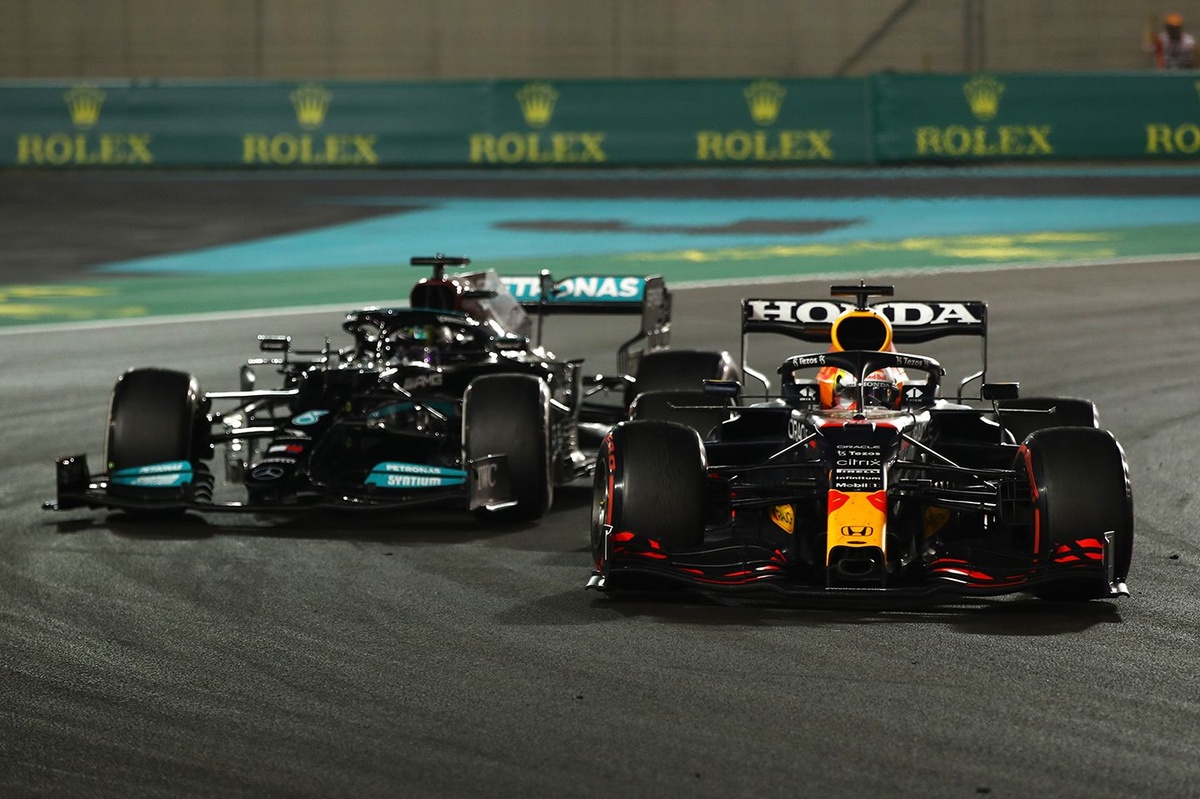
So what did Masi actually do? On the final lap sequence of the GP of Abu Dhabi 2021, Hamilton and Verstappen were level on points before the race, yet Hamilton led by 11 seconds when the safety car was deployed with just six laps to go after Nicholas Latifi’s crash in the fight for position. Latifi’s impact with Mick Schumacher’s Haas set the stage; the safety intervention arrived at the worst possible time for anyone chasing a clean procedural finish.
Wittich’s defence pivots on the idea that Masi’s instruction created the kind of closing sprint that everyone expected if conditions allowed. He says the race director basically built a last-lap shootout rather than handing over a trophy by default. And in his mind, sport is allowed to be dramatic when the framework permits it.
Why Abu Dhabi 2021 still remains in debate
Here’s the part that keeps the debate alive for fans, drivers and officials alike. Hamilton had 11 seconds of cushion before the safety car and, crucially, Latifi’s accident came on the penultimate phase, right after the tyres and track positions were already in a sensitive equilibrium.
Because the timing made a red flag feel like a theoretical option rather than a practical one, Mercedes chose not to pit Hamilton when the safety car was out. Verstappen, with nothing to lose, went for fresh softs and stayed second, turning the restart math into a knife fight.
Then comes the sentence that changed the title’s fate: on lap 57 of 58, Masi instructed the five cars one lap down—the ones between Hamilton and Verstappen, and only those—to recover a lap, and he ordered the safety car to come in immediately before the final lap. Verstappen moved past Hamilton, whose tyres were hard-used from earlier running, and took the win and the championship.
Even if you accept that the intent was to race to the flag, the procedure raised eyebrows because Masi also adjusted the normal rhythm of how the safety car and lap recovery would be handled. Wittich doesn’t deny the controversy; he challenges the leap from controversy to illegitimacy. He frames it as an application of autoridade discricionária within the regulatory room available at the time.
And the numbers still sting: Hamilton and Verstappen were tied in points before Yas Marina, Hamilton led by 11 seconds when the safety car appeared, and Latifi crashed with six laps remaining. The rest is history, including the fact that the decision was made in the tightest possible window—just before the last-lap outcome.
What the regulation allowed at the time
Let’s talk text, not vibes. Wittich leans heavily on the article 48.12 language from the era. The clause states that if the race director considers it safe to do so, and if the message “CARROS ATRAPALHADOS PODEM ULTRAPASSAR AGORA” has been sent to all competitors via the official messaging system, then any cars that were lapped by the leader must overtake the cars on the lap of the leader and the safety car.
The same provision continues with the timing logic: unless the race director believes the safety car is still needed, once the last lapped car has passed the leader, the safety car returns to the pits at the end of the following lap.
Wittich’s legalistic takeaway is straightforward. The rules contained both a procedure and a discretionary safety valve. If the diretor de provas believed it was safe and justified, then the intervention could be executed in a way that still produced a racing finish rather than forcing a stop-start scenario.
That’s why he keeps repeating the same theme in lawyer terms: the wording didn’t define everything as a strict checklist. It allowed the race director to act, and the act aimed to preserve the structure of competition while managing safety and timing.
- The instruction to let the five cars between Hamilton and Verstappen recover a lap falls under the regime triggered by the message and the article 48.12 mechanism.
- The return of the safety car at the end of the next lap is the default rhythm, but the clause also embeds the discretion to assess whether the safety car is still required.
- In Wittich’s reading, changing the “usual” cadence was not a breach; it was an exercise of autoridade discricionária tied to the race director’s safety judgement.
As an attorney of the sport, you can see the tension instantly: fans want predictability; officials need real-time control. Abu Dhabi 2021 became the battleground where that philosophical split turned into a points swing.
Where the FIA failed in the post-race
Now we hit the real accountability angle, and Wittich goes beyond regulations. He says the FIA’s institutional response after the race was the part that looked most unfair, most political, most human—sorry, most cynical.
After the investigation, Masi was destituted from his role as diretor de provas. Wittich argues the conclusion effectively pointed to the need for someone to be removed, and that someone became Masi.
Wittich’s critique is not subtle. He says it felt like the FIA found a single person to absorb the blame because the wider system—procedures, decision-making context, and leadership backing—was not carried with him. He adds that in “extreme situations” you need clear support from the top, not a left-behind scapegoat narrative after the storm.
There’s a parallel he draws from the past too. Under Charlie Whiting, he claims the leadership backing was firmer, and that culture of support under Max Mosley’s era meant the diretor de provas wasn’t isolated when pressure peaked.
In other words: even if you accept the regulatory interpretation debate, the post-corrida handling is where the FIA’s credibility got bruised. If the sport’s authority structure leaves its own race leadership exposed, then the institution doesn’t just lose a title argument—it loses trust.
Why the case still weighs on F1’s image
Abu Dhabi 2021 didn’t just decide a championship; it left a scar on how people perceive rule consistency and authority. The sport can survive controversy—every season has it. What it struggles with is inconsistency in how rules are applied, explained, and defended.
Wittich’s defence is essentially that the FIA set the conditions for a racing finale and then later acted as if the outcome was solely the fault of the diretor de provas. That disconnect fuels the suspicion that the system protects itself by narrowing blame into one pair of hands.
The reputational damage matters because the sport runs on legitimacy. When the title outcome is questioned, every future regulation gets viewed through a courtroom lens: who had authority, what discretion existed, what procedure was followed, and whether the institution stood behind its own decisions.
That’s why the debate keeps resurfacing whenever the safety car, carros dobrados, or red flag rules are discussed in later seasons. Fans remember the mechanism, teams remember the uncertainty, and lawyers—well, lawyers remember the missing backing.
O Veredito Jogo Hoje
From where we sit, Wittich’s point lands like a clean strike: if the article 48.12 framework provided a discretion lever for the race director, then the FIA can’t later pretend the decision was only a personal failure while leaving the diretor de provas politically exposed. You don’t get to demand authority in the moment, then deny institutional support after the result. That’s not “just sport”; that’s governance, and governance has to be accountable—especially when the safety car turns a regulation into a title.
Assinado: JogoHoje — Advogado Esportivo, mirando regra, precedente e responsabilidade institucional.
Perguntas Frequentes
Por que Michael Masi foi acusado de errar em Abu Dhabi 2021?
Porque a decisão na volta 57 de 58 alterou o procedimento habitual de como lidar com carros uma volta atrás e o timing de entrada do safety car, o que gerou debate sobre se a aplicação respeitou fielmente o regulamento esportivo e a intenção operacional do processo para esse tipo de cenário.
O que dizia o artigo 48.12 do regulamento da F1?
Ele estabelecia que, se o diretor de provas considerasse seguro e após a mensagem oficial “CARROS ATRAPALHADOS PODEM ULTRAPASSAR AGORA”, os carros ultrapassados pelo líder poderiam voltar a ultrapassar no regime da volta do líder junto do safety car. Também trazia a regra de retorno do safety car ao final da volta seguinte, salvo se o race director entendesse que ainda era necessário.
Por que a FIA foi criticada no caso Abu Dhabi 2021?
Porque, após a investigação, Masi foi destituído e a leitura pública foi de que ele teria virado o principal alvo da punição. Wittich sustenta que faltou respaldo político e institucional ao diretor de provas em situações extremas, o que reacendeu dúvidas sobre consistência de regras, autoridade discricionária e legitimidade institucional.