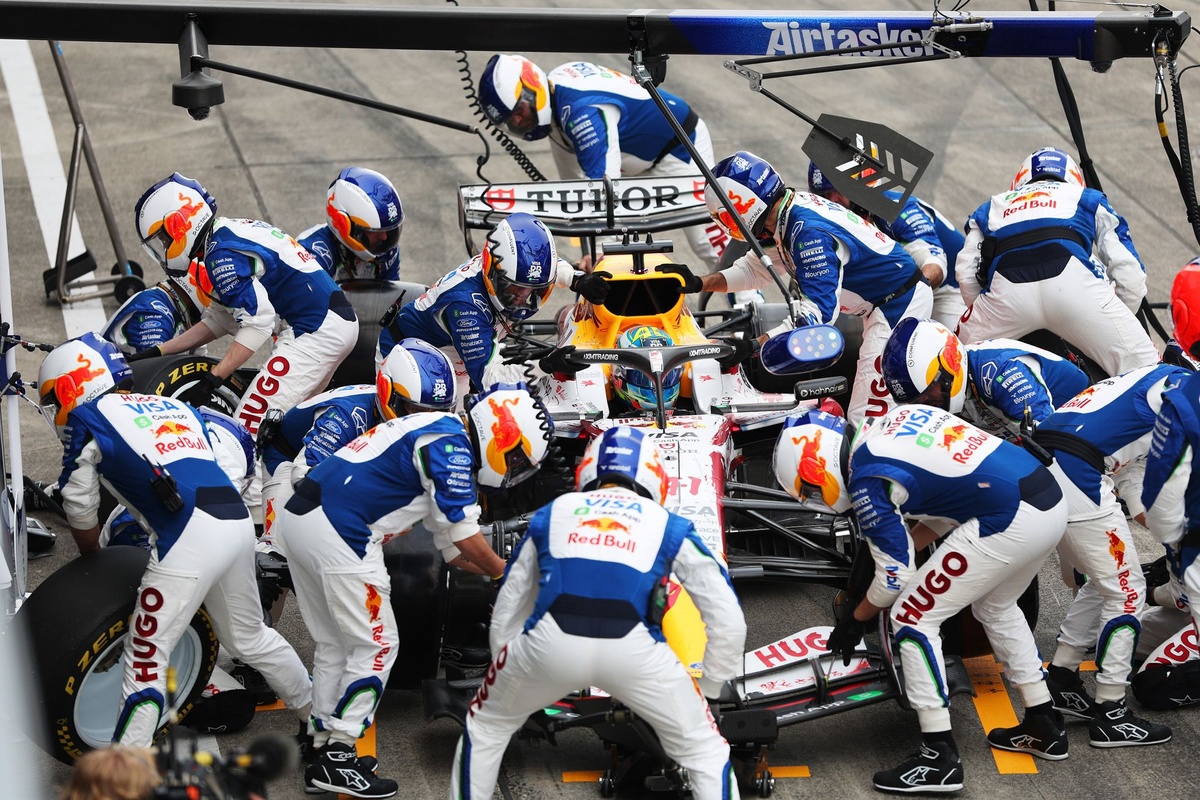
Jogo Hoje has been tracking the Formula 1 development race closely, and the latest signal from Racing Bulls is hard to miss: they’re lining up a rapid run of pieces, first in Miami and then again in Montreal. In a season where timing can be worth more than raw horsepower, this is the kind of move that can quietly reshuffle the midfield order.
With the calendar already bent by the cancellation of the Bahrain and Saudi Arabian races, Racing Bulls are using the forced gap to get their next cycle aligned for the American stop and the Canadian one right after. It’s strategic, competitive, and, frankly, a little ruthless: you don’t get many chances to “reset” the update rhythm in this era of rules complexity.
What Racing Bulls will bring to Miami and Montreal
The plan is straightforward on paper and chaotic in execution: Racing Bulls are preparing new components for the Miami Grand Prix (1–3 May) and another for the Canadian Grand Prix in Montreal (22–24 May). Alan Permane, the team’s design chief, was explicit that the Montreal work can’t be pulled forward, which is why the team’s performance roadmap looks like back-to-back pressure.
Permane described it as an awkward sequence: a “decent” planned improvement for Bahrain that will show up in Miami, followed by a planned Montreal package that arrives almost immediately after. That means the team isn’t just chasing marginal performance gain—they’re managing how pieces introduced interact with the car’s evolving baseline.
Why the calendar pushed them into a tight sequence
Here’s the tactical reality: the forced five-week pause in April, triggered by the cancellation of the Bahrain and Saudi Arabian races, changed the update cadence across the whole pit-lane. When you lose events, you don’t just lose laps; you lose the natural rhythm of testing, measuring, and then deciding how many parts you dare to field at each stage.
So instead of sticking to their original progression, Racing Bulls adapted their timing of updates to the new schedule. The key detail is that the Bahrain package was already on the roadmap, but its displacement into Miami created a different allocation problem: how many sets can be produced, stored, and confidently run without compromising the homologation window realities?
That’s where the development race gets spicy. Teams aren’t just building. They’re scheduling. They’re also reading each other like a chess clock with engines. In a new regulation cycle, even a small shift in the janela de homologação equivalent can decide whether you get a true step forward or an expensive half-measure.
What Alan Permane revealed about the plan
Permane’s comments paint a picture of a team that used the pause to prepare more confidently. He said the Bahrain update was “quite decent,” and that it likely allowed the team to arrive at Miami with more sets available than they would have otherwise.
His numbers mattered for the performance engineering side. Where the team might have had only two or three sets of that Bahrain-derived package, they expected to have three or four sets for Miami. That’s not just inventory. That’s an engineering advantage: more runs, better data confidence, and less gambling with the car’s balance when the track conditions refuse to cooperate.
Permane also insisted the update cycle wasn’t fundamentally broken, because it had been planned with weeks of lead time. Still, the knock-on effect is obvious: the car will be asked to absorb a new package aerodinâmico, then almost immediately replace or supersede key elements with the next Montreal step.
How this messes with the midfield fight
Racing Bulls sit seventh after three rounds, and the gap tells you the midfield is tighter than it looks: they’re four points behind Haas in fourth, while Alpine and Red Bull are tied in fifth. That’s the kind of cluster where one genuine performance gain can turn into two positions—if the package is timed right and the setup window holds.
This is also where their approach can either pay off or backfire. Running a stronger Miami step, then rapidly pivoting to Montreal, is a high-wire act. The upside is obvious: if the new components work as intended, Racing Bulls can bank enough data and forward momentum to keep pressure on the teams above and around them. The downside is just as real: if the car needs a deeper adaptation than expected, the following event can turn into a scramble rather than a development milestone.
Still, Permane’s confidence is telling. He expects small improvements almost every race, alongside two or three bigger timing of updates steps before the end of the season. That’s how you stay dangerous in the pelotão intermediário: you don’t wait for one miracle weekend, you accumulate reliable steps that compound.
And in this midfield chess match, the psychological edge matters too. When you can show a credible sequence of upgrades across Miami and Montreal, you signal to the others that you’re not merely surviving—you’re planning to climb.
O Veredito Jogo Hoje
Racing Bulls didn’t just “find a schedule gap”; they turned it into a tactical weapon. In the midfield, where the margins are thin and confidence is currency, this Miami-to-Montreal momentum can be the difference between playing catch-up and suddenly dictating the pace. If the package aerodinâmico lands cleanly and the pieces introduced don’t disrupt the car’s baseline faster than the team can learn, they’ll force Haas, Alpine, and the rest to react instead of plan. That’s the whole point of the development race: timing isn’t a detail—it’s the game.
Perguntas Frequentes
Why is Racing Bulls planning two updates in sequence?
Because the calendar shift forced their update cycle to land around Miami and Montreal, and the Montreal components can’t be brought forward. The team also used the April disruption to secure more sets for Miami, making the sequence more feasible.
Which races will receive the new packages?
Racing Bulls plans new developments for the Miami Grand Prix (1–3 May) and then another major step for the Canadian Grand Prix in Montreal (22–24 May).
How can this strategy influence the midfield battle?
If the upgrade steps deliver the expected performance gain at the right time, Racing Bulls can close the points gap to Haas and challenge the tied group around Alpine and Red Bull. The risk is that the rapid handoff between packages could demand faster setup adaptation than anticipated.