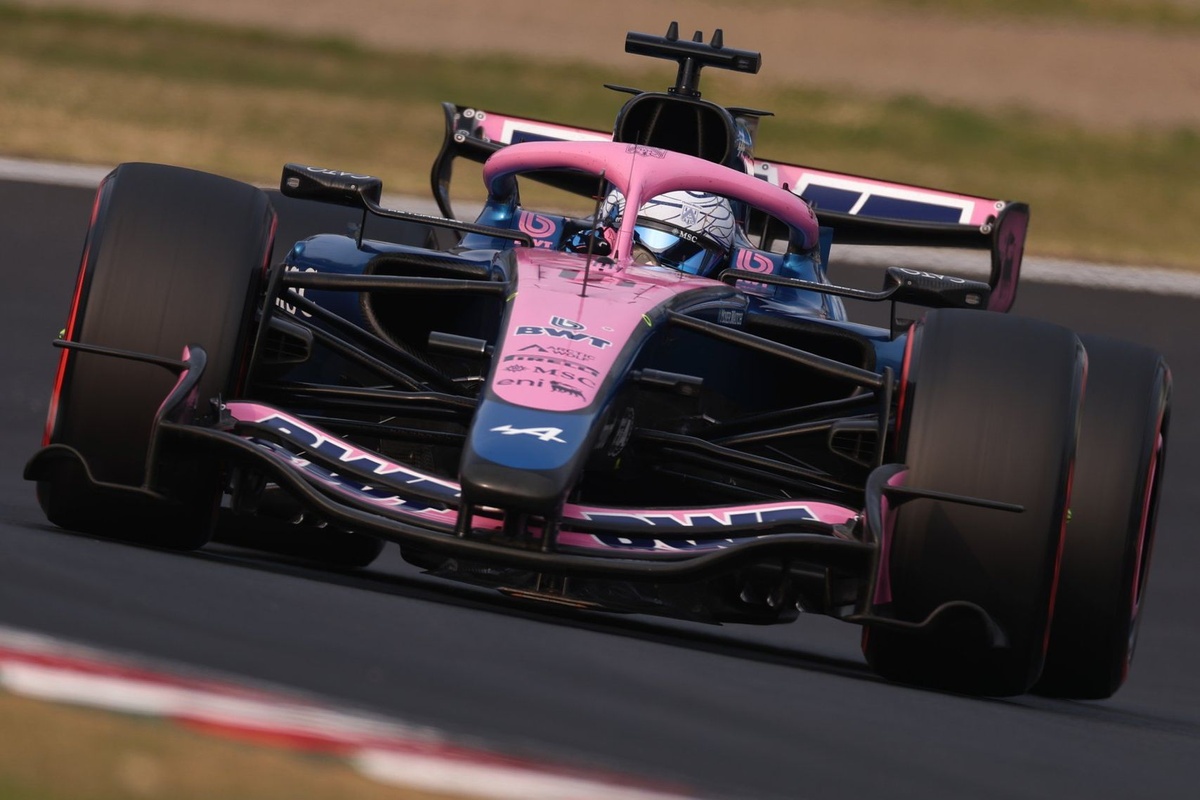
According to Jogo Hoje’s reporting, the Alpine power struggle isn’t happening on track this time, it’s happening on paper. And the closer Mercedes gets to buying a minority slice of the team, the louder the governance alarm bells in F1 start to ring.
Alpine is majority-owned by Renault, but 24% of the shares were sold in June 2023 to a group of investors for €200 million. Now, with Alpine set to become a customer of Mercedes engines in 2026, the market chatter around a possible Mercedes purchase of that 24% is pushing the debate from “business news” into “watch this space” territory. Because in Formula 1, control isn’t a vibe. It’s a conselho administrativo, it’s voting rights, and it’s who gets to influence strategy when the chequebook opens.
What’s on the table between Mercedes and Alpine
The headline sounds simple: Mercedes is interested in buying the 24% stake currently held by the investor group led by Otro Capital. But the real story is what that stake could deliver in practice—especially once Alpine flips from its current engine setup to the new era under the 2026 regulations, when it will run Mercedes power units.
Flavio Briatore has already acknowledged interest from “some groups” for the stake. Later, he pointed to a broader field of suitors as rumours gathered around Toto Wolff’s orbit and, crucially, the ex-Red Bull camp including Christian Horner. The market’s logic is straightforward: Mercedes wants the asset, but the rest of the grid wants to know what kind of influence that purchase would bring.
Who owns what: the share split explained
Here’s the corporate map, stripped of marketing gloss. Renault remains the control societário heavyweight, holding the majority of Alpine shares. The other chunk—participação minoritária—is the 24% sold in June 2023 for €200 million to a consortium of investors.
That investor group includes Otro Capital, alongside RedBird Capital Partners and Maximum Effort Investments. The list also features high-profile minority names across sports and entertainment, including Travis Kelce and Patrick Mahomes, Rory McIlroy, Anthony Joshua, Trent Alexander-Arnold and Juan Mata, plus actors Ryan Reynolds and Michael B. Jordan, and Roger Ehrenberg linked to Eberg Capital.
One detail matters for governance, not gossip: as part of the deal, Alec Scheiner, co-founder and an investor behind Otro Capital, joined the conselho administrativo of Alpine. That board presence is where minority rights stop being theoretical and start shaping decisions.
From Toleman to Alpine: why Enstone has always been a hot asset
Enstone’s pull isn’t new. The current Alpine outfit is the product of decades of identity shifts, restructures, and ownership changes—each one leaving behind a familiar theme: the chassis, the people, and the know-how are the value.
It started in 1981 with Ted Toleman’s team entering Formula 1, using Hart engines. After 1985, the Toleman operation was bought by the Benetton Group and the identity shifted accordingly. In 1991, the team ran with Ford Cosworth power and signed Michael Schumacher, then moved its base to Enstone in 1992—giving the team its enduring “Enstone” nickname. The first major trophy arrived in 1994 with Schumacher.
Fast forward: Renault acquired Benetton in 2000. The team later cycled through names tied to corporate sponsors and investment blocs, including Renault F1 Team, Lotus Renault GP, and Lotus F1 Team, before Renault reasserted control in 2015 as Renault Sport F1 Team. The Alpine identity returned in 2021, the year Alpine’s most recent race win came—Esteban Ocon’s victory at the Hungarian GP.
So when investors talk about buying 24%, they’re not just buying branding. They’re buying a proven F1 asset with a deep engineering base and a board-level seat carved out by the divisão acionária.
The conflict-of-interest risk with Mercedes as engine supplier
Now we get to the part that makes the paddock raise an eyebrow. In 2026, Alpine becomes a cliente de motores of Mercedes. That’s already a relationship where commercial terms, technical priorities, and future integration matter.
But if Mercedes also holds a meaningful minority stake, the conflito de interesses question stops being academic. You don’t need a conspiracy theory to see the tension: when the engine supplier is also a shareholder, who truly protects the competitive interest of the customer team?
That’s why this isn’t just “who’s buying what.” It’s about governança esportiva. It’s about whether board discussions, voting outcomes, and long-term planning stay clean when the supplier has skin in the game.
Briatore’s stance is that independence can be protected through process—particularly around voting within the F1 structures. Still, process doesn’t erase perception. And in F1, perception is fuel for politics.
What Flavio Briatore really means by “75% decides and 25% are passengers”
Briatore offered a blunt analogy: “A Red Bull already has been pioneering with two teams for the last 10 or 15 years. And Mercedes is looking to buy the 24% of Otro. Normally, in a company, 75% decide and 25% are passengers. And that’s the reality.”
That line is designed to calm nerves. But as a financial journalist would tell you, “passengers” can still influence the ride. Minority holders with board representation can ask the hard questions, push for certain safeguards, and shape how contracts are interpreted at board level.
In other words, even if Renault’s majority control remains the dominant force, a Mercedes-backed governance footprint could still change the dynamics. Not necessarily on race day—but on the long-term levers that decide budgets, technical direction, and strategic priorities.
The Veredito Jogo Hoje
From a governance standpoint, this is exactly the kind of deal that makes F1 look like a closed room for insiders. Renault may hold the majority, but a Mercedes purchase of Alpine’s 24% isn’t a harmless financial move—it’s a potential power-adjacent shift that could blur the lines between engine customer and engine provider. If F1 wants credibility, it has to treat the conflito de interesses risk as real, not as a slogan about “75% deciding.” Because when the conselho administrativo meets the engine contract, the sport’s independence doesn’t survive on faith alone.
— JogoHoje.esp.br editorial desk
Perguntas Frequentes
Who owns Alpine in Formula 1?
Renault is the majority owner. In addition, 24% of the shares belong to a separate investor group that bought the stake in June 2023 and secured representation on Alpine’s conselho administrativo.
Why does a possible Mercedes purchase of the Alpine 24% create conflict-of-interest concerns?
Because Alpine is set to become a cliente de motores of Mercedes in 2026. If Mercedes also holds a stake, the same company could be both supplier and shareholder, raising conflito de interesses and governance questions around decision-making and competitive independence.
How much did Renault sell of Alpine in 2023?
In June 2023, Renault sold 24% of Alpine shares for €200 million to the investor group led by Otro Capital.