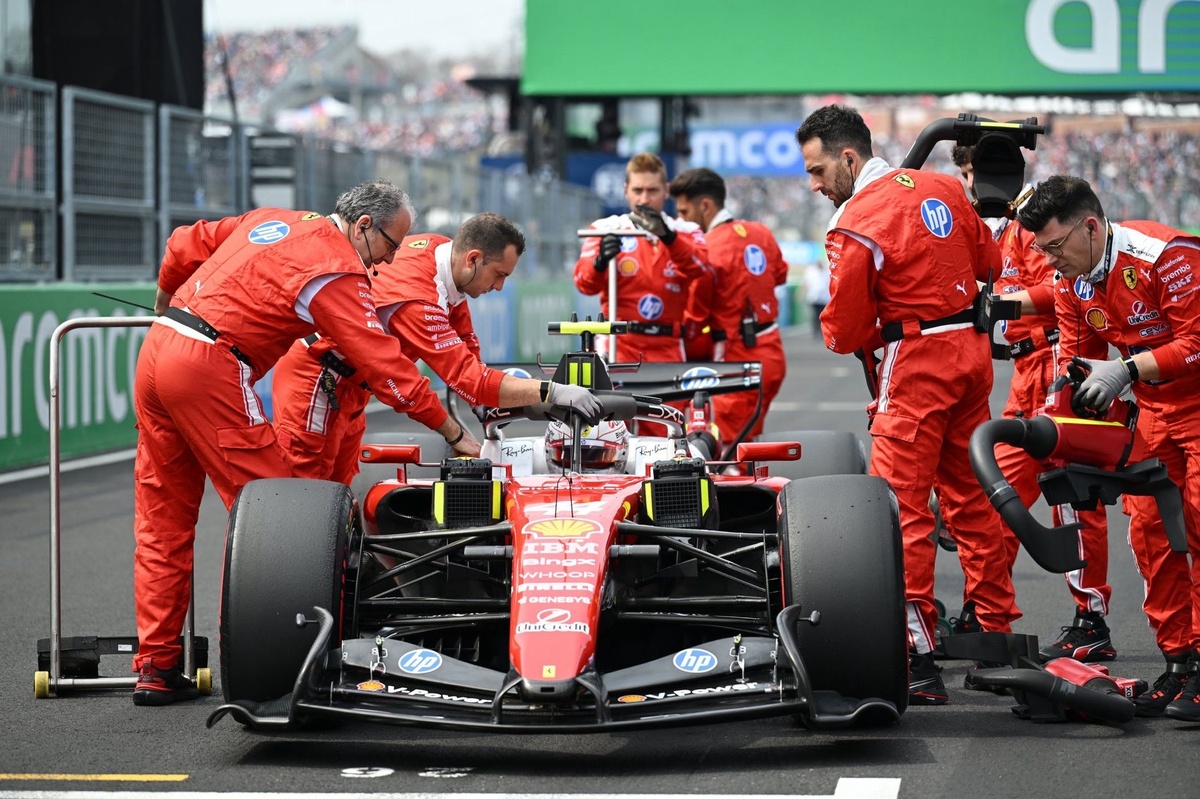
John Elkann doesn’t sound like a man selling optimism for the sake of it. He’s selling a plan. After a 2025 season that landed below Ferrari’s own ambitions, the president addressed the company’s shareholders in Amsterdam and framed what comes next: new regulation season 2026, and a new internal alignment inside the Scuderia. According to the broader coverage environment around Formula 1 on Jogo Hoje, the subtext here matters as much as the headline.
The opening angle is simple, but it’s also a bit of a tell. Elkann said Ferrari will approach the 2026 “new championship with new regulations” with “unity and determination” and, crucially, with the kind of day-to-day focus that doesn’t show up in press conferences. That’s the point: a team can’t just talk about “learning and evolving” when the stopwatch and the constructors’ standings keep disagreeing. So what does he emphasize? unit internal, development technical, and sporting management as the backbone for the next cycle.
The Elkann message: unity after a season that missed the mark
Let’s be honest: when the boss of a historic outfit starts talking like this, it’s rarely because the workshop is humming perfectly. The 2025 reality, in Elkann’s own framing, was “below our ambitions.” That matters because ambitions create pressure, and pressure creates behavior. The talk of “unity” is basically a request for the whole organisation to move like one system, not a set of parallel departments protecting their own turf.
On the tactical side, unity isn’t a vibe. It’s process. It’s how you translate data into direction, how fast you close feedback loops, and whether the people who design the car and the people who run the weekends are rowing the same way. Elkann’s “learn and evolve” line reads like a corporate version of what engineers say when they finally stop chasing ghosts and start making the next iteration count.
And then comes the pivot. The president explicitly links the reset to 2026’s new regulation. That’s not just timing. It’s leverage. If 2025 exposed weaknesses in the current concept, 2026 offers a structural chance to rebase the whole philosophy of the car. Why would you waste that window on internal friction?
Why 2026 changes everything for Ferrari and for F1
In F1, regulation shifts are the rarest kind of equalizer. Not because teams start from scratch, but because the hierarchy of understanding gets shaken. When the rulebook changes, the same design instincts can suddenly become liabilities. That’s when development technical becomes less about incremental upgrades and more about choosing the right bets early.
For Ferrari, that’s where sporting management enters the frame. You’re not just managing races; you’re managing an entire learning curve under time constraints. 2026 is a test of whether the Scuderia can coordinate aerodynamic direction, power-unit strategy, simulation priorities, and real-world reliability targets without turning the project into a never-ending committee discussion.
Elkann’s language suggests he believes the team can keep the project coherent even while the technical picture is being rewritten. That’s the hidden part fans should watch: not who sounds confident, but who delivers consistency in the build-up. New cycles reward teams that reduce noise and accelerate decisions.
The contrast with the WEC: success where alignment finally clicked
Here’s where Elkann gets interesting, and where the story stops being pure corporate PR. He praised Ferrari’s endurance department, especially in the WEC, and he didn’t do it casually. He called it “a memorable season,” and he pointed to a specific date: 8 November 2025 as “a moment of pure joy” for Ferrari and fans worldwide.
That specificity is strategy. It’s a reminder that endurance rewards discipline, and discipline is exactly what a fragmented F1 project can lack when things go wrong. In endurance, your racecraft is only as good as your reliability planning, your stint management, and your ability to adapt without panic. That’s endurance culture, and it’s a culture that builds unit internal because everyone must trust the same playbook.
Elkann also went to the big numbers. Ferrari’s endurance success came with the builders’ and drivers’ titles in the WEC, marking 50 years after their last overall world endurance title. And he tied it directly to the flagship machine: the 499P delivered a third straight Le Mans win, in 499P fashion, with that run continuing to stack confidence inside the organisation.
The tactical takeaway? Ferrari is showing that its best internal cohesion isn’t theoretical. It exists where processes are tested under long-run pressure. You don’t win endurance titles and Le Mans streaks without a team learning to synchronise.
What the speech reveals about pressure inside the Scuderia
Let’s connect the dots. Elkann first acknowledges the 2025 disappointment, then pivots to 2026 and demands unity. That sequence implies the pressure isn’t only on the track. It’s also on the machine room: the design group, the operational staff, the decision-makers. When a season goes “below expectations,” the natural temptation is to blame and scramble. Elkann’s counter is to tighten alignment before the next rulebook arrives.
In other words, the speech reads like an attempt to prevent the classic mid-cycle disease: everyone trying to solve everything at once. If 2026 is the reset, Ferrari needs a single direction, not five competing theories. That’s why the emphasis on development technical and sporting management feels deliberate. He’s basically telling the Scuderia: the project must stay coherent from the first concept sketch to the final race strategy.
And if you’re wondering whether this is a subtle warning to internal rivals, ask yourself this: why bring up endurance success while also admitting F1 fell short? Because the message is clear. Ferrari already knows how to operate as one unit. Now it has to replicate that in the F1 environment.
What to expect from Ferrari in the new Formula 1 cycle
So what do we watch next? Not platitudes. We watch whether Ferrari turns 2026 into a structured build-up rather than a hope-and-pray exercise. If Elkann’s “unity” is real, the first sign will be speed of decision-making: fewer late concept flips, cleaner test priorities, and upgrades that look like they belong to a single design roadmap.
Second, we watch whether the endurance mindset influences F1 execution. That can show up in reliability targets, consistency in trackside problem-solving, and a calmer approach to setbacks. The 499P story isn’t just a trophy parade; it’s a blueprint for how Ferrari can manage long seasons without losing the plot.
Finally, there’s the psychological layer. Elkann is repositioning the narrative. Ferrari didn’t just “fail” in 2025; it is “learning and evolving.” That framing is meant to keep the internal group focused on the next milestone rather than staying stuck in the frustration of the last one.
O Veredito Jogo Hoje
Ferrari’s real move for 2026 isn’t the talk about “unity” itself, it’s the choice to anchor that unity in endurance results and in a concrete timeline. Elkann is essentially saying: we know how to run as one team, we proved it in the WEC with titles and the 499P landing another Le Mans streak, so now we’re going to force that same unit internal logic into F1 through development technical and sporting management. If they deliver coherence on the technical side, the next cycle won’t just be “new regulations” on paper, it will be a reset with teeth. — Analista Tático, Jogo Hoje
Perguntas Frequentes
What did John Elkann say about Ferrari in 2026?
He said Ferrari will start the 2026 season with new regulation conditions and approach the new cycle with unity and determination, focusing on the work needed to return stronger after a 2025 campaign below expectations.
Why did the WEC enter Elkann’s speech?
Because he used Ferrari’s endurance success as evidence of internal alignment: the WEC titles, the significance of 8 November 2025, and the dominance of the 499P with a third consecutive Le Mans win. It’s a credibility play for how the organisation can operate as one unit under pressure.
What changes for Ferrari with the new F1 regulations?
The entire technical direction can be reshaped. New rules mean teams must rethink priorities in development technical and strengthen sporting management to coordinate the project efficiently during the transition, especially in areas where the old concept no longer applies.